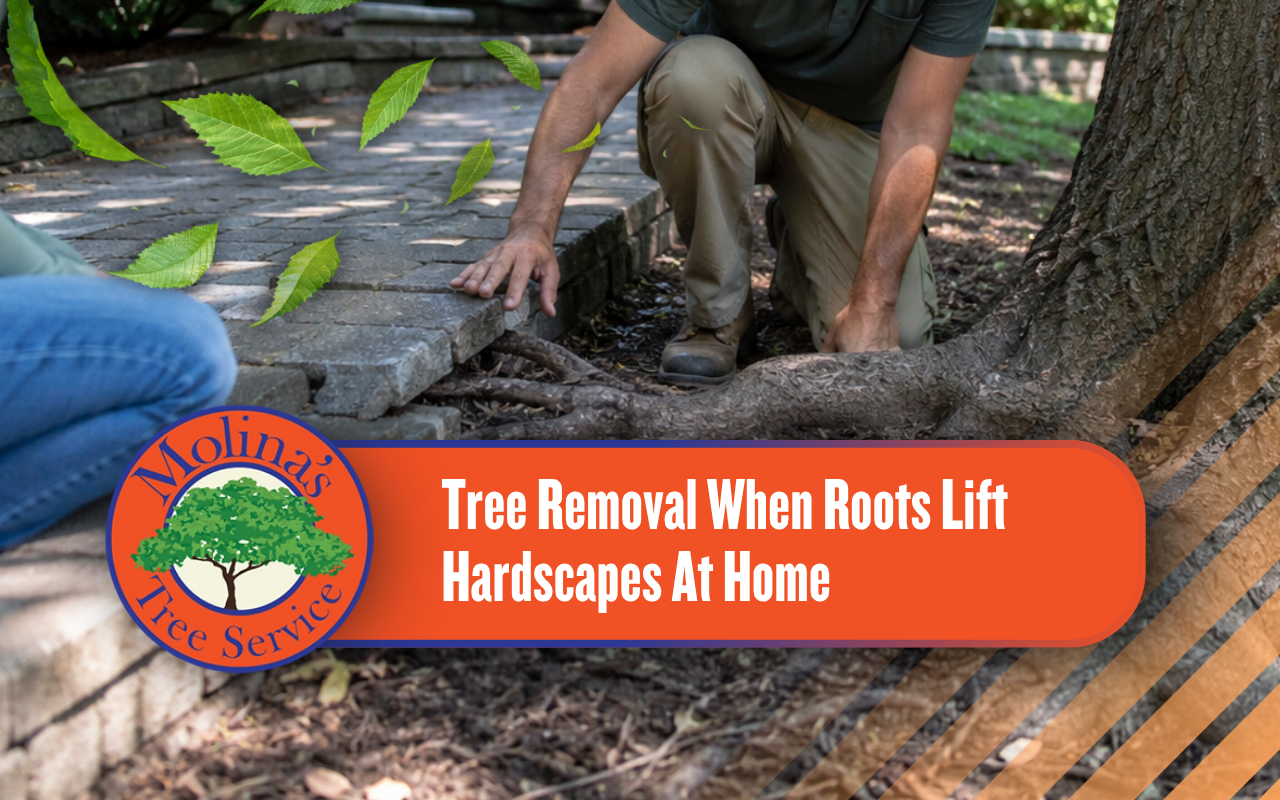
Tree removal when roots lift hardscapes can protect your family, guests, and outdoor spaces from growing hazards. Raised patios, cracked walkways, and uneven pavers may seem minor, yet they can become costly and unsafe.
At Molina’s Tree Service & Landscaping LLC, we help property owners review the damage and choose a safe next step. Our goal protects hardscapes while respecting nearby trees.
Early Warning Signs Around Nearby Patios And Walkways
Changes often appear before damage develops. You may see loose pavers, narrow cracks, raised slab edges, or soil pushing through joints. Tree roots lifting walkways and patios may also cause water to collect in low spots after rain.
Check these areas through seasons because movement may become easier to notice. Watch for:
- Uneven steps or raised corners
- Gaps between pavers or concrete
- Visible roots near paved edges
- Water pooling beside lifted sections
How Root Damage Becomes A Serious Safety Risk
Uneven hardscapes can cause trips, falls, and drainage problems. Cracks may widen over time, while standing water can weaken the base under pavers or concrete. Roots may also press against walls, driveways, pipes, and foundations.
Tree removal when roots lift hardscapes becomes more urgent when the surface changes quickly or the tree is unstable. A professional review can separate a small repair from a condition that threatens people, structures, or important access areas.
Measuring Damage Before Choosing The Right Solution Safely
Start by noting where the surface is raised and how much each section has moved. Measure height differences between slabs, check for new cracks, and mark areas that keep changing. Damaged spots may show that roots are active under a wider area.
Knowing when root damage requires tree removal depends on tree health, root size, distance from the trunk, and nearby structures. Our team can review these factors and explain whether repair, root control, or a professional tree removal service is the safer choice.
Root Control Methods That May Preserve Hardscapes Longer
Some properties can avoid removal when the tree is healthy and the damage is limited. Root barriers may guide future growth away from paved areas. Careful pruning can also remove selected roots, although cutting major roots may weaken or unbalance the tree.
Possible management steps include:
- Installing a deep root barrier
- Using mulch to support deeper roots
- Improving drainage around paved areas
- Pruning only roots approved by an expert
These methods need planning because a poor cut or barrier may increase stress.
When Removal Protects Structures And Nearby Outdoor Areas
Tree removal when roots lift hardscapes may be necessary when large roots keep raising the surface, important roots cannot be cut safely, or the tree has poor health. In some sites, tree removal when roots lift hardscapes is best near foundations, utilities, walls, or narrow routes.
At Molina’s Tree Service & Landscaping LLC, we also consider nearby site limits before work begins. Review our guidance for removal near retaining walls and large trees in urban neighborhoods.
Safe Planning For Professional Tree Removal Work Projects
A safe plan should cover tree direction, nearby buildings, access, equipment, and cleanup. Large branches and trunk sections need controlled handling, especially near weak surfaces, utility lines, or public walkways.
Homeowners should avoid cutting a damaged tree without proper tools and training. Our article about the risks of do-it-yourself removal explains why this work can become dangerous. Tree removal when roots lift hardscapes should follow a clear plan that protects people and property.
Frequently Asked Questions
Can raised pavers be fixed without removing trees?
Yes, minor lifting may allow paver reset, root barriers, or careful root pruning. However, the tree must remain stable, and the cause should be controlled before the surface is rebuilt.
How quickly can root damage become worse?
Growth rates vary by species, soil, water, and season. Visible movement should be checked early because repeated lifting can weaken the hardscape.
Will cutting surface roots always solve the problem?
No. Cutting important roots can harm stability and health. A professional should identify which roots may be removed and whether another method is safer.
What signs mean removal may be necessary?
Fast lifting, large cracks, damaged walls, poor tree health, and major roots under structures can all show when root damage requires tree removal.
Who should inspect the tree and damaged area?
A trained professional should inspect the tree and hardscape. With Molina’s Tree Service & Landscaping LLC, you receive guidance based on safety, site conditions, and long-term needs.
Restoring Hardscapes And Preventing Future Root Damage Problems
After removal or root work, rebuild the base before replacing pavers or concrete. Clear loose material, add compacted gravel, restore drainage, and use flexible joints where movement may occur. Permeable pavers may also improve water flow.
Prevention may include:
- Choosing smaller trees near paved areas
- Leaving enough space around new plantings
- Checking walkways twice each year
- Installing barriers during landscape updates
For us, tree removal when roots lift hardscapes should be the final step after careful review. For local guidance, read about tree removal planning in Greenville or contact us for an assessment.