Tree removal near retaining walls needs care because roots, soil, and wall pressure can affect your yard over time. When a tree grows too close to a wall, it may push soil, weaken support, or create hidden damage.
At Molina’s Tree Service & Landscaping LLC, we look at the tree, wall, slope, and nearby plants before work begins. Therefore, homeowners can make safer choices before small signs become larger yard problems.
Why Nearby Trees Can Weaken Retaining Walls
Trees add shade and beauty, yet their location matters. When roots grow behind or under a retaining wall, they can push soil into tight spaces. Over time, this pressure may cause cracks, leaning, or shifting blocks.
Retaining walls hold soil in place and help control slopes. However, large roots can change how the soil moves after rain. For this reason, tree removal near retaining walls often needs a careful plan instead of simple cutting.
Early Wall And Root Warning Signs To Watch
Roots and wall damage warning signs can appear slowly. A wall may lean outward, small cracks may widen, or soil may pull away near the base. These changes are easy to miss, but they can point to growing pressure.
- Cracks near the tree or along wall joints
- Bulging wall sections after rain or soil movement
- Exposed roots, raised pavers, or washed-out soil
- Dead branches, fungus, hollow areas, or trunk lean
When these signs appear, our team at Molina’s Tree Service & Landscaping LLC checks the tree and surrounding ground with care. Also, we explain whether trimming, monitoring, or removal is the safer next step.
Careful Planning Protects Soil, Walls, And Landscapes
Tree removal near retaining walls is different from open-yard removal because nearby structures limit safe movement. The crew must decide how to control branches, trunk sections, and equipment without shaking the wall.
Before cutting, we review the tree size, lean, branch spread, root area, and wall condition. In addition, we look for loose blocks, weak soil, fences, plants, and other features that need protection during the job.
Professional Removal Methods For Tight Yard Spaces
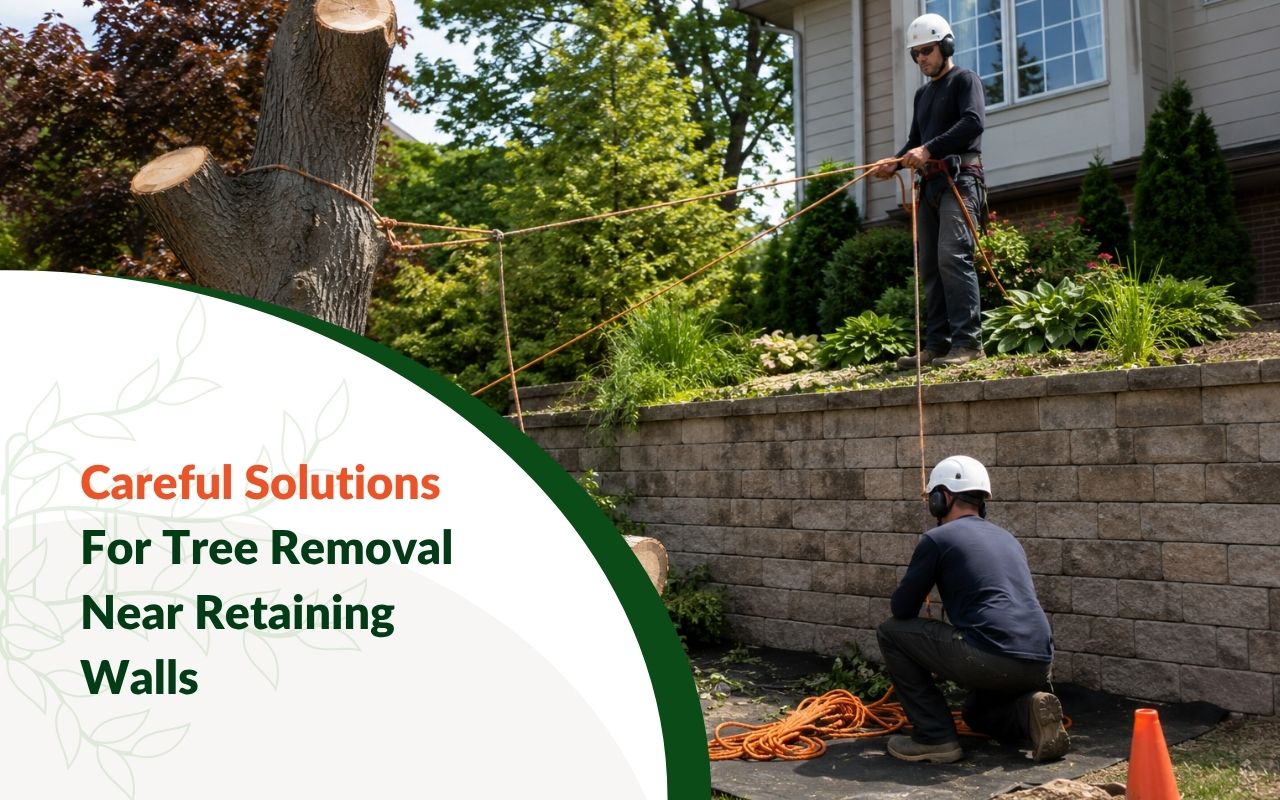
Removing trees near retaining walls often requires slow and controlled work. Instead of dropping large sections, trained crews may lower pieces one at a time. This helps reduce impact near the wall and surrounding landscape.
- Section cutting to manage weight and direction
- Rope support when space is tight or uneven
- Careful branch lowering near walls, fences, and plants
- Cleanup that keeps the work area safer afterward
For more details about our careful process, you can review our tree removal services. As a result, you can better understand how we protect nearby areas during removal.
Local Tree Removal Support For Easley Homeowners
Homeowners searching for tree removal in Easley, SC often deal with slopes, tight yards, older walls, and mixed soil. Because of this, local experience can help the removal plan fit the property instead of using one basic method.
With Molina’s Tree Service & Landscaping LLC, you get guidance from a team that understands nearby landscapes and common tree concerns. Also, our local tree removal guidance can help nearby property owners compare service needs.
Smart Choices Before Damage Becomes More Serious
Tree removal near retaining walls may be safer when warning signs appear early. Waiting until a wall is badly cracked or a tree is weak can make the work harder and may increase the risk of yard damage.
- Check walls after heavy rain or strong wind
- Watch for soil gaps, leaning, or new cracks
- Keep drainage clear so water does not build pressure
- Avoid planting large trees close to retaining walls
Also, avoid unsafe shortcuts. Our guide about DIY tree removal risks explains why cutting trees near structures can be dangerous without proper tools and training.
Frequently Asked Questions
Can roots damage a retaining wall over time?
Yes, roots can add pressure behind or under a retaining wall. Over time, that pressure may lead to cracks, leaning, or soil movement, especially when drainage is poor.
Is removing trees near retaining walls always needed?
No, removal is not always the first answer. Sometimes trimming or monitoring may help. However, removal may be safer when roots, wall damage, or tree weakness create risk.
What makes this type of removal more difficult?
The wall, slope, roots, and nearby plants all limit working space. Therefore, Tree Removal Near Retaining Walls must be planned to control weight, direction, and ground movement.
Should I check permits before removing a tree?
In some areas, rules may apply before tree cutting. Our tree cutting permit guide can help you understand what to review before scheduling work.
When should I call a professional tree service?
Call when you notice leaning walls, exposed roots, cracks, hollow trunks, or storm damage. These signs can mean the tree, soil, or wall needs a safer plan.
Protect Your Yard With A Careful Next Step
Tree removal near retaining walls is about more than cutting a tree. It also protects soil, wall strength, nearby plants, and the safety of your outdoor space after the tree is gone.
When customers contact Molina’s Tree Service & Landscaping LLC, we explain the safest next step in clear terms. To discuss your yard, stop by our contact page and share what you are seeing near the wall.