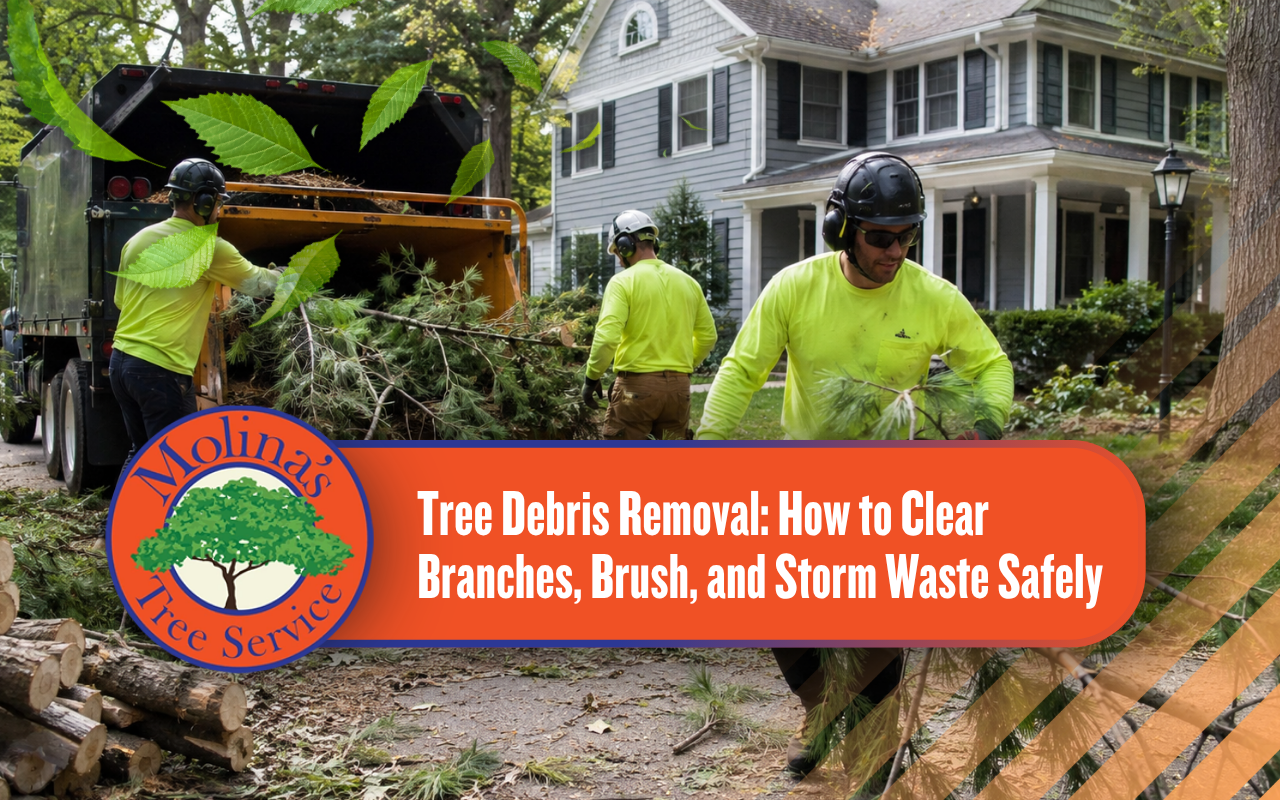
Tree debris can take over a yard quickly after pruning, removal, or a severe storm. Large limbs, brush piles, broken branches, and scattered leaves can block driveways, hide hazards, and make lawn recovery harder.
Schedule complete debris cleanup with an insured team backed by 12+ years of experience and 24/7 emergency availability.
Sort Debris Before Moving It
Not every pile should be handled the same way. Small brush can often be chipped, while large trunk sections may require equipment or cutting before they can be moved.
- Small branches and leafy brush
- Large limbs
- Trunk rounds and logs
- Root balls
- Storm-damaged fencing mixed with debris
- Leaves and small twigs
Storm Debris Can Hide Hazards
A branch pile may conceal sharp broken wood, nails from damaged structures, unstable limbs, or sections under tension. Do not climb onto piles created by fallen trees.
Our review storm cleanup steps guide explains why safety and documentation should come before fast cleanup.
Clear Access Before Hauling
Plan safer brush removal before moving large piles through narrow gates, shared driveways, or landscaped areas. A good route can reduce damage to fences, turf, irrigation, and neighboring property.
When equipment access is limited, debris may need to be cut smaller and carried or moved in stages.
Debris Type and Best Handling Method
| Debris Type | Common Method | Homeowner Consideration |
|---|---|---|
| Leafy branches | Chipping | Fast volume reduction |
| Large limbs | Cut and haul | Heavy manual handling |
| Logs | Haul or leave cut | Decide whether wood stays |
| Stumps | Grinding | Separate service |
| Mixed storm waste | Sort before removal | May include non-tree debris |
Brush Removal Is More Than Appearance
Large brush piles can block drainage, create trip hazards, hide damaged landscape features, and interfere with mowing or repairs.
Prompt removal also makes it easier to inspect the yard for remaining broken limbs, stump holes, damaged fencing, or other hidden storm issues.
Can Tree Waste Be Reused?
Some clean woody material can be chipped for mulch or cut into usable firewood where appropriate. Diseased, invasive, or contaminated material may need different handling.
Read our explore tree waste reuse guide for practical disposal ideas.
Expert Tip: Decide before cleanup whether you want chips or logs left on site. Changing the plan after material has already been loaded can add time and confusion.
Removal Projects Should Include Cleanup Scope
If tree removal is planned, ask whether the estimate includes hauling all brush and trunk sections. A tree can be safely down but still leave a large cleanup project behind.
Our review full removal services page explains how tree cutting and cleanup can be coordinated.
Emergency Cleanup After High Winds
When a storm leaves trees across a driveway or near the home, clear only what is safe. Do not cut limbs supporting a fallen trunk or work beneath partially suspended branches.
Our team at Molina’s Tree Service & Landscaping LLC is available 24/7 for urgent storm hazards.
Finish Storm Cleanup in Stages
After a major storm, the safest sequence may be hazard removal first, access restoration second, and detailed yard cleanup last. That order keeps crews focused on unstable limbs and blocked areas before spending time on smaller twigs and leaves.
Homeowners can also document damaged fencing, landscape features, or structures before everything is moved. If an insurance claim may be involved, photos taken before final haul-away can help preserve a record of what happened.
Protect the Yard During Cleanup
Heavy equipment can rut soft ground, especially after rain. Access plans may need to change when soil is saturated.
Ask how the crew will reach the debris and whether mats, smaller equipment, or alternate routes may be appropriate. Careful access planning matters.
Frequently Ask Question
Can tree branches be chipped on site?
Often, yes. Chipping is a common way to reduce the volume of smaller limbs and brush.
Can I keep the wood after tree removal?
Usually this can be discussed before work begins. Ask how logs will be cut and where they will be stacked.
Is stump grinding part of debris removal?
Not automatically. Stump grinding is often a separate service and should be included specifically in the estimate.
Should I clean storm debris myself?
Small loose branches may be manageable, but avoid suspended limbs, heavy logs, utility hazards, and unstable trees.
Do you offer emergency storm cleanup?
Yes. Our insured team is available 24/7 for emergency tree and debris hazards.
Schedule complete debris removal with our insured team for organized residential cleanup after trimming, removal, or storm damage.
Finish With a Final Walkthrough
After debris is removed, inspect the work area for small branches, stump holes, disturbed soil, or remaining hazards. Confirm what material was intentionally left behind.
Book full yard cleanup with our team at Molina’s Tree Service & Landscaping LLC for insured residential service, 12+ years of experience, and 24/7 emergency help.