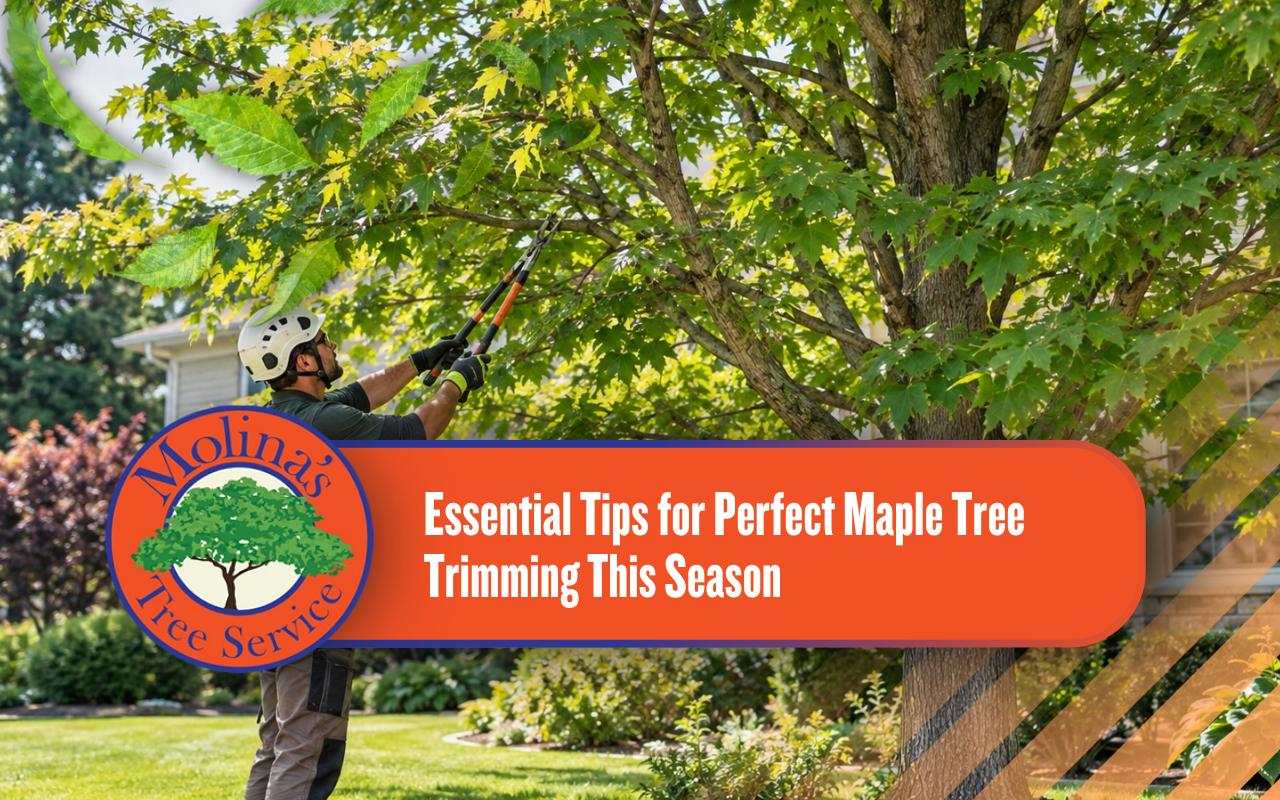
Healthy maples need careful attention as their branches grow, cross, or become damaged. Maple Tree Trimming can improve structure, support healthy growth, and keep the canopy looking balanced. Our team at Molina’s Tree Service & Landscaping LLC understands how thoughtful cuts can protect the natural form of each tree.
Knowing what to remove and when to make each cut can prevent unnecessary stress. Homeowners who want professional support can explore our tree trimming service for help with routine care and more complex branch concerns.
Why Maple Tree Trimming Supports Healthy Growth
Regular Maple Tree Trimming removes dead, damaged, crowded, or poorly placed branches that may affect the canopy. Selective cuts can improve light and airflow while helping the tree maintain a stronger structure. Proper care also makes it easier to identify branches that may become weak or cause problems as the tree continues growing.
Maple tree pruning should focus on the tree’s condition instead of simply removing branches for appearance. A careful approach keeps more healthy growth in place and avoids unnecessary cuts. For a closer look at structural care, review our guide to tree pruning for health and structure.
Tools That Make Trimming Safer and Cleaner
The right equipment helps create cleaner cuts and makes branch removal easier to control. At Molina’s Tree Service & Landscaping LLC, we know that tool choice should match the size, height, and condition of the branch instead of using one tool for every task.
- Bypass pruners work well for small branches and detailed cuts.
- Loppers provide more leverage for branches that are too thick for hand pruners.
- A pruning saw can handle larger limbs that require controlled cutting.
- Gloves and eye protection help reduce common trimming risks.
- Clean cutting tools help reduce the chance of spreading problems between branches.
When Should You Trim a Maple Tree?
Timing matters because seasonal growth affects how a maple responds to pruning. Maple Tree Trimming is often easier when the branch structure is clearly visible and the tree is not covered by dense foliage. Light removal of dead or damaged branches may also be needed when those problems become noticeable.
Heavy cutting should not be treated as routine maintenance. The best timing can depend on tree condition, branch size, and the type of work needed. Our seasonal tree trimming guide explains how seasonal changes can influence planning.
Signs That Maple Branches Need Attention
Regular inspection can reveal problems before the canopy becomes difficult to manage. Look at the way branches connect, grow, and interact with nearby limbs. Some concerns are easy to see from the ground, while larger or higher branches may need closer professional evaluation.
- Dead branches that no longer produce healthy leaves.
- Broken or cracked limbs that may continue weakening.
- Branches that cross and rub against each other.
- Growth that points inward and creates a crowded canopy.
- Unusual bark damage, discoloration, or visible signs of decline.
When you choose Molina’s Tree Service & Landscaping LLC, we can focus on the branches that need attention while keeping healthy growth in place. This selective approach can support better structure without removing more of the canopy than necessary.
Shaping the Canopy Without Over-Pruning
Good canopy shaping should work with the tree’s natural form. Maple tree pruning can remove crossing, inward-growing, or poorly positioned branches while preserving healthy limbs. The goal is not to force every maple into the same shape but to create a balanced structure that fits the individual tree.
Overgrown trees may need gradual care instead of major branch removal in one session. Large reductions can place unnecessary stress on a tree and may encourage weak new growth. Our team at Molina’s Tree Service & Landscaping LLC can consider branch size, canopy density, and overall structure before deciding how much work is appropriate.
Caring for Maples After Pruning Work
Care should continue after the final cut. A recently pruned maple benefits from normal monitoring so you can notice changes in leaf growth, branch condition, or visible damage. Avoid unnecessary treatments when the tree does not show a clear need for them.
- Check new growth and major branches during the following weeks.
- Maintain suitable soil moisture based on weather and site conditions.
- Keep mulch away from direct contact with the trunk.
- Watch pruning areas for cracking, unusual discoloration, or decline.
- Schedule future maintenance based on growth rather than a fixed cutting routine.
Consistent observation can make future maple tree pruning more focused. Small maintenance needs are often easier to manage before branches become crowded, damaged, or difficult to reach.
Frequently Asked Questions
How often should a maple tree be trimmed?
There is no single schedule that fits every maple. Growth rate, branch condition, tree age, and location can all affect how often trimming is needed. Regular inspections can help you decide when another tree trimming service is useful instead of pruning simply because a certain amount of time has passed.
Can trimming help reduce disease concerns?
Removing dead or affected branches can be part of good tree care when cuts are made correctly. Clean tools and careful branch selection are also important. Our guide on how pruning can help prevent disease explains the role thoughtful pruning can play.
What if my maple tree has become too large?
An overgrown maple may need gradual size management rather than aggressive cutting. Crown reduction can sometimes help manage selected branches while keeping the tree’s natural structure in mind. Review our tree crown reduction techniques for more information about this approach.
Is maple tree pruning different from simple branch removal?
Yes. Maple tree pruning involves choosing branches based on health, structure, spacing, and future growth. Removing branches without considering those factors can leave the canopy unbalanced. Our tree pruning guide explains how selective cuts support healthier structure.
Should homeowners trim high or heavy maple branches themselves?
High, heavy, damaged, or difficult-to-reach branches can create serious safety concerns. In those situations, professional equipment and controlled cutting methods may be the safer choice. With Molina’s Tree Service & Landscaping LLC, you can discuss the tree’s condition and the type of trimming it may need before work begins.
Plan Better Care for Your Maple Trees
Thoughtful Maple Tree Trimming can keep your maple looking balanced while supporting healthy branch structure. The best results come from careful timing, clean cuts, regular inspection, and avoiding unnecessary branch removal. Each tree should be evaluated based on its current growth and condition.
If your maple has crowded, damaged, overgrown, or hard-to-reach branches, contact our team about your maple tree. At Molina’s Tree Service & Landscaping LLC, we can help you plan the next step based on the care your tree needs.