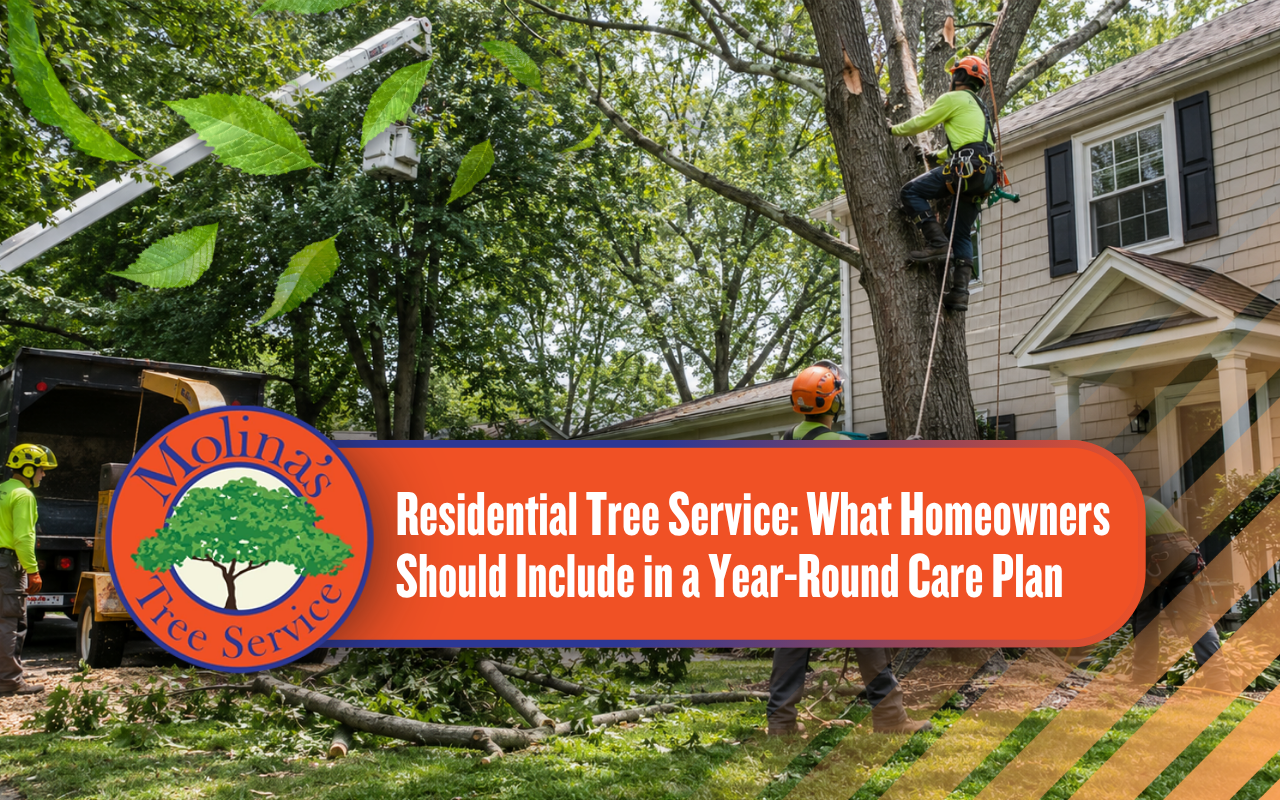
Residential tree service works best when it is planned before a tree becomes an emergency. Routine inspections, selective trimming, hazardous-limb removal, stump work, and timely cleanup can keep a yard safer and easier to maintain.
Explore residential tree services with an insured team bringing 12+ years of experience to home tree care.
Begin With a Property Walkthrough
Look at trees from several angles. Check whether branches are rubbing the roof, blocking driveway sightlines, leaning over play areas, or showing recent storm damage.
Also look at the ground. Cracks in soil, exposed roots, fungal growth near the trunk, or sudden leaning can deserve closer attention.
Separate Routine Maintenance From Hazards
Routine trimming can often be scheduled around species and season. Hanging limbs, split trunks, uprooted trees, and branches on structures require faster action.
Our review residential trimming services page explains common pruning and clearance needs.
Build a Service Plan Around Risk
Plan regular tree maintenance by prioritizing defects above roofs, driveways, patios, play areas, and other occupied spaces. The same branch may deserve different urgency depending on what is beneath it.
That risk-based approach helps homeowners spend maintenance dollars where they have the most practical value.
Residential Tree Service Planning Guide
| Condition | Likely Service | Priority |
|---|---|---|
| Dead branches | Selective trimming | Depends on location |
| Tree leaning after storm | Emergency evaluation | High |
| Healthy tree near roof | Clearance pruning | Planned |
| Old stump | Stump grinding | Convenience/project based |
| Dead standing tree | Removal evaluation | Often high |
| Brush accumulation | Debris cleanup | Maintenance |
Tree Removal Should Have a Clear Reason
Removal may be appropriate when a tree is dead, severely damaged, unstable, conflicting with construction, or creating a risk that cannot be managed reasonably through pruning.
See our review tree removal services page for common project considerations.
Trimming Should Solve Specific Problems
Good trimming is selective. It can improve clearance, remove deadwood, reduce rubbing branches, and address structural conflicts without stripping the canopy.
Expert Tip: Keep a simple photo record of major trees each year. Changes in lean, canopy density, dead branches, or trunk condition are easier to notice when you can compare seasons.
Do Not Forget the Stump
After removal, the stump may interfere with mowing, replanting, walkways, or future landscaping. Grinding can reduce the stump below grade and make the area easier to reuse.
Our explore stump grinding options page covers the next step after removal.
Storm Planning Belongs in Residential Care
Before severe weather, look for hanging deadwood, cracked unions, large branches over structures, and trees that have shifted at the roots.
After storms, stay away from power lines and suspended limbs. Our team at Molina’s Tree Service & Landscaping LLC is available 24/7 for emergency tree hazards.
Coordinate Tree Care With Future Yard Plans
If you expect to add a patio, fence, garden bed, driveway extension, or other landscape feature, include that information during the tree-service walkthrough. Future construction can affect which roots, branches, or stumps become conflicts.
Planning services together can also reduce duplicated cleanup. For example, removing a declining tree and grinding its stump before new landscaping begins is often easier than working around a newly finished planting bed later.
Raleigh Permit and Ownership Questions
Tree work near sidewalks and streets may involve public right-of-way or City trees. Raleigh requires a Tree Impact Permit before work affecting City trees.
When ownership is unclear, confirm the property line or contact the appropriate local department before cutting.
Choose Service Based on the Whole Yard
A residential tree plan should consider tree health, structure, nearby targets, future landscaping, access, debris handling, and homeowner priorities. Looking at the whole property can reduce repeat visits and conflicting work.
Residential Tree Service FAQs
How often should residential trees be inspected?
There is no fixed schedule for every tree, but seasonal visual checks and inspections after major storms are practical.
When should a tree be removed?
Removal may be considered when a tree is dead, unstable, severely damaged, or creates risk that cannot be managed reasonably.
Is trimming always good for a tree?
No. Trimming should have a clear purpose. Excessive or poorly placed cuts can create stress and weak regrowth.
Should I grind the stump after removal?
It depends on future use of the area. Grinding is helpful when the stump interferes with mowing, planting, or construction.
Do you provide emergency residential tree service?
Yes. Our insured team is available 24/7 for urgent tree and storm hazards.
Plan year round care with our insured team for trimming, removal, stump grinding, cleanup, and 24/7 emergency tree needs.
Keep Home Tree Care Proactive
Tree maintenance does not have to be complicated. Inspect regularly, respond to storm damage, trim with a purpose, remove true hazards, and plan stump and debris work as part of the same property strategy.
Schedule complete residential service with our team at Molina’s Tree Service & Landscaping LLC for insured tree care, 12+ years of experience, and 24/7 emergency availability.