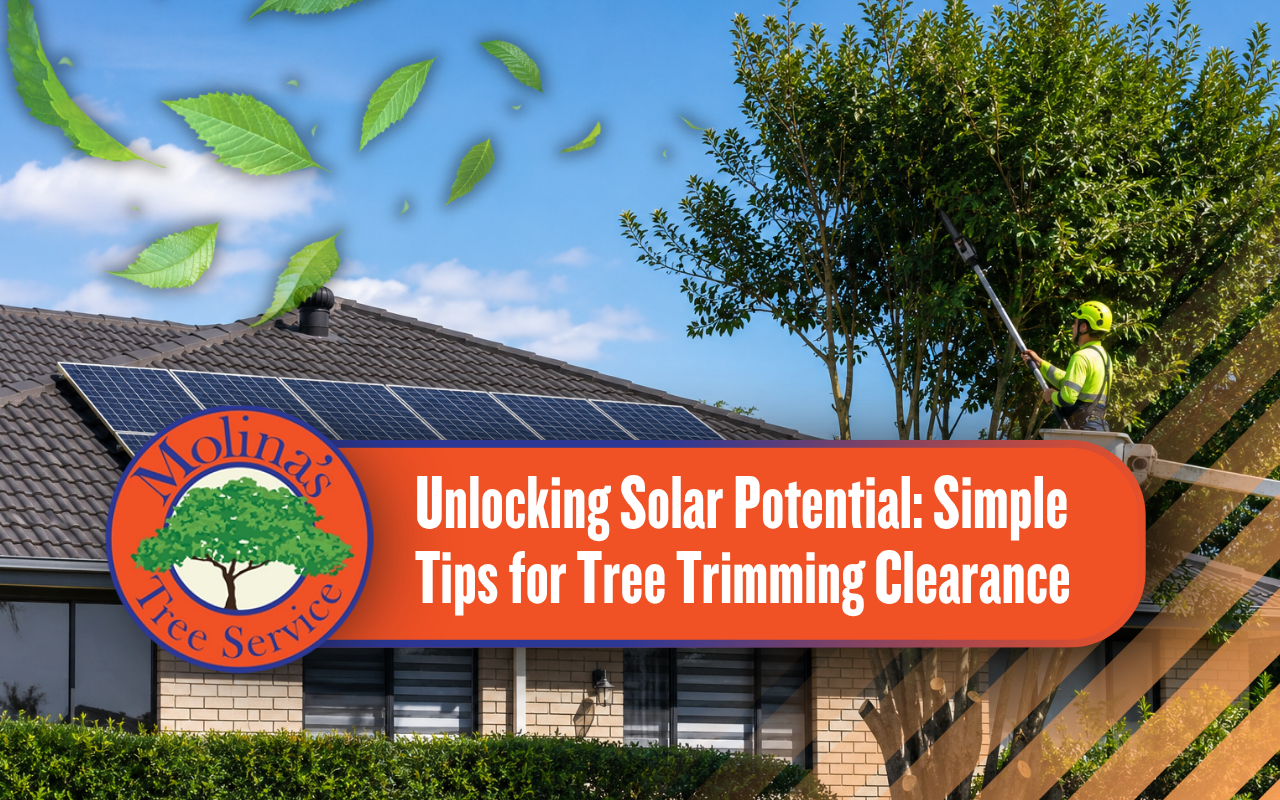
Tree Trimming for Solar Panel Clearance can improve the amount of direct sunlight reaching a solar system. The goal is not to remove every nearby branch. Careful pruning reduces harmful shade while preserving the structure, health, and natural value of each tree.
At Molina’s Tree Service & Landscaping LLC, we take a balanced approach to sunlight management. Our professional tree trimming services focus on practical clearance, healthy growth, and safe working methods around homes and solar equipment.
How Does Tree Shade Affect Solar Output?
Solar panels need open access to sunlight during the most productive parts of the day. Branches, dense foliage, and seasonal growth can create moving shadows across the array. Even when only part of the system is shaded, overall energy production may become less consistent.
Shade patterns also change throughout the year. The sun sits lower during some seasons, while leaves become thicker during others. A branch that causes little trouble today may block more light after new growth appears. Regular observation helps property owners identify these changes before they become larger problems.
Improving sun exposure without harming trees requires more than cutting the closest limbs. The tree’s form, growth direction, condition, and distance from the panels must all be considered. This approach supports better solar access without creating weak branches or an unbalanced canopy.
Planning Tree Trimming for Better Solar Clearance
Before Tree Trimming for Solar Panel Clearance begins, the property should be reviewed from several angles. We consider where the sun moves, which branches create shade, and how each proposed cut may affect future growth. This planning helps avoid unnecessary pruning.
Our team at Molina’s Tree Service & Landscaping LLC looks for targeted solutions instead of removing large sections of the canopy. In many cases, selective cuts can open a useful path for sunlight while keeping most of the tree intact. This protects shade, habitat, appearance, and long-term tree stability.
The best plan may include crown thinning, crown reduction, or selective branch removal. The right method depends on the tree species, branch structure, panel location, and amount of clearance needed. A professional assessment can help determine which option offers the best balance.
Assessing Daily and Seasonal Shade Patterns
Good pruning decisions begin with careful observation. Shade should be checked at different times because a branch may block the panels in the morning but have little effect later. Seasonal changes should also be considered before deciding which limbs need attention.
- Observe the panels during morning, midday, and afternoon hours.
- Note which branches create the longest or darkest shadows.
- Check whether shade comes from one limb or a dense group of branches.
- Consider how new leaves and branch growth may change future exposure.
- Review solar monitoring data for repeated drops during clear weather.
Taking photos from the same location can make shade changes easier to compare. Solar system monitoring tools may also show when production falls. These details help connect visible shade with actual performance and support more focused pruning decisions.
Crown Thinning and Reduction Methods That Protect Trees
Trimming trees that shade solar panels does not always require cutting back the entire crown. Selective pruning can reduce canopy density or shorten specific branches while maintaining the tree’s natural form. The method should match the type and location of the shade.
- Crown thinning removes selected interior branches to let more light pass through.
- Crown reduction shortens overextended limbs while preserving balanced growth.
- Deadwood removal eliminates weak branches that may fall near the panels.
- Directional pruning guides future growth away from the solar array.
- Selective clearance removes only the branches that directly affect sunlight access.
These methods are different from topping, which removes large branch sections without respecting healthy growth points. Excessive cutting can cause stress, weak sprouts, decay, and an unnatural appearance. Controlled pruning is a safer way to improve exposure while supporting the tree’s future health.
Safe Clearance Around Panels and Nearby Structures
Tree Trimming for Solar Panel Clearance requires extra care because branches may be close to roofs, electrical equipment, gutters, or fragile panels. Cut limbs must be controlled so they do not strike the array or damage the surrounding property.
With Molina’s Tree Service & Landscaping LLC, you receive a tree-focused approach that also considers nearby structures. We review branch weight, direction, attachment points, and available drop space before work starts. Larger limbs may need to be lowered in smaller sections rather than allowed to fall freely.
Clearance should also account for future growth. Cutting a branch just beyond the panel edge may provide only temporary relief. Strategic pruning creates useful space while avoiding excessive removal. The goal is steady sunlight access, not a harsh gap in the canopy.
Professional Pruning Practices for Long-Term Results
A professional tree trimming service can manage difficult branches while reducing risk to the tree, roof, and solar equipment. Proper cuts are made near suitable growth points so the tree can respond naturally. Clean tools and controlled work methods also support healthier results.
- Inspect the tree for weak, dead, crossing, or damaged branches.
- Identify the limbs that create meaningful shade on the panels.
- Select pruning points that preserve healthy branch structure.
- Remove branches in controlled sections when structures are nearby.
- Review the remaining canopy for balance and future growth direction.
Professional pruning is especially important when branches are large, high, difficult to reach, or close to utility lines. Property owners should not climb or work near electrical hazards without suitable training and equipment. Safe clearance depends on both correct pruning and careful job-site control.
Frequently Asked Questions
When is the best time to trim trees near solar panels?
The right time depends on the tree species, its condition, and the urgency of the shade problem. Some pruning can be completed during active growth, while other work may be better during a dormant period. Our guide to tree trimming for improved sunlight exposure explains how targeted work can support better light access.
Is crown thinning better than removing large branches?
Crown thinning may be useful when dense interior growth creates scattered shade. Removing a large branch may be necessary when one limb blocks a major part of the array. The decision should protect the tree’s structure. Review the differences between tree thinning and tree topping before choosing a method.
Can crown reduction improve solar panel exposure?
Yes, crown reduction can shorten selected limbs that extend over or toward a solar array. Correct reduction cuts maintain natural growth points and avoid leaving harmful stubs. Our overview of tree crown reduction techniques provides more information about this controlled approach.
Will pruning harm a healthy tree?
Correct pruning should remove only what is needed and preserve the tree’s natural structure. Problems often occur when too much foliage is removed or cuts are made in poor locations. At Molina’s Tree Service & Landscaping LLC, we focus on improving sun exposure without harming trees through measured, selective pruning.
How often should solar panel clearance be checked?
Clearance should be reviewed regularly because branches continue to grow and shade patterns change with the seasons. A visual check during different times of day can reveal new problems. Solar monitoring data may also show whether shade has started to reduce energy production again.
Improve Solar Exposure While Protecting Your Trees
Tree Trimming for Solar Panel Clearance should support both clean energy goals and a healthy landscape. Strategic cuts can reduce shade, guide future growth, and maintain the benefits that mature trees bring to a property. Regular monitoring helps keep the results effective over time.
When you choose Molina’s Tree Service & Landscaping LLC, we develop a practical trimming plan around your trees, solar panels, and property layout. Use our contact page to request a solar clearance assessment and discuss a responsible approach to improving sunlight access.