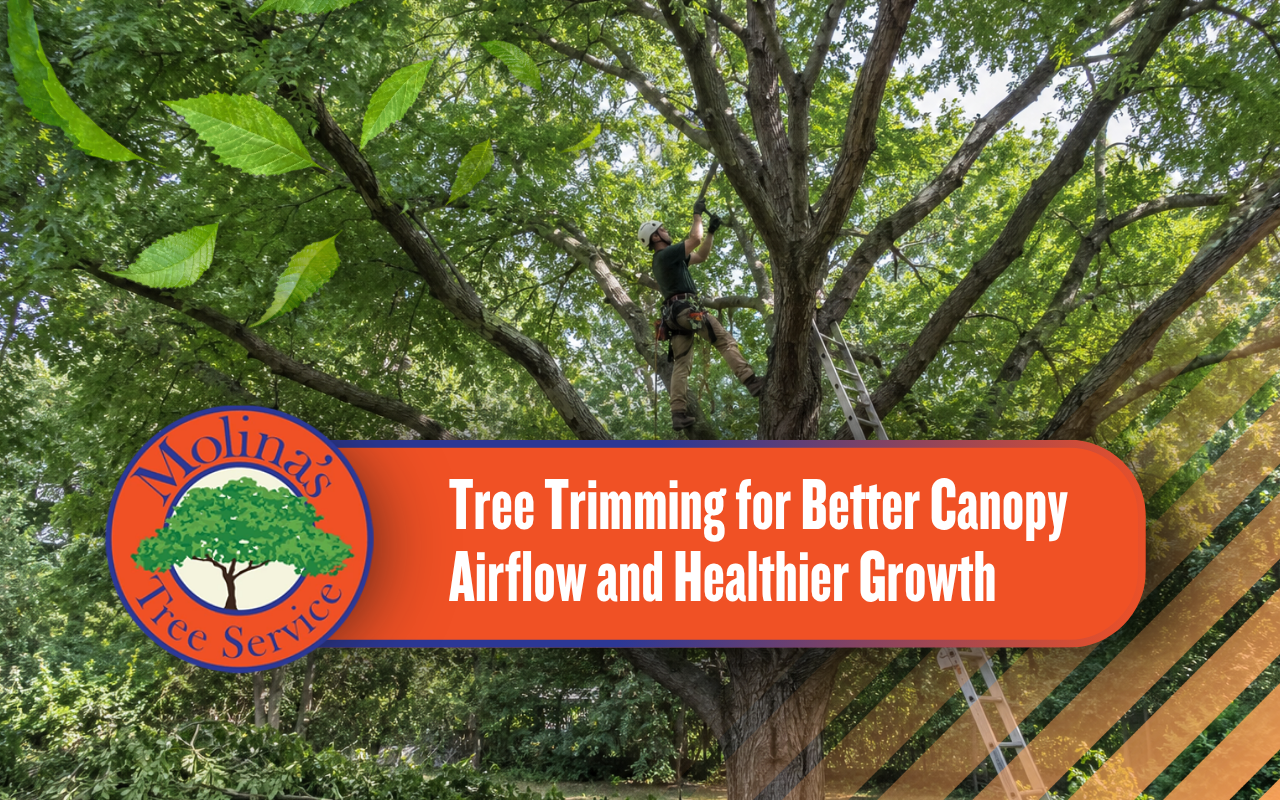
Tree trimming for better canopy airflow helps sunlight and fresh air move through crowded branches. As a result, leaves dry faster after rain, inner growth gets more light, and weak limbs face less pressure during windy weather.
At Molina’s Tree Service & Landscaping LLC, we trim with care so each tree keeps a natural shape. Our goal is simple: create more space without removing too much growth or causing stress.
Open Canopies Support Stronger Tree Health Naturally
Good airflow lowers moisture inside the crown. Therefore, leaves and branches are less likely to stay damp for long periods. This simple change can reduce mold, fungus, and other problems that often develop in dark, crowded areas.
It also explains how canopy airflow improves tree health. More light reaches inner leaves, which helps the tree make food and send energy to its roots. Stronger roots support better growth, balance, and long-term strength.
Common Warning Signs Of An Overcrowded Tree Canopy
Dense growth can look healthy at first. However, hidden problems may be forming inside the canopy. Knowing the signs a tree canopy is too dense makes it easier to act before damage spreads.
- Leaves remain wet long after rain stops.
- Inner branches look weak, thin, or bare.
- Moss, mildew, or fungus appears in shaded areas.
- Crossing limbs rub together and damage bark.
- Insects gather where air and light are limited.
How Strategic Trimming Improves Airflow And Tree Balance
Tree trimming for better canopy airflow removes dead, crossing, and crowded branches. This opens clear paths for wind and light while keeping the tree’s shape balanced. In turn, the canopy dries faster and carries less extra weight.
Our team uses careful cuts instead of stripping the crown. For a closer look at our approach, visit our professional trimming options and see how planned care can support safer growth.
Best Seasons For Safe And Effective Tree Trimming
Many deciduous trees respond well to trimming in late winter or early spring. During this time, the branch pattern is easier to see, and tree trimming for better canopy airflow can prepare the tree for fresh growth as warmer weather returns.
Evergreens may need lighter work in late spring or early summer. Still, timing depends on the tree, local weather, and its condition. At Molina’s Tree Service & Landscaping LLC, we inspect these details before choosing the safest plan.
Practical Trimming Techniques That Protect Natural Tree Structure
Proper cuts matter because poor trimming can leave wounds, weak regrowth, or an uneven crown. A careful tree trimming service should remove only what is needed and protect the branch collar near the trunk.
- Remove dead, damaged, and rubbing limbs first.
- Thin crowded areas without creating large empty gaps.
- Keep healthy branches that support natural balance.
- Avoid topping, which can cause weak new shoots.
Our guide to thinning compared with topping explains why selective work is safer. You can also review safe crown reduction methods for trees with heavy outer growth.
Safety Steps Before Cutting High Or Heavy Branches
Tree work can become dangerous when branches are large, high, or near buildings and power lines. Therefore, tree trimming for better canopy airflow requires keeping people, pets, vehicles, and outdoor items clear before any cutting begins.
- Use sharp, clean tools for smooth cuts.
- Wear gloves, eye protection, and a hard hat.
- Never stand below a branch being removed.
- Call trained professionals for risky or heavy limbs.
At Molina’s Tree Service & Landscaping LLC, we plan each cut and control the work area. This careful process helps protect your tree, home, and surrounding landscape.
Frequently Asked Questions
How often should a dense canopy be trimmed?
Most trees need inspection every year, but trimming frequency can vary. Growth rate, species, storm damage, and past care all affect the right schedule.
Can trimming reduce the risk of tree disease?
Yes. Better airflow helps leaves dry faster and may reduce conditions that support fungus. Read more about pruning for disease prevention.
Does thinning make a tree weaker in storms?
Careful thinning can reduce weight and wind pressure. However, removing too many branches may cause stress, so balanced work is important.
What branches should be removed first?
Dead, broken, diseased, crossing, and poorly attached branches usually come first. Healthy support limbs should remain whenever possible.
Can every tree benefit from canopy thinning?
No. Some trees already have open crowns or may be under stress. A professional check helps decide whether trimming is useful.
Build Long Term Strength With Professional Tree Care
Tree trimming for better canopy airflow supports cleaner foliage, stronger branches, and healthier growth. It also helps the crown handle light, moisture, and wind with less strain through each season.
At Molina’s Tree Service & Landscaping LLC, we focus on safe cuts and natural structure. Review our guide to pruning for health and structure, then use our tree canopy care contact page to discuss tree trimming for better canopy airflow with our team.