
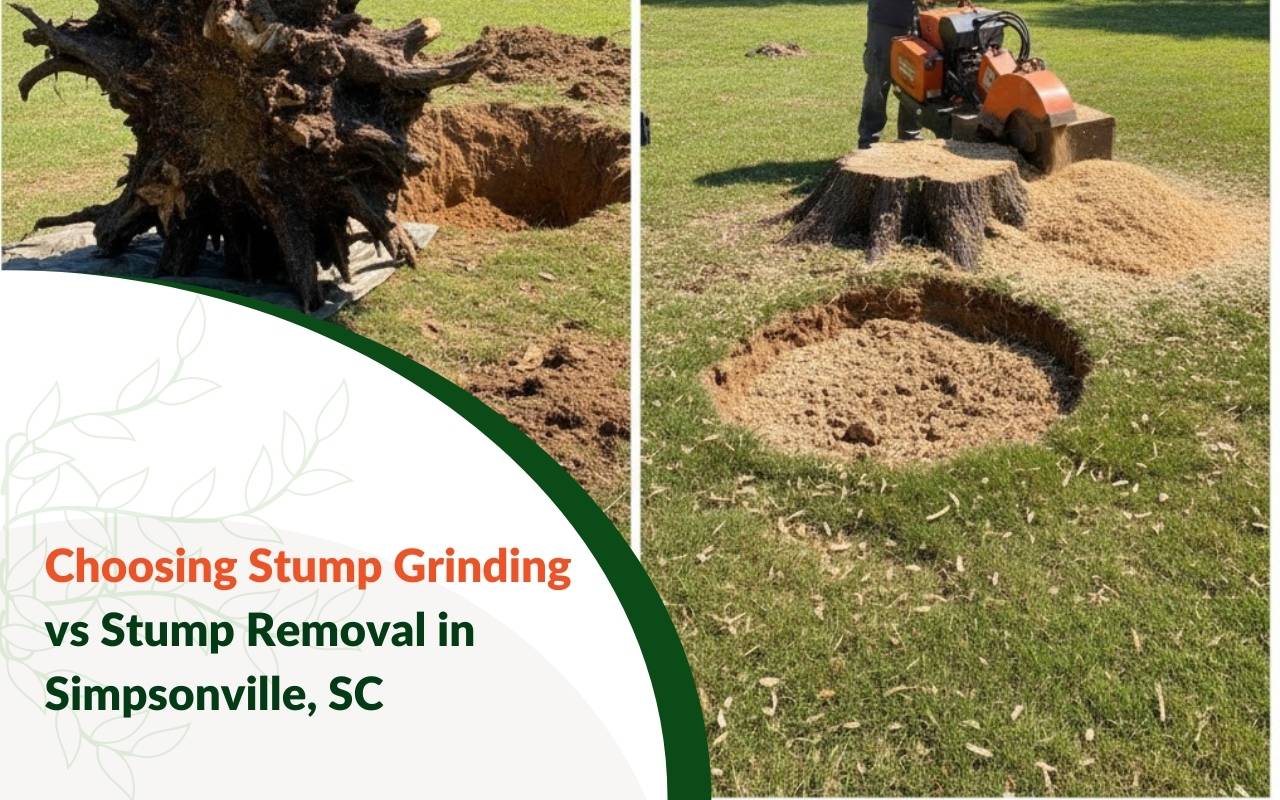
Stump Grinding vs Stump Removal in Simpsonville, SC is a choice many homeowners face after tree work. That lonely stump looks ugly, gets in the way, and raises safety concerns. After any tree removal in Simpsonville, SC, the next decision is what to do with the stump.
Deciding between grinding and full removal can feel harder than the original project. Grinding leaves a flat surface, while removal pulls out the roots. This decision affects how your yard looks, drains, and grows. It also influences pests, including termites, and the future cost of landscaping projects.
The Importance of Addressing Tree Stumps in Your Yard
Old stumps are more than an eyesore. They create tripping hazards for children, guests, and even pets. They also slow down mowing and trimming, because you must steer around the stump and its roots. Over time, the wood begins to rot and change the soil around it.
Rotting wood helps explain why leaving stumps attracts termites and other pests. These insects may move from the stump toward decks, fences, or structural wood. Understanding that Stump Grinding vs Stump Removal in Simpsonville, SC gives you two clear paths helps you choose protection for your home and plants.
Stumps also invite fungal growth. Mushrooms and other fungi can spread from the decaying stump into healthy shrubs, flowers, or turf. By acting early, you protect your garden’s health and keep the yard easy to maintain. Quick action avoids long-term problems that cost more to solve later.
Understanding the Stump Grinding Process
The stump grinding process uses a machine with a rotating cutting wheel. This wheel slowly chips away the wood. The operator grinds the stump several inches below the soil line. The machine turns the stump into small wood chips that you can leave as mulch or remove, depending on your plan.
Knowing how long stump grinding takes helps with scheduling. Many average stumps take between fifteen and forty-five minutes, depending on size and roots. A professional stump grinding service works efficiently and manages cleanup. With the right equipment and training, even large stumps disappear in less than an afternoon.
Because grinding focuses on the stump, surrounding turf and beds usually stay intact. The machine is targeted and precise. Therefore, your lawn experiences less disruption compared to excavation. This makes grinding a good choice in tight spaces, near patios, fences, or established planting beds.
Pros and Cons of Stump Grinding
Looking at the pros and cons of stump grinding helps you see why many homeowners prefer this method. Grinding is usually quicker, less messy, and easier on the lawn. It also avoids digging large holes. The remaining wood chips give you an instant mulch source for paths or beds.
- Fast completion with minimal disruption to nearby landscaping.
- Smaller hole to fill compared to full excavation.
- Mulch available for garden beds or to cover the area.
- Less risk of damaging nearby utilities or hardscape features.
However, stump grinding has limitations you should weigh carefully. Roots remain underground, and they decompose slowly. This decay can create small voids or invite insects. Some trees may send up new shoots that need removal.
- Roots can sprout, especially in vigorous species.
- Underground decay may attract pests if left unmanaged.
- Area may need extra soil if chips settle over time.
- Not ideal if you plan deep foundations or major grading.
Factors to Consider Before Choosing Stump Grinding
Several site details influence whether grinding is the best answer. Stump diameter, tree species, and root spread affect how easily the machine works. Hardwoods and very wide trunks may require more time and more passes. Soft, sandy soil is easier to work in than compacted clay.
- Size and type of tree that produced the stump.
- Distance from structures, fences, or irrigation lines.
- Space for the grinder to reach the stump safely.
- Current and future plans for planting or hardscapes.
Access is especially important when you hire a professional stump grinding service. Operators must move the machine through gates and along paths. Steep slopes or wet soil can create safety risks. Additionally, local rules may control equipment noise, so checking neighborhood guidelines before scheduling avoids frustration.
After grinding, you should decide what to do with the chips and the shallow hole. You may keep chips as mulch or remove them. Then you can fill the space with topsoil and seed, sod, or plantings. A little planning now leads to smoother landscaping later.
Exploring Stump Removal Methods
Full stump removal focuses on pulling out the stump and as many major roots as possible. Manual removal uses shovels, mattocks, and saws to cut roots. While this method suits small stumps in loose soil, it is hard work. It also takes time and patience.
Chemical methods use stump-dissolving products that speed natural decay. They reduce the physical labor, yet they require waiting weeks or months. Mechanical removal usually relies on a backhoe or similar machine. This option is faster and clears most roots, but it disturbs more soil and surrounding turf.
Understanding how stump removal affects landscaping is essential before you begin. Complete excavation leaves a sizable hole that needs backfilling and leveling. Nearby plants, paths, or edging may shift as soil settles. Planning your next project right away, such as a patio or new bed, helps you use that open space wisely.
Pros and Cons of Stump Removal
Stump removal offers clear benefits that appeal to many homeowners. By pulling the stump and roots, you greatly reduce chances of regrowth. There is no buried wood to rot slowly underground. The cleared space gives you more freedom for future projects, including new trees, lawns, or hardscapes.
- No stump or major roots left to sprout again.
- Open, flexible space for patios, driveways, or garden beds.
- Less concern about pests feeding on buried wood.
- Simpler digging for future posts, pipes, or plantings.
There are also important drawbacks with full removal. Heavy equipment can tear up grass, compact soil, and damage nearby beds. Large holes require careful backfilling and compaction to avoid future sink spots. Manual digging is tiring and slow, especially for older or larger stumps.
- Greater disruption to lawns and surrounding landscapes.
- More time spent restoring soil, grading, and reseeding.
- Higher physical effort if you rely on hand tools.
- Possible need for permits or careful utility locating.
Factors to Consider Before Choosing Stump Removal
When you consider stump removal, think about the impact on existing landscaping. Digging out roots may disturb nearby shrubs, flower beds, and irrigation lines. You might need to move plants temporarily and then replant them later. This adds effort but can protect valuable specimens.
Soil stability is another key concern. Removing large root systems creates voids that must be filled with quality soil. Without proper compaction, the area may settle unevenly. That movement can affect patios, walkways, and retaining walls. Careful grading and seeding after removal helps restore a smooth, safe lawn surface.
Finally, consider the time and equipment involved. Excavation, hauling, and disposal take longer than grinding. You may need larger machines and more crew members. Therefore, matching your budget, schedule, and physical ability to the method ensures realistic expectations and fewer surprises.
Cost Comparison: Stump Grinding vs Stump Removal in Simpsonville, SC
From a budget perspective, Stump Grinding vs Stump Removal in Simpsonville, SC often comes down to labor and equipment. Grinding usually requires one machine and a shorter visit. Removal often needs excavation equipment, hauling vehicles, and more time to restore the area afterward.
However, it is important to look beyond the initial invoice. Grinding may leave roots that later sprout and need extra care. Future grading or planting might also uncover buried roots. Removal may cost more upfront, yet it can reduce surprise work later, especially before major projects like patios or driveways.
Environmental Impact of Stump Grinding vs Stump Removal in Simpsonville, SC
The environmental impact of Stump Grinding vs Stump Removal in Simpsonville, SC is another helpful comparison. Grinding turns the stump into wood chips that slowly decompose. These chips add organic matter, help retain moisture, and support soil life when used thoughtfully around beds and trees.
In contrast, full removal can compact soil, disturb beneficial insects, and disrupt fungal networks. Heavy machinery may crush topsoil structure, reducing air pockets roots need. With grinding, roots stay in place and break down slowly. This gentle process can support earthworms and microbes, which improves long-term soil health.
Frequently Asked Questions
What is the main difference between stump grinding and stump removal?
Stump grinding reduces the stump to wood chips several inches below ground, leaving roots in place. Stump removal digs or pulls the stump and major roots from the soil. Grinding is less invasive, while removal creates a clear but larger hole that needs careful backfilling.
Does grinding or removal do more to prevent termites?
Both methods help protect your property, yet removal leaves less wood underground. Termites prefer steady food sources, such as buried or surface wood. Grinding helps when chips are cleared or managed. Either way, dealing with the stump quickly reduces the risk of insects moving toward your structures.
How stump removal affects landscaping in the short and long term?
In the short term, stump removal disturbs more soil and may damage turf or nearby beds. In the long term, it creates an open space ready for planting or hardscape projects. Proper backfilling, grading, and reseeding help the area blend into the rest of your yard.
How long does stump grinding usually take for a typical yard?
Most average stumps take between fifteen and forty-five minutes to grind, depending on size, wood density, and root spread. Multiple stumps naturally take longer. Working with experienced crews keeps the process efficient and safe, while also handling cleanup and chip management.
When should I hire a professional stump grinding service instead of doing it myself?
Hiring a professional is wise when the stump is large, near structures, or hard to reach with rental tools. A trained operator manages safety, underground utilities, and cleanup. If you prefer a smooth finish and quick results, professional help is usually the better choice.
Making the Right Decision for Your Yard
Ultimately, choosing between Stump Grinding vs Stump Removal in Simpsonville, SC depends on your yard’s layout and future plans. Grinding suits homeowners who want speed, minimal disruption, and helpful mulch. Removal works best when you need a completely clear space for new structures or deep-rooted plantings.
As you decide, consider soil health, pest risks, and long-term goals for your landscape. If you need tailored guidance, you can easily contact Molina’s Tree Service & Landscaping for local advice. Their stump grinding services help you choose a safe, practical, and attractive outcome for your outdoor space.