
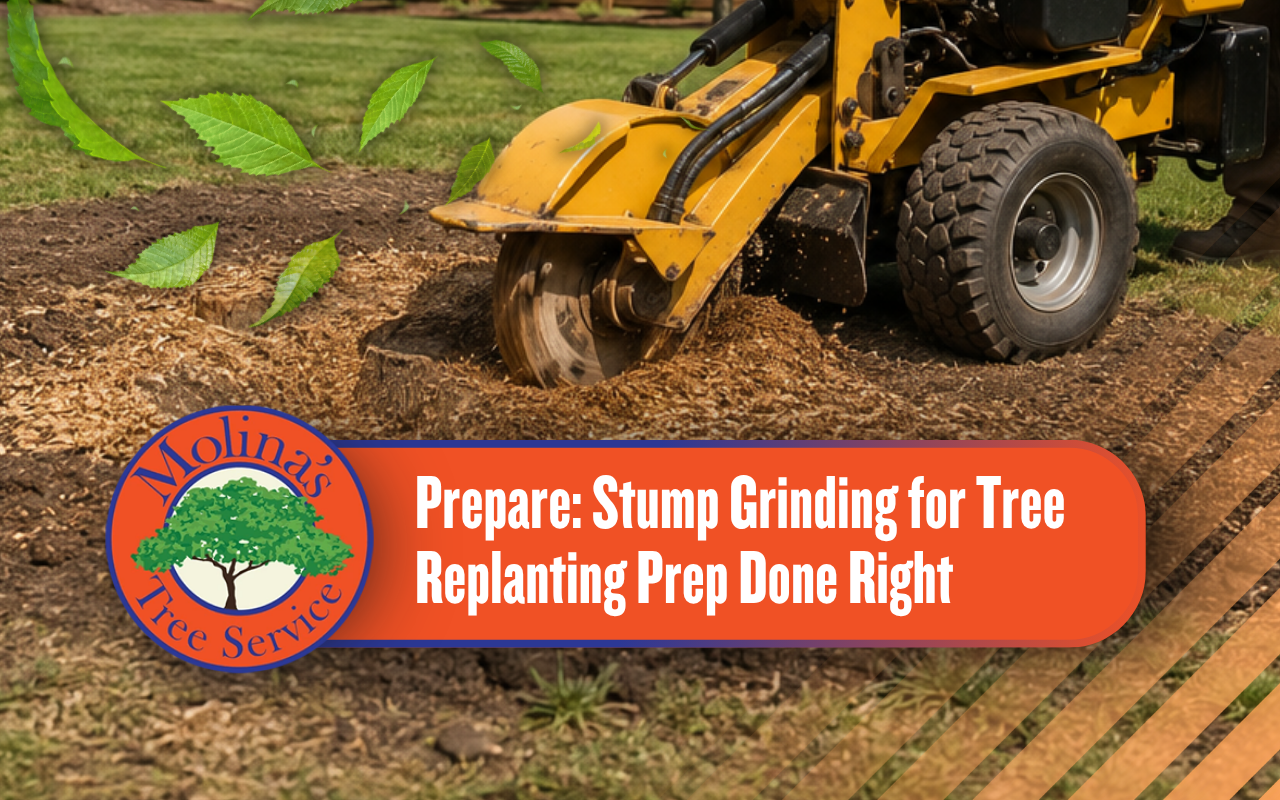
Stump Grinding for Tree Replanting Prep creates a cleaner starting point for future planting. Grinding clears the visible stump, opens usable yard space, and makes it easier to inspect the soil before choosing a new tree or planting location.
At Molina’s Tree Service & Landscaping LLC, we help homeowners understand what happens below the surface. Our stump grinding service can prepare the area for soil recovery, grading, and thoughtful replanting.
Why Does Grinding Depth Matter Before Replanting?
The depth of grinding affects how much usable space remains above the old root system. A shallow grind may improve the yard’s appearance, but it can leave solid wood close to the surface. That wood may interfere with digging, soil settling, and the early growth of a replacement tree.
Stump Grinding for Tree Replanting Prep often requires more planning than a basic cleanup project. The grinder should reach a depth that supports the intended use of the area. Planting grass, adding a flower bed, and installing another tree may each require a different level of preparation.
With Molina’s Tree Service & Landscaping LLC, you can discuss your replanting goal before the work begins. This helps our team consider stump size, location, nearby structures, and the amount of soil that may need attention after grinding.
What Remains Underground After Stump Grinding
A stump grinder removes the main trunk base and some surrounding wood, but it does not remove every underground root. Large roots may remain in the soil and slowly break down over time. Their presence does not always prevent replanting, but it can affect the best location for a new tree.
Old roots may create hard areas that are difficult to dig through. As they decay, they can also leave small gaps in the soil. Homeowners should expect some settling and monitor the ground before placing a new tree directly over the former stump.
It is also important to understand the difference between grinding and full removal. Our guide to stump grinding versus stump removal explains how each method affects the remaining roots and planting area.
Preparing Soil After Stump Grinding
Preparing soil after stump grinding begins with removing excess wood chips and checking the depth of the hole. A small amount of decomposed wood can support soil structure, but a hole filled mainly with fresh chips may settle unevenly and use available nitrogen while breaking down.
- Remove loose wood chips that fill most of the grinding area.
- Check for large root pieces near the planned planting hole.
- Add clean topsoil that matches the surrounding ground.
- Mix in suitable organic matter when the soil needs improvement.
- Level the area without packing the soil too tightly.
- Water lightly and watch for settling before planting.
Soil conditions can vary across one yard. Heavy clay may drain slowly, while sandy soil may lose moisture quickly. A simple soil test can help identify drainage, pH, and nutrient concerns before a replacement tree is selected.
When to Replant After Grinding a Stump
When to replant after grinding a stump depends on soil condition, remaining roots, planting location, and the type of tree. Some areas may be ready after the soil is cleaned, replaced, and allowed to settle. Other sites may need more recovery time.
Waiting several weeks can make it easier to notice sinking soil or hidden wood fragments. However, there is no single waiting period that works for every property. Planting beside the old stump location may be possible sooner than planting directly in the same spot.
Our team at Molina’s Tree Service & Landscaping LLC can explain what we see during the grinding process. Homeowners can also review this homeowner stump grinding guide for additional planning considerations.
Stump Grinding for Tree Replanting Prep is most effective when the removal and planting plans support each other. Knowing the desired tree size and planting position early can reduce problems during soil preparation.
Choosing a Better Location for New Growth
Planting directly where the old stump stood may not always be the best choice. Remaining roots, changing soil levels, and decomposing wood can make that exact location less stable. Moving the planting hole a short distance may give the new tree more consistent soil.
- Check the expected mature size of the replacement tree.
- Keep enough space from buildings, driveways, and utility areas.
- Observe how much sunlight the location receives each day.
- Consider drainage after rain or regular irrigation.
- Look for large remaining roots before digging.
- Choose a species suited to the local soil and available space.
A carefully selected location can reduce root competition and future conflicts. Native or locally adapted trees may also handle the area’s weather and soil conditions more easily than species with very different needs.
Replanting Steps for Strong Root Development
Once the ground is stable, careful planting supports healthy root growth. The planting hole should be wider than the root ball but not much deeper. A tree placed too low may struggle with poor airflow and excess moisture around the trunk.
- Measure the root ball before digging the planting hole.
- Keep the root flare near the finished soil level.
- Backfill with suitable soil and remove large air pockets.
- Water slowly after planting to settle soil around the roots.
- Add mulch without placing it against the trunk.
- Monitor moisture instead of watering on a fixed schedule.
New trees need steady care during establishment. Check the soil before watering, watch for leaning, and inspect leaves for stress. Stakes may be useful in some locations, but they should not remain longer than necessary.
An old stump that continues to create yard problems may need attention before planting begins. These signs that a stump needs grinding can help homeowners decide when preparation should start.
Frequently Asked Questions
Can I plant a new tree in the same spot?
It may be possible, but the site should be checked for large roots, wood chips, and unstable soil. Planting slightly beside the old location often gives the new tree better soil. A professional stump grinding service can help clarify the condition of the area.
Should all wood chips be removed before replanting?
Most loose chips should be removed from the planting hole because they can settle as they break down. A small amount mixed into surrounding soil may be manageable, but the new tree should not be planted in a deep layer of fresh wood chips.
How deep should a stump be ground for replanting?
The right depth depends on the planned use of the site and the remaining root system. Replanting often needs more preparation than covering the area with grass. This comparison of grinding and stump removal explains the limits of each approach.
How long should the soil settle before planting?
The soil may need several weeks to reveal sinking or hidden debris, although conditions differ by site. At Molina’s Tree Service & Landscaping LLC, we encourage homeowners to consider soil stability, drainage, remaining roots, and the new tree’s needs rather than relying only on a fixed waiting period.
What should I check before scheduling stump grinding?
Identify the future use of the space, note nearby structures, and consider the size of the replacement tree. You can also review a local stump grinding overview to understand common site and access considerations.
Plan Your Replanting Project With Confidence
Stump Grinding for Tree Replanting Prep gives homeowners a practical path from removal to renewal. Proper grinding depth, careful chip cleanup, soil recovery, and a suitable planting location can create better conditions for future growth.
When you choose Molina’s Tree Service & Landscaping LLC, we can consider your replanting plans as part of the stump grinding process. Use our contact page to discuss your yard and future planting goals.