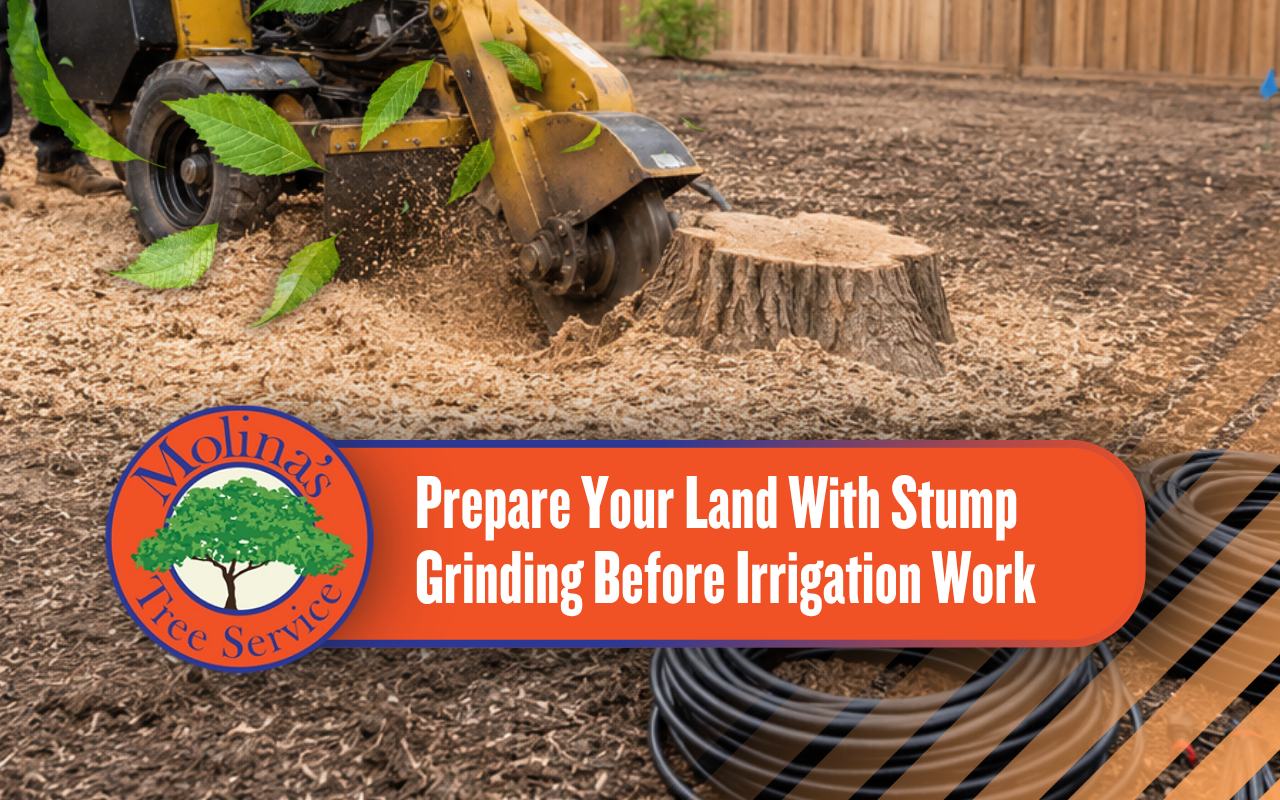
Stumps may look harmless after a tree is gone, yet roots can remain across the yard. Stump grinding before irrigation work clears these hidden barriers before pipes, valves, and sprinkler heads are installed.
At Molina’s Tree Service & Landscaping LLC, we help prepare clean, level ground for smoother irrigation projects. Early planning protects new lines, supports steady water flow, and lowers the chance of costly digging later.
Why Old Stumps Disrupt New Irrigation System Plans
Old stumps can block trench routes and force irrigation pipes to bend around solid wood. These changes may create weak joints, uneven depth, and areas where water pressure drops.
Roots also move through moist soil and may press against buried lines. Understanding how stump roots interfere with sprinkler systems helps property owners avoid leaks, broken fittings, and poor spray coverage.
Clear Ground Creates Safer Paths For Irrigation Lines
Stump grinding before irrigation work creates a more direct path for trenching. Straight routes need fewer fittings, which can reduce future leak points and make the system easier to inspect.
- Cleaner trench paths for pipes and wiring
- More even depth across each irrigation zone
- Less risk of roots pressing against fittings
- Faster access for future maintenance work
Our professional grinding options support safer site preparation before irrigation crews begin their work.
Professional Grinding Protects Soil And Nearby Landscape Areas
A stump grinding service removes wood below ground without pulling out the full root system. This approach usually causes less soil movement than complete stump removal.
With Molina’s Tree Service & Landscaping LLC, you receive clear guidance based on stump size, location, and nearby features. Our team works carefully around lawns, beds, fences, and planned utility routes.
Simple Site Checks Prevent Delays During Installation Work
Before grinding starts, mark the planned irrigation layout and note every stump near a trench. Also check for rocks, wires, metal, and nearby utility lines.
- Mark sprinkler zones and main pipe routes
- Measure the space around each stump
- Identify nearby structures and landscape features
- Keep people and pets away from equipment
For larger roots or difficult sites, our Raleigh stump removal options explain when full removal may be the better choice.
Proper Soil Preparation Supports Stable Irrigation Pipe Placement
After stump grinding before irrigation work, clear loose wood chips from planned trench areas. Then rake the surface, fill low spots, and remove sharp root pieces or stones.
Preparing soil for irrigation lines also means keeping trench bottoms smooth and firm. A thin layer of fine soil or sand can protect pipes from hard pressure points.
- Remove chips from open trench routes
- Level soft or uneven ground
- Break up compacted soil near the stump
- Backfill in layers after pipes are placed
Our guide to better drainage after stump grinding offers useful steps for managing water around repaired areas.
Debris Management Keeps Irrigation Trenches Clean And Open
Grinding leaves wood chips and fine material behind. Some chips can be reused as mulch, but they should not fill irrigation trenches or sit under new pipes.
Stump grinding before irrigation work is most useful when debris is managed right away. Clear trench paths first, then reuse or remove extra material based on the needs of the landscape.
Wood chips can hold moisture and settle over time. Therefore, placing them under pipes may create soft spaces that shift after rain. Clean soil gives the backfill better support and helps each line stay at the planned depth.
However, useful chips do not need to go to waste. Spread a light layer around trees or garden beds, while keeping it away from trunks. Extra material can also be removed with other yard waste. This simple cleanup keeps the work area open and makes the next installation steps easier.
Frequently Asked Questions
How deep should a stump be ground?
Most stumps should be ground several inches below the planned soil level. The right depth depends on pipe routes, grading, and future planting plans.
Can irrigation lines cross old root areas?
Yes, but loose roots and hard sections should be cleared first. A smooth trench helps protect pipes from pressure and movement.
Should all wood chips be removed?
No. Chips may be reused away from trenches, but excess material should not remain under irrigation pipes or fittings.
When is full stump removal necessary?
Full removal may be useful when large roots block deep trenches, grading work, or major landscape changes.
Can grinding improve sprinkler performance?
Yes. Stump grinding before irrigation work supports straighter pipe routes, more stable placement, and more even water delivery.
Build A Stronger Landscape With Better Ground Preparation
At Molina’s Tree Service & Landscaping LLC, we prepare yards for the next stage of improvement. Careful grinding, cleanup, and soil preparation give irrigation teams a safer and more workable surface.
Review our ground preparation before new sod for related planning tips. Then stop by our contact page for project guidance before scheduling stump grinding before irrigation work.