
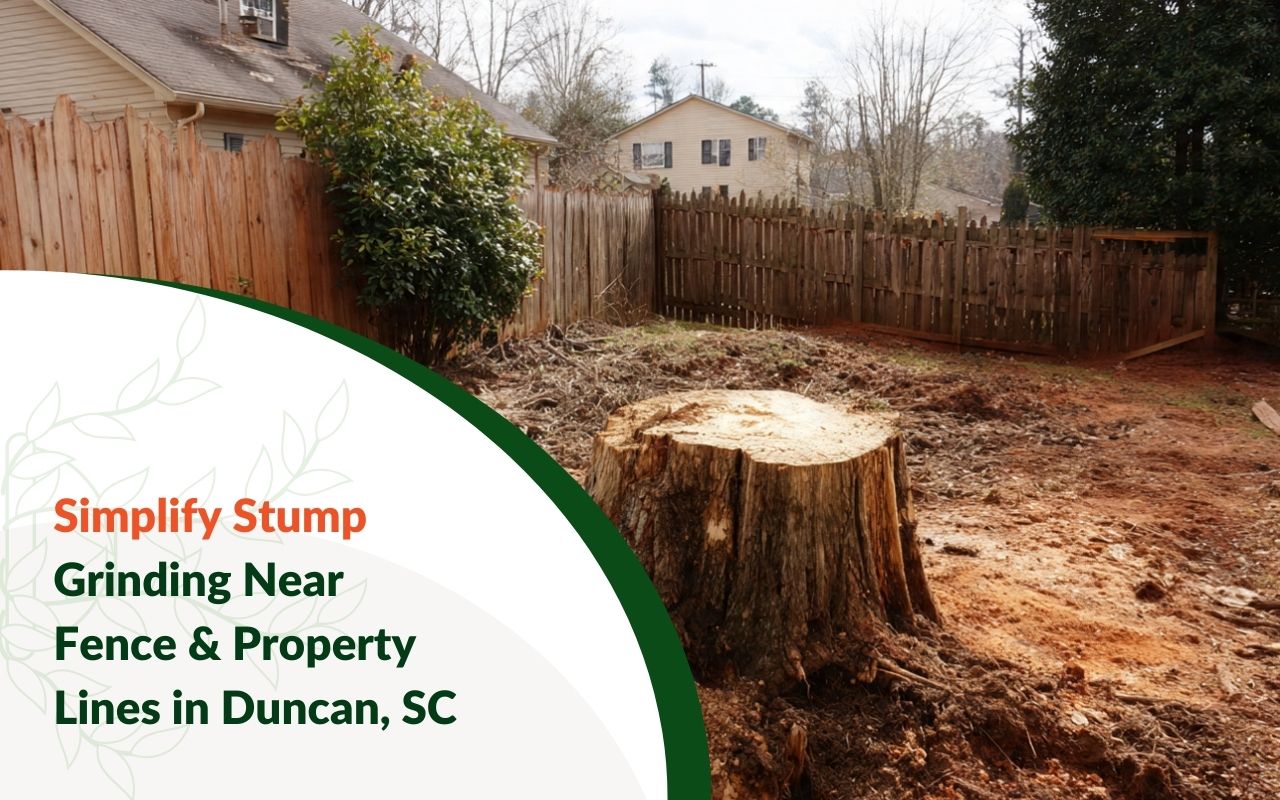
Stump Grinding Around Fence & Property Lines in Duncan, SC can feel intimidating, especially when the space is tight. However, with a careful plan, you can protect your fence and keep your yard clean. Many homeowners feel stuck when a stump blocks landscaping goals. Still, you can handle it with the right steps and a steady approach.
In this guide, Molina’s Tree Service & Landscaping covers safe setup, clean chip handling, and smart backfilling. As a result, your outdoor space stays neat and functional. Whether you DIY or hire help, you will learn simple ways to work with confidence.
Choosing the Right Stump Grinder for Fence Proximity
When Molina’s Tree Service & Landscaping helps with Stump Grinding Around Fence & Property Lines in Duncan, SC, the first step is picking equipment that fits. A grinder with a narrow cutting head can slip between posts. Also, adjustable cutting height helps you stay level with the ground while avoiding fence parts.
Before you start, consider these quick checks. Then, you can work with more control and less risk.
- Choose a compact or mid-sized grinder for tight access.
- Confirm the cutting head clears posts, rails, and panels.
- Test positioning before powering on the machine.
- Prefer steady control over raw power near fences.
If you want a reliable local option, explore stump grinding services that are built for narrow spaces and careful work.
Understand Property Lines Before You Grind
To avoid neighbor issues, Molina’s Tree Service & Landscaping recommends confirming boundaries before Stump Grinding Around Fence & Property Lines in Duncan, SC. Start by finding survey stakes, ribbons, or corner markers. If they are missing, you may need a surveyor so you do not cross the line by mistake.
In addition, create a visible edge while you work. That way, you focus on the stump, not on guessing distances.
- Locate survey corners and compare them to your fence line.
- Mark the work zone with flags or paint for clear reference.
- Keep your survey copy nearby for quick checks.
- Stop early if the stump appears to cross onto shared space.
Safety Steps for Grinding Near Fences
Even with small machines, flying chips can damage fences or cause injury. That is why Molina’s Tree Service & Landscaping stresses protective gear and a protected work area. Use eye and ear protection, gloves, and sturdy boots. Also, keep pets and bystanders away from the work zone.
For extra protection, set up simple shielding along the fence. As a result, you reduce scratches and dents while you grind.
- Wear a face shield or safety glasses and hearing protection.
- Use tarps or plywood as a chip barrier along the fence line.
- Inspect blades and bolts before each grinding session.
- Keep the area clear of toys, tools, and loose debris.
Techniques for Root Work Along Boundaries
When Molina’s Tree Service & Landscaping handles Stump Grinding Around Fence & Property Lines in Duncan, SC, root work near borders is done in layers. Start by grinding a shallow ring around the stump to cut the larger roots. Then, lower the head little by little, which helps reduce shaking near posts.
If you run into thick roots, switch tools to stay gentle on the fence. For example, a root saw or pry bar can help with tough sections. This approach supports careful root chasing near boundaries without stressing the fence footing.
Chip Disposal and Soil Settling Made Simple
Clean handling matters because chips spread fast in tight areas. Molina’s Tree Service & Landscaping often uses tarps to control mess. With a tarp, you can fold and lift chips without scattering them across the lawn. This keeps chip disposal & soil settling easier from start to finish.
Choose a plan that fits your yard and your rules. Then, cleanup stays quick and tidy.
- Lay tarps or landscape fabric to catch chips as you grind.
- Reuse chips as mulch if you have space and want a natural look.
- Haul large piles to approved yard waste sites when needed.
- Keep chips out of drains and walkways to prevent hazards.
Prevent Soil Settling After Stump Removal
After grinding, the hole often settles as air pockets collapse. Because of that, Molina’s Tree Service & Landscaping fills in layers using topsoil and coarse sand. Add 3 to 4 inches at a time, then tamp lightly. This reduces dips and helps the area stay level over time.
Also, fill slightly above grade, since the ground will compress naturally. After a few weeks, check the spot and top it off if needed. Then reseed or lay sod to blend the area into your lawn.
Keep Fence Posts Stable After Grinding
Fence posts can shift if soil is disturbed near their base. So, Molina’s Tree Service & Landscaping checks post stability after stump work. If a post looks loose, add gravel for drainage and re-pack the area firmly. In some cases, you may need concrete to lock it back in place.
Pay attention to the ideal depth for fence posts. Many residential fences place posts at least one-third of their length below ground, with a common minimum depth around 24 inches. If you are replacing or resetting posts, confirm the depth so the fence stays straight and secure.
When Professional Help Makes Sense
Sometimes tight fence lines and shared boundaries raise the risk. In those cases, Molina’s Tree Service & Landscaping can handle Stump Grinding Around Fence & Property Lines in Duncan, SC with equipment designed for narrow passes. Professionals also know how to limit vibration near posts and how to remove major roots without harming nearby structures.
If you want to see service options in the region, review stump grinding in Greenville, SC to understand what a full-service approach can include, from grinding to cleanup and restoration.
Frequently Asked Questions
How close can I grind to a fence without damaging it?
You can grind close if you control chip spray and reduce vibration. Use barriers and work in slow layers, especially near posts and rails.
What should I do if the stump is on or near a boundary line?
Confirm your survey markers first and mark the work edge. If anything is unclear, pause and verify before grinding further.
Can I leave the wood chips in the hole after grinding?
You can, but it may increase settling as chips break down. For better leveling, remove most chips and backfill with soil mix.
How do I reduce soil settling after stump removal?
Backfill in thin layers and tamp lightly. Fill slightly above grade, then recheck after a few weeks and add soil if needed.
Is stump grinding safe for nearby fence posts?
Yes, when done carefully. Work in layers, avoid hard jolts, and inspect post stability afterward so small shifts are fixed early.
Enhance Your Landscape with a Cleaner Fence Line
With the right grinder, clear boundaries, and careful cleanup, Stump Grinding Around Fence & Property Lines in Duncan, SC becomes much easier. Moreover, steady root work and smart backfill help protect fence stability and reduce future dips. Plan your steps, control the chips, and keep the area level. Then your yard looks cleaner and works better for the long run.