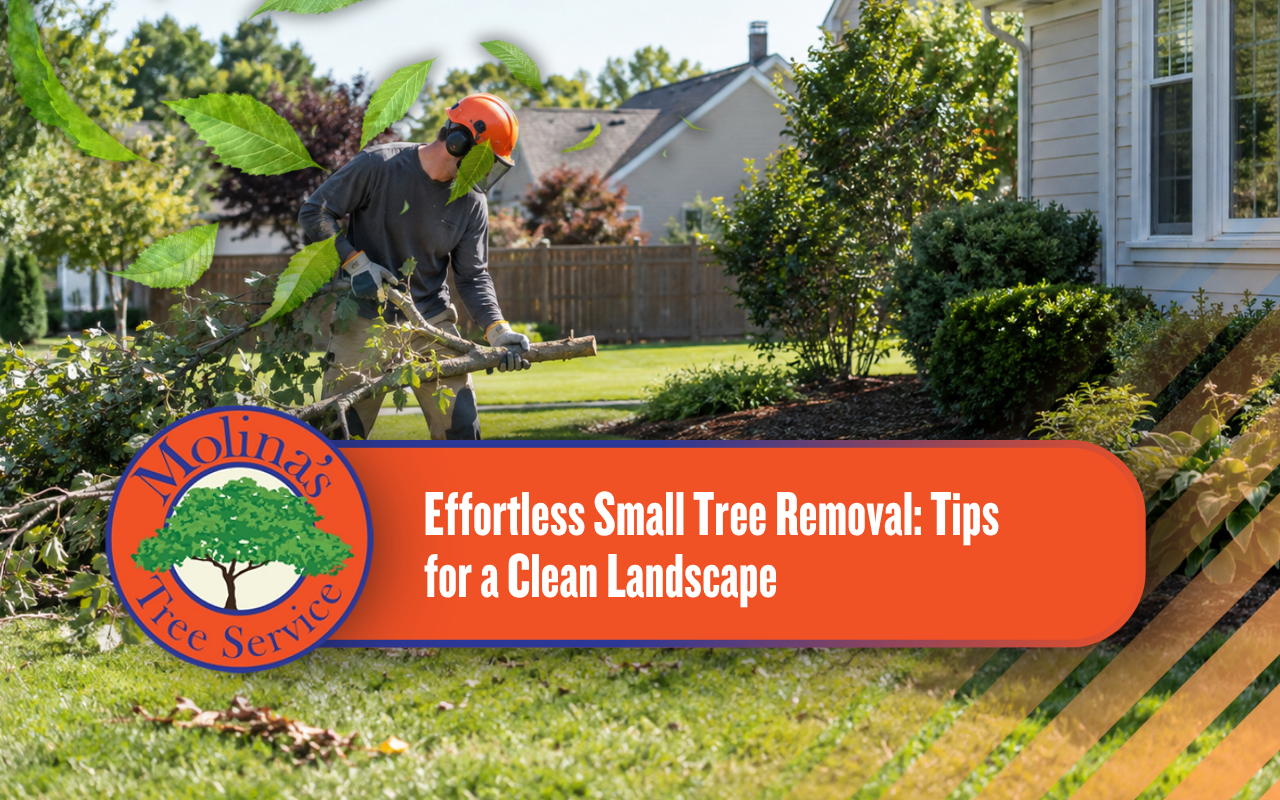
A young or unwanted tree can change how your yard looks and how you use the space. Small Tree Removal may seem simple, but roots, nearby plants, fences, and uneven ground can make the job harder. A careful plan can help protect the rest of your landscape while keeping the work organized.
At Molina’s Tree Service & Landscaping LLC, we understand that each tree and yard can bring different concerns. Before deciding what to do, it helps to review the tree, the area around it, and the safest path forward. You can also explore our tree removal service options for more information.
Assessing Tree Size, Roots, and Nearby Risks
Start by looking at the trunk, branches, and root area. A thin young tree may have a smaller root system, while an older tree can be harder to remove cleanly. Check whether branches lean toward a fence, roof, garden bed, driveway, or other feature. These details can affect how much control the job requires.
Root location matters as much as tree height. Roots may spread under grass, mulch, hard surfaces, or nearby plants. When removing young trees, avoid assuming that the root system ends close to the trunk. A careful inspection can help you decide whether simple hand work makes sense or whether a professional should handle the removal.
Choosing Safe Tools and a Removal Method
The right approach depends on the tree’s size, condition, and location. Small Tree Removal should not begin with a tool choice alone. First, decide whether the tree can be managed safely without putting people, structures, or nearby plants at risk. With Molina’s Tree Service & Landscaping LLC, you can discuss the situation before choosing a practical removal plan.
- Use basic hand tools only when the tree is small and easy to control.
- Wear eye protection, gloves, and sturdy footwear during yard work.
- Keep children, pets, and other people away from the work area.
- Avoid cutting when branches are near utility lines or hard-to-reach spaces.
- Stop if the tree shifts, splits, or reacts in a way you did not expect.
When Is DIY Removal a Poor Choice?
DIY work becomes less suitable when the tree is close to a building, power line, fence, parked vehicle, or other valuable feature. Unstable branches, a leaning trunk, or a hard-to-see root system can also make the job less predictable. Our guide to the risks of DIY tree removal explains why extra caution matters.
A professional tree removal service can also make sense when the tree is larger than expected or when several young trees need attention. Our team at Molina’s Tree Service & Landscaping LLC can help you consider the site, access, and surrounding landscape before work begins. The goal is to remove the unwanted tree without creating avoidable damage elsewhere.
Step-by-Step Planning for a Cleaner Removal
A clean result starts before any cutting or digging. Planning the work area can reduce wasted effort and help you protect nearby plants. Instead of rushing through Small Tree Removal, focus on a simple order of work that keeps the site clear and makes debris easier to manage.
- Clear loose items, tools, and obstacles from the area around the tree.
- Look for overhead lines, nearby structures, irrigation parts, and landscape features.
- Decide how branches and trunk pieces will be moved away from the site.
- Work in small, controlled sections rather than making large cuts at once.
- Review the ground after removal so roots, holes, and debris are not left behind.
Local rules can also affect some tree projects. Before removing a tree, review any permit or property requirements that may apply in your area. Our article on tree cutting permits and local regulations can help you understand what to check before work starts.
Handling Roots, Stumps, and Tree Debris
Removing the visible trunk is only part of the job. Roots, stump material, branches, and leaves can still affect how the area looks and how easily you can reuse the space. When you choose Molina’s Tree Service & Landscaping LLC, we can consider the full work area instead of focusing only on what is above the ground.
- Collect loose branches and leaves so the work area stays clear.
- Check for exposed roots that could create a trip point or block future planting.
- Level open soil areas when practical to reduce dips and uneven ground.
- Decide whether usable wood or plant material can stay in the landscape.
- Keep heavy debris away from delicate plants, edging, and garden features.
Project needs can vary based on tree size, access, root spread, and cleanup. If you want to understand common planning factors before booking, review our guide to tree removal cost factors.
Restoring the Landscape After Tree Removal
After removing young trees, check the ground for holes, loose soil, roots, and leftover debris. Filling and leveling the area can make the space easier to use again. You may also need to refresh mulch, repair a garden edge, or prepare the soil for grass or a new plant, depending on your plans.
A clean finish should fit the rest of the yard. Avoid rushing into new planting until you understand the remaining root area and soil condition. Small changes after removal can help the space look more natural and make future lawn or landscape care easier to manage.
Frequently Asked Questions
Can I remove a small tree by myself?
Some very small trees may be manageable with basic hand tools, but the location and root system matter. If the tree is near structures, utilities, or other plants, extra care may be needed. For a wider view of related outdoor work, explore our tree and landscaping services.
What makes removing young trees difficult?
Roots can spread farther than expected, and young trunks can still be heavy or awkward to control. Nearby fences, garden beds, irrigation lines, and hard surfaces can add more limits. The safest approach depends on the full site, not only on the tree’s height or trunk width.
Do I need permission before removing a tree?
Rules can vary by location, property type, and the tree involved. Before starting, it is wise to check local requirements that may apply to your property. Our guide to tree cutting permits and local regulations gives you useful points to review.
What factors can affect a professional removal project?
Tree size, access, root spread, nearby structures, cleanup needs, and site conditions can all shape the work involved. These details are useful to review before scheduling Small Tree Removal. You can also read about common tree removal project factors before making your next decision.
What should I do with the area after removal?
Clear remaining debris, check for exposed roots, and fill low areas as needed. Then decide whether the space will become lawn, a garden bed, or a new planting area. Giving the soil time to settle can also help you see whether more leveling or cleanup is needed.
Plan Your Next Tree Removal With Confidence
Small Tree Removal is easier to plan when you understand the tree, roots, nearby features, and cleanup needs before work begins. A careful approach can protect the rest of your yard and leave the area ready for its next use. The best choice is the one that matches the real conditions around the tree.
With Molina’s Tree Service & Landscaping LLC, you can talk through your tree and landscape needs before deciding on the next step. If an unwanted young tree is affecting your yard, contact our team about your tree removal needs and share the details of your property.