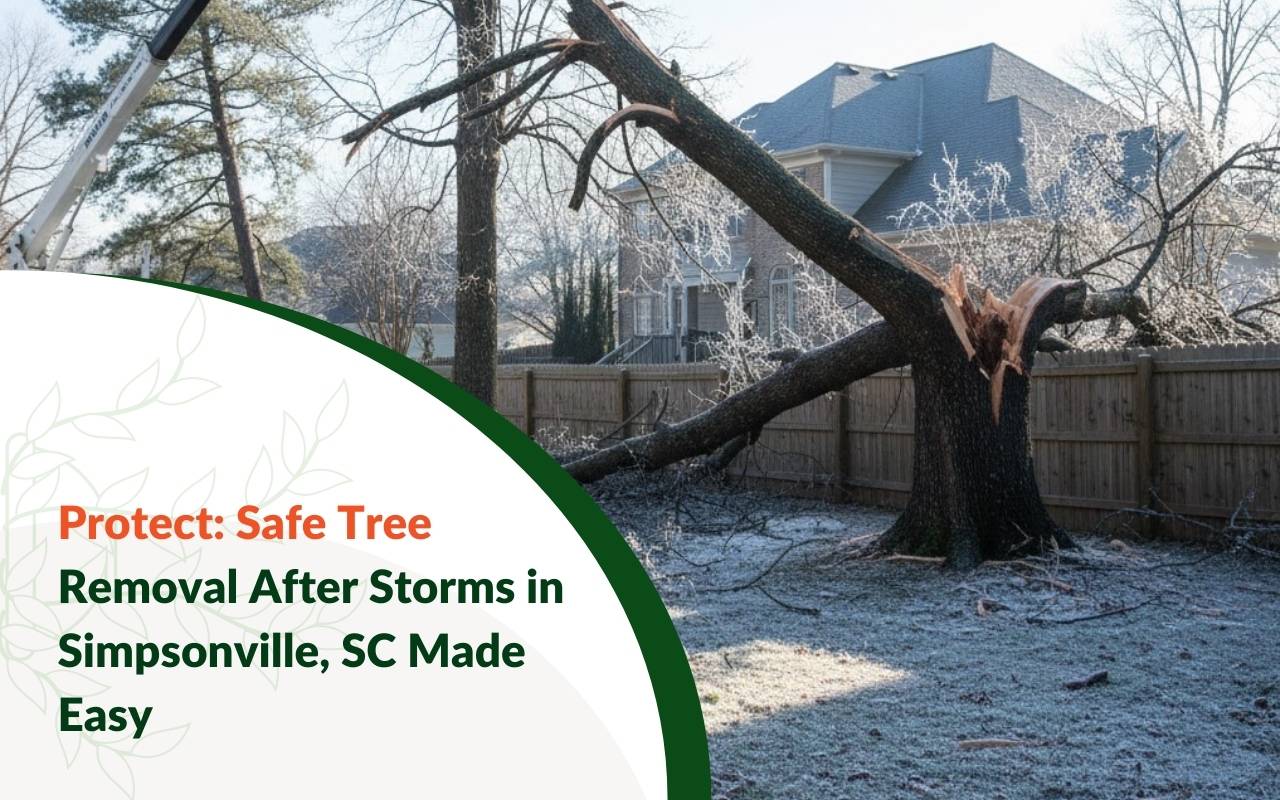
Safe Tree Removal After Storms in Simpsonville, SC helps you protect your home after severe weather. Storms can leave fallen trees, broken branches, and a yard that feels unsafe. Before you grab a chainsaw, you must slow down. Rushing this work can harm you, damage structures, and even affect nearby power lines.
Instead, start with a clear plan. Learn how to inspect damage, choose tools, and decide between DIY work and hiring help. When you understand each step, you handle the mess with confidence. This guide walks you through key choices so your yard becomes safe and calm again.
Assessing Tree Damage After a Storm
Right after a storm, walk your property slowly and stay alert. Look for broken limbs, cracked trunks, or trees pulled partly from the ground. A careful tree damage assessment after storms shows which trees are stable and which are not. Keep pets and children away from risky areas while you inspect.
- Check each tree from several angles, from roots to crown.
- Note hanging or lodged branches that could fall suddenly.
- Watch for raised soil or exposed roots around the base.
- Take photos of major damage for insurance or professionals.
Next, rate every tree as stable, questionable, or hazardous. Hazardous trees need fast attention because they may fail without warning. This simple system supports your decisions and prepares you to explain problems to a certified arborist. It also builds the base for Safe Tree Removal After Storms in Simpsonville, SC.
Recognizing Signs of a Dangerous Leaning Tree
Some trees lean naturally, but new or sudden leaning is a warning sign. After a storm, compare the tree’s angle to how it looked before. When a leaning tree becomes dangerous, it often tilts toward a house, driveway, or utility line. Any lean greater than usual deserves a closer look.
Then examine the trunk and roots. Cracks on the leaning side, lifted roots, or gaps in the soil hint at serious failure. A heavy canopy on one side increases the risk of tipping. If you see several of these signs together, treat the tree as unsafe and plan for quick removal.
Essential Tools for Safe Tree Removal
Before you start cutting, gather the tools needed for safe tree removal. At minimum, you should have a well-maintained chainsaw, a hand saw or pruning saw, sturdy ropes, and plastic wedges. These items help you guide each cut, control how branches fall, and avoid the saw getting stuck in the wood.
- Use a stable ladder that reaches your work area without overreaching.
- Keep extra chainsaw chains, bar oil, and fuel on hand.
- Store ropes and wedges where you can reach them quickly.
- Check every tool for damage before each job.
Also keep a small level, basic hand tools, and a first-aid kit nearby. With the right equipment ready, Safe Tree Removal After Storms in Simpsonville, SC feels more controlled and less stressful. Well-chosen tools improve your accuracy and reduce the chance of sudden, dangerous movement while you work.
The Importance of Proper Safety Gear
Even simple cuts can turn risky without good protection. Wear a hard hat, safety glasses, and hearing protection when using saws. Strong gloves improve your grip and guard your hands from cuts and splinters. Steel-toed boots help shield your feet from heavy logs and rolling branches on the ground.
For chainsaw work, chaps are vital because they can slow or stop a spinning chain. Bright, high-visibility clothing keeps you noticeable if you work near roads or helpers. Proper safety gear is a key part of how to remove fallen trees safely. It lowers injury risks so you can focus on the job.
DIY Tree Removal: Tips and Precautions
If you handle smaller trees yourself, plan every step carefully. Clear your work area of furniture, toys, and vehicles. Decide where you want the tree or limb to fall, and mark a retreat path. Never allow anyone to stand within twice the tree’s height while you are cutting.
- Start by removing small, low branches to improve visibility.
- Make a small undercut on the fall side to prevent bark tearing.
- Create the back cut slightly above the undercut to guide the fall.
- Cut the trunk into short, manageable sections for easier handling.
Always watch for hidden root damage, sudden shifting, or tension in branches. If the tree moves in a way you did not expect, stop immediately. Knowing how to remove fallen trees safely also means knowing when to pause. When the situation feels beyond your comfort level, call a qualified crew.
Hiring Professional Emergency Tree Removal Services
Large trees, heavy damage, or anything near power lines should be left to a professional emergency tree removal service. These crews bring cranes, rigging gear, and trained climbers who understand complex risks. They can remove storm-damaged trees quickly while protecting nearby roofs, fences, and landscaping from further harm.
When choosing a company, confirm licenses, insurance, and experience with storm work. For complex tree removal in Simpsonville, SC, or emergency help at night or on weekends, reach out to a trusted local team. You can also contact Molina’s Tree Service & Landscaping to discuss your specific situation and safety concerns.
Understanding Local Regulations and Permits
Before cutting down any major tree, check Simpsonville and Greenville County rules. Some trees need a permit, especially larger specimens or those in protected zones. Ignoring these regulations can lead to fines or delays with insurance claims. It is always safer to ask questions first than to undo a costly mistake later.
Many professional services will manage permits and explain local guidelines for you. Permits also ensure Safe Tree Removal After Storms in Simpsonville, SC respects neighborhood standards and environmental rules. To understand ongoing care rules, review resources about when to trim your trees in SC and the best times for trimming in SC.
Disposal and Cleanup of Fallen Trees and Debris
Once cutting is done, you still must deal with heavy logs and scattered branches. Cut trunks into short sections for easier stacking or hauling. A chipper can turn small limbs into useful mulch, but always follow the manufacturer’s safety rules. Keep the discharge chute pointed away from people, windows, and vehicles.
Bundle twigs according to local pickup rules, or arrange a roll-off container for large loads. If stumps remain, consider professional stump grinding services to prevent tripping hazards and insect problems. Good cleanup improves curb appeal and keeps pests, rot, and fungi away from healthy plants.
Ensuring Post-Storm Landscape Restoration
After removal and cleanup, think about your yard’s long-term health. Choose native or well-adapted tree species that handle local storms better. Improve soil with compost or aged mulch so new roots grow strong. Plant trees far enough from buildings, driveways, and power lines to avoid problems as they mature.
Young trees need regular watering, light pruning, and some support during their first seasons. Remove only damaged or crossing branches, and schedule routine care with expert tree trimming in Simpsonville, SC. Thoughtful restoration turns storm damage into an opportunity to design a safer, more resilient landscape.
Frequently Asked Questions
What should I check first after a storm?
Begin by looking for downed power lines, gas leaks, and blocked exits. Only then inspect trees from a safe distance. Note cracked trunks, hanging branches, and uprooted roots. Keep everyone away from damaged areas until you decide whether the tree can stay or needs professional removal.
When is it safe to remove a tree myself?
Small trees that are already on the ground and far from structures are better suited for DIY work. You should also feel confident using saws and safety gear. If the tree is tall, leaning, tangled with other trees, or near wires, call a professional instead.
How do I know if a leaning tree is about to fall?
Warning signs include fresh cracks in the trunk, heaving soil, exposed roots, and a new or sharper lean. If the tree suddenly tilts after a storm or leans toward a building or driveway, treat it as unstable. In these cases, contact an emergency tree removal crew quickly.
What tools do I need for basic storm cleanup?
For light work, use hand pruners, a pruning saw, work gloves, and safety glasses. For larger branches, you may need a chainsaw, wedges, and sturdy ropes. Always pair tools with proper protective gear, and never use unfamiliar equipment without clear instructions and training.
Should I call my insurance company before tree removal?
Often yes. Many policies cover damage from fallen trees, but rules vary. Take photos of the scene before moving anything, if it is safe. Then contact your insurer and follow their directions. They may prefer that a licensed tree service documents the work and provides detailed invoices.
Prioritizing Safety in Tree Removal Efforts
Safe Tree Removal After Storms in Simpsonville, SC depends on clear planning, patience, and respect for hidden dangers. Whether you choose careful DIY work or hire experts, always start with a thorough assessment. Pair proper tools with strong safety gear, and never ignore warning signs from leaning or cracked trees.
By following local rules, arranging responsible cleanup, and restoring your landscape thoughtfully, you protect your property and community. Each smart choice you make reduces the chance of injuries and extra damage. With the right approach, even a badly damaged yard can become safe, healthy, and beautiful again.