
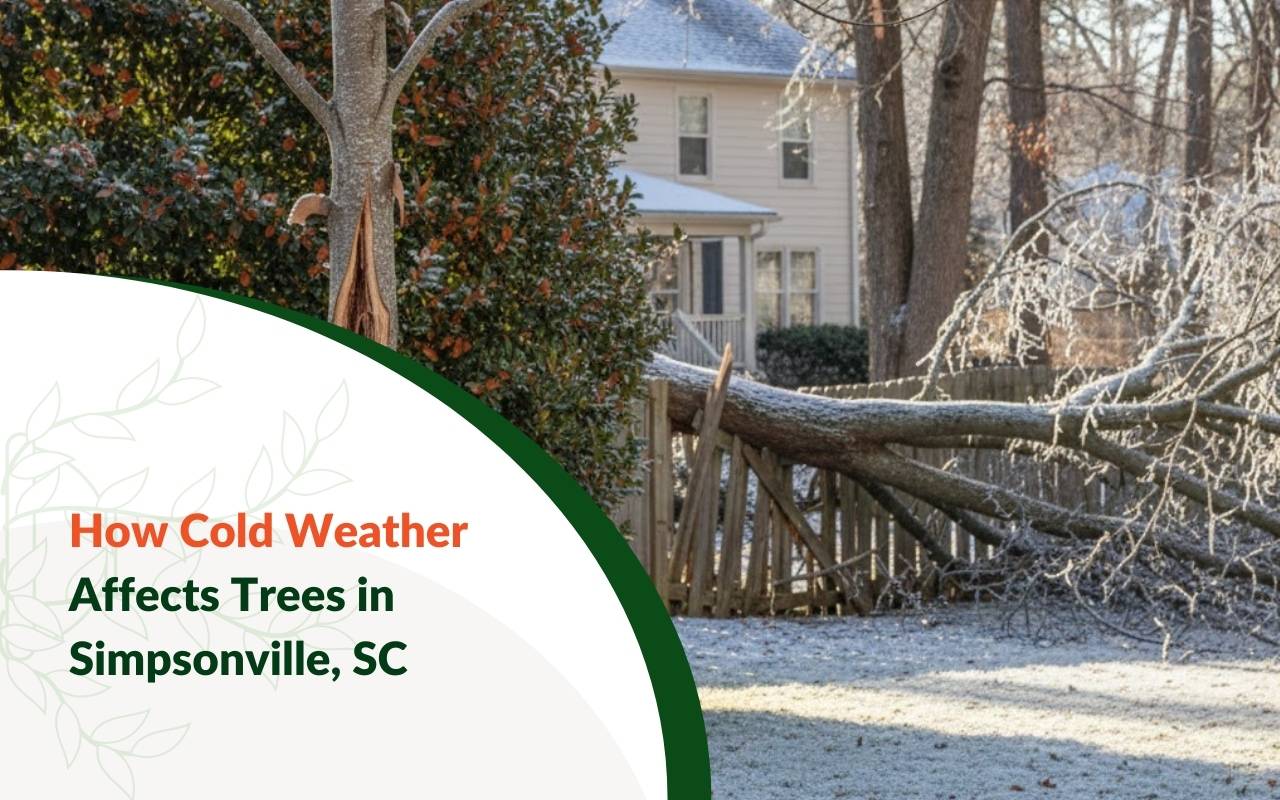
How Cold Weather Affects Trees in Simpsonville, SC matters to every homeowner who wants healthy trees during chilly months. Winter may make the town look calm and beautiful. However, low temperatures silently test each trunk, branch, and root on your property.
As frost settles in, trees face hidden stress from freezing soil, dry winter air, and icy winds. However, you can reduce damage by learning the early warning signs, adjusting care routines, and planning simple steps before and after each cold spell throughout the season.
Understanding the Impact of Cold Weather on Tree Health
When winter arrives, How Cold Weather Affects Trees in Simpsonville, SC depends on how quickly temperatures drop and rise. Trees slow their growth and enter a light rest phase, using less water and food. This natural pause helps them save energy until warmer weather returns.
Yet sudden deep freezes can harm living cells inside branches and roots. Ice crystals may tear tissues, and frozen soil can block water from reaching roots. Over time, this stress weakens natural defenses, making trees easier targets for pests, disease, and harsh winter sun.
- Rapid freezes and thaws strain inner tissues.
- Frozen ground limits water and oxygen near roots.
- Dry winter winds pull moisture from bark and needles.
- Weakened trees are more open to insects and fungus.
Signs of Frost Damage in Trees
Knowing the early signs of frost damage in trees helps you act before problems spread. During winter, watch for brown, wilted, or black leaf edges, even on evergreen foliage. Cracked or sunken bark areas may also point to cold injury beneath the surface.
As spring begins, check buds and new shoots for slow or twisted growth. Buds that never open, weak leaves, and dead branch tips reveal deeper damage. When you spot these issues, prune carefully and remove dead wood to guide the tree back toward healthy growth.
- Discolored or drooping leaves and needles.
- Bark splits, sunken spots, or peeling patches.
- Buds that stay closed or fall off.
- Branches that feel brittle and snap easily.
Mulching to Protect Roots in Winter
Mulch is one of the best tools for how to protect roots from freezing. A layer of organic material keeps soil temperature steadier and holds moisture in place. The best mulch to protect roots often includes shredded bark, wood chips, or pine straw spread in a gentle ring.
Keep mulch a few inches away from the trunk to prevent rot and pest problems. A two to four inch layer usually works well. Additionally, refresh compacted or washed-away mulch before serious cold arrives so roots enjoy steady insulation all winter long in Simpsonville.
- Choose loose, organic mulch materials.
- Spread mulch in a wide, doughnut-shaped ring.
- Keep mulch off the trunk to avoid decay.
- Check thickness after heavy rain or wind.
Watering Trees in Winter: Best Practices
Even in cold months, watering trees in winter supports strong roots. When the ground is not frozen, slow, deep watering helps prevent dehydration. Aim for midday watering on mild days so moisture can soak into the soil before nighttime temperatures drop again.
Use a gentle flow at the base of the tree rather than fast sprinklers that may freeze on leaves. Avoid watering right before a hard freeze, since ice around roots can worsen damage. With steady winter watering, trees enter spring less stressed, stable, and ready to grow.
- Water only when soil is not frozen solid.
- Focus on deep soaking instead of quick sprays.
- Check soil moisture a few inches below the surface.
- Reduce watering during long, rainy periods.
Selecting Resilient Tree Species for Cold Weather
Choosing trees that match local weather is a simple way to limit winter problems. Native and well-adapted species usually handle Simpsonville’s cold snaps better than delicate, exotic trees. They often bounce back faster after frost and need less special care through the season.
Look for trees with thicker bark, smaller leaves, and lower water needs. Before planting, check the USDA hardiness zone and local success stories. This careful planning reduces future stress and may lower how often you must rely on a winter tree protection service for extra help.
Pruning and Trimming Strategies for Winter Tree Health
Thoughtful pruning before heavy ice and snow arrive keeps trees safer and stronger. Removing dead, rubbing, or weak branches lowers the risk of winter breakage. Late winter pruning, just before spring growth, often gives trees time to seal cuts and recover fully.
If you feel unsure about structure or safety, consider professional tree trimming in Simpsonville, SC. You can also learn more about when to trim your trees in South Carolina and the best times for trimming in SC to time your pruning wisely.
Protecting Trees from Ice and Snow
Ice and snow can weigh down branches and bend young trunks. After storms, carefully sweep snow off branches with an upward motion instead of shaking them. This gentle movement lowers the chance of snaps and cracks while still clearing heavy buildup from limbs.
For very exposed or young trees, loose wraps or burlap screens can soften cold winds and snow. Avoid tying wraps too tight, since trapped moisture can lead to mold. Combined with smart pruning, these light barriers help trees stand up to winter storms safely.
Monitoring Tree Health Throughout the Winter Season
Regular winter checks let you catch small issues early. Look for new bark cracks, oozing spots, or fungus near the base of the trunk. By tracking How Cold Weather Affects Trees in Simpsonville, SC during each cold snap, you can respond quickly when something looks wrong.
Test soil moisture before watering trees in winter by digging a small hole near the root zone. Notice any drooping foliage, sudden color changes, or early leaf drop. When problems feel complex or widespread, calling a trusted winter tree protection service offers extra peace of mind.
Post-Winter Tree Care in Simpsonville, SC
After the last frost, reviewing How Cold Weather Affects Trees in Simpsonville, SC helps you set a fresh care plan. Inspect each tree for broken limbs, lifted roots, or damaged bark. Prune out dead wood, and refresh mulch that has thinned or shifted over the season.
When a tree is badly split, leaning, or clearly dying, safe removal may be the best option. In these cases, explore expert tree removal in Simpsonville, SC and follow up with professional stump grinding services to clear the area for healthy new growth and planting.
Frequently Asked Questions
How cold is too cold for most trees in Simpsonville, SC?
Many established trees can handle short drops below freezing. However, rapid temperature swings and long, deep freezes cause more harm. Young or newly planted trees are especially sensitive and may need extra mulch, wraps, or wind protection during very cold nights and icy weather.
What are the first signs of frost damage in trees?
Early signs of frost damage in trees include wilted, brown, or black leaf edges and needles. Additionally, you may see cracked or sunken bark and buds that never open in spring. Checking trees after each cold snap helps you notice these changes before damage spreads.
How often should I be watering trees in winter?
In winter, water only when the soil is not frozen and feels dry a few inches below the surface. Deeply watering trees in winter every few weeks during dry spells is often enough. Avoid watering right before a hard freeze or during long rainy periods.
What is the best mulch to protect roots from freezing?
The best mulch to protect roots usually includes shredded bark, wood chips, or pine straw. These materials breathe well and insulate soil. Spread mulch in a wide ring, two to four inches deep, and keep it slightly away from the trunk to prevent rot and insects.
When should I call a winter tree protection service?
You should contact a winter tree protection service if you see large cracks, hanging limbs, leaning trunks, or repeated frost damage. Professionals can safely remove risky branches, improve structure, and suggest better watering, mulching, and pruning plans tailored to your Simpsonville property.
Ensuring Healthy Trees Year-Round
Protecting trees from winter in Simpsonville, SC is an ongoing process, not a one-time task. When you understand How Cold Weather Affects Trees in Simpsonville, SC, you can adjust watering, mulching, pruning, and monitoring to match each season’s demands and keep trees strong.
If you see serious damage, large dead limbs, or safety risks, reach out through the Molina’s Tree Service & Landscaping contact page. Prompt help from local experts keeps your landscape safer, healthier, and more beautiful through every cold spell and warm, sunny day.