
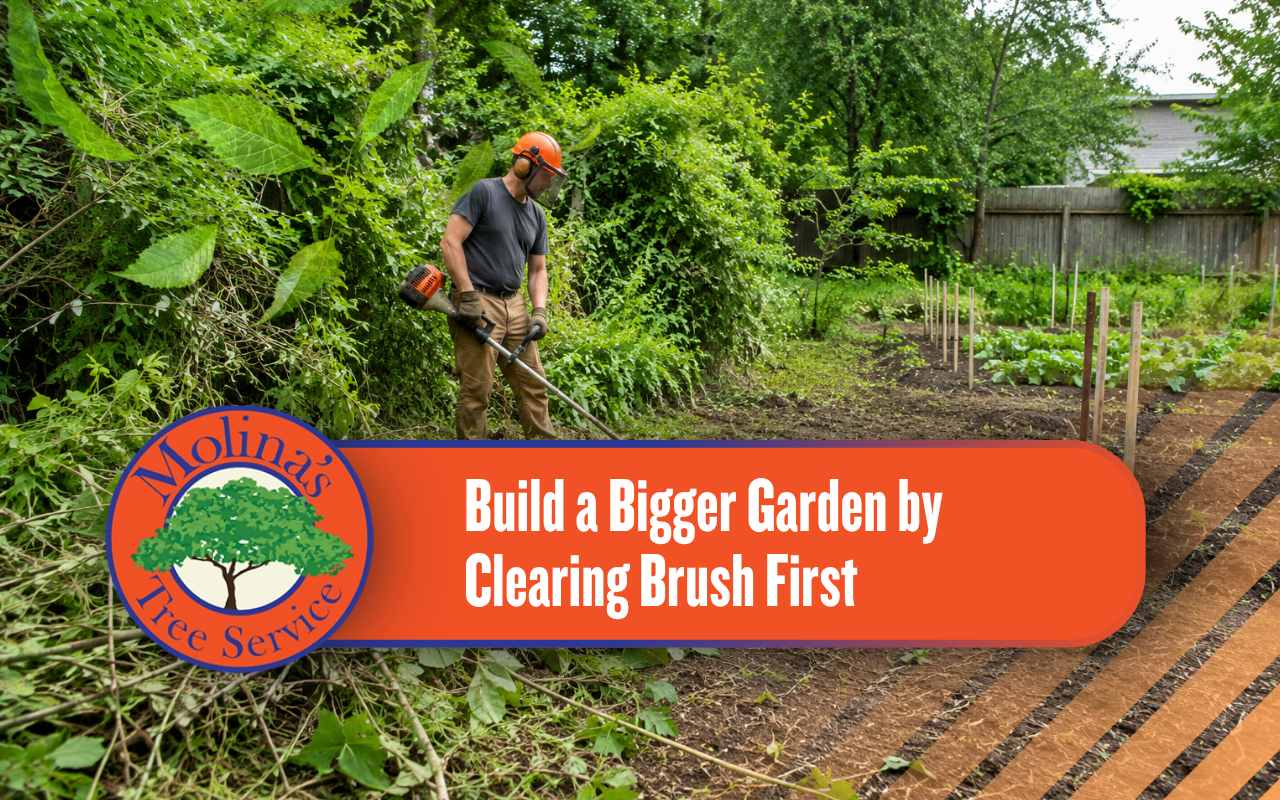
Dense vines, brambles, and unwanted shrubs can take over space that could support vegetables, flowers, or new landscape beds. Brush Removal for Garden Expansion creates a cleaner starting point and makes it easier to see how much usable yard space you can reclaim.
At Molina’s Tree Service & Landscaping LLC, we help homeowners prepare overgrown areas for practical outdoor improvements. Before clearing begins, explore our tree care and landscaping services to understand the support available for your yard project.
Assess the Space Before Clearing Begins
Walk around the overgrown area and study the ground before cutting anything. Look for thick vines, thorny plants, hidden branches, stumps, rocks, and uneven soil. Mark the space you want to turn into a garden so the project has clear boundaries.
- Identify plants or young trees you want to keep.
- Mark hidden obstacles that may affect safe cutting.
- Check how workers and equipment can reach the area.
- Choose a place where cut brush can be collected.
This early review helps you decide whether the area needs light trimming or a complete brush removal service. It also reduces surprises once the cutting and debris removal work starts.
What Should You Remove Before Planting?
Start with plants that block light, movement, and access to the soil. Tangled vines, dead limbs, thorny brambles, invasive shoots, and fallen debris can make future garden work difficult. Removing overgrowth before planting also gives you a clearer view of roots and drainage problems.
With Molina’s Tree Service & Landscaping LLC, you can approach Brush Removal for Garden Expansion as a full yard transformation instead of a quick surface cleanup. Our guide to practical brush removal best practices explains useful steps for handling dense growth carefully.
Choose Safe Tools for Dense Overgrowth
The right tools depend on the size and thickness of the brush. Small stems may only need hand tools, while larger branches and wide areas may require powered equipment. Every tool should be clean, sharp, and suitable for the material being cut.
- Use pruning shears for thin stems and small growth.
- Choose loppers for thicker branches within easy reach.
- Use a hand saw for larger woody stems.
- Wear gloves, eye protection, long sleeves, and sturdy boots.
- Keep a clear path for carrying debris out safely.
Powered cutters can speed up clearing, but they also require more control and safety planning. Homeowners who lack the proper equipment may benefit from professional support rather than taking on heavy growth alone.
Clear Brush in Manageable Working Sections
Begin at the outside edge and move inward. Cut lighter vines and leafy growth first so you can see the thicker stems below. Working in small sections keeps the site open and prevents large piles from blocking your movement.
Our team at Molina’s Tree Service & Landscaping LLC can make Brush Removal for Garden Expansion more organized by separating cutting, root clearing, and debris handling into clear stages. This approach is especially useful when clearing brush to expand garden space across a large or heavily overgrown section.
Do not pull tangled vines without checking where they lead. They may be wrapped around branches, fences, or plants you want to protect. Cut them into shorter pieces and release them slowly to avoid sudden movement.
Handle Debris With a Practical Plan
Brush can create a large amount of material in a short time. Separate small leafy waste from thick branches as you work. This makes disposal easier and keeps the clearing area safer.
- Stack branches in one controlled area.
- Place vines and thorny growth in sturdy containers.
- Chip suitable wood for mulch when practical.
- Remove diseased or invasive plant material separately.
- Arrange responsible hauling for the remaining debris.
Some cleared material can be reused, while other waste needs proper removal. Review these eco-friendly tree waste disposal methods before deciding what to compost, chip, reuse, or haul away.
Prepare the Ground for New Garden Beds
After the visible brush is gone, rake the area and remove loose roots, stones, twigs, and hidden debris. Check for stumps or strong root systems that may return and compete with future plants.
Loosen compacted soil carefully and avoid digging deeper than needed. A soil test can help you understand drainage and nutrient needs without guessing. Add suitable compost or soil material only after you know the condition of the cleared ground.
Before planting, mark the shape of each bed and leave enough room for walking paths. This final layout helps protect the soil from foot traffic and makes watering, weeding, and harvesting easier.
Frequently Asked Questions
How does brush removal create more garden space?
Brush removal opens areas hidden under vines, shrubs, and fallen debris. It reveals the ground, improves access, and helps you measure where beds, paths, or landscape features can fit. For more extensive clearing needs, review our approach to clearing overgrown lots and unwanted trees.
When should I clear brush before planting?
Clear the area before preparing soil, adding compost, or building garden borders. This gives roots and cut growth time to be removed properly. It also helps you spot drainage issues before new plants are placed in the ground.
Can roots and stumps affect a new garden?
Yes. Large roots and old stumps can block digging, compete for space, and produce new shoots. A professional assessment can help determine what should be removed. When you choose Molina’s Tree Service & Landscaping LLC, we focus on creating a cleaner area for the next stage of your project.
What happens to the brush after removal?
Depending on the material, brush may be chipped, composted, reused, or hauled away. Thick branches and invasive growth often need separate handling. Our yard debris disposal guide explains responsible options for managing cleared material.
Is professional clearing useful for small garden projects?
It can be helpful when the area contains thick brambles, heavy branches, hidden stumps, or difficult access. A brush removal service may also reduce the time between clearing and planting. You can contact our team about your garden project to discuss the condition of the space.
Turn Cleared Yard Space Into a Garden
Brush Removal for Garden Expansion can turn an unused corner into a practical place for vegetables, flowers, or improved landscaping. Careful clearing, organized debris removal, and proper ground preparation create a stronger foundation for the garden you want to build.
At Molina’s Tree Service & Landscaping LLC, we help make overgrown spaces easier to use and plan. Request help preparing your garden area and take the next step toward a cleaner, more useful yard.