
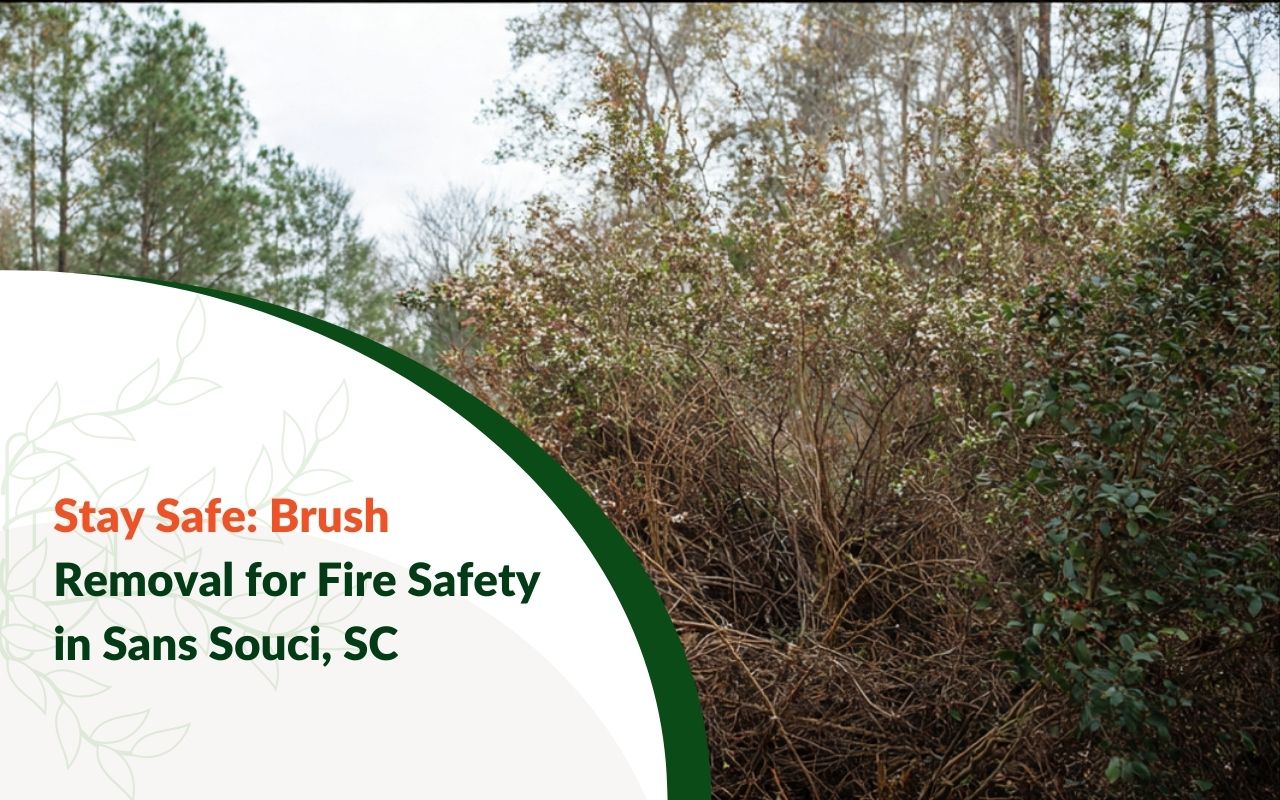
Brush Removal for Fire Safety in Sans Souci, SC helps you feel calm and protected at home. In Sans Souci, SC, wildfires can grow fast, so smart brush cleanup matters. When you clear extra plants, you build a safer buffer zone. That space can also help firefighters work with less risk.
In this guide, Molina’s Tree Service & Landscaping explains simple steps for safer yards. You will learn easy ways to handle cut vegetation, including chip, compost, and haul. You will also learn how to plan steady cleanups through the year. By the end, you will know how to protect what matters most.
Why Brush Removal Matters for Fire Safety in Sans Souci, SC
In Sans Souci, SC, a clear yard can lower wildfire risk. Brush Removal for Fire Safety in Sans Souci, SC means cutting back dry leaves, dead limbs, and thick shrubs. Since these fuels ignite quickly, removing them can slow a fire and reduce heat near your home. As a result, crews may have a safer place to respond.
For homeowners, brush removal in Sans Souci, SC works best when it is routine. Dry stretches and windy days can push flames forward. Therefore, regular clearing reduces fuel and lowers the chance of fast spread. Molina’s Tree Service & Landscaping often sees that steady cleanup supports both home safety and neighborhood safety.
- Reduces dry fuel that can ignite fast
- Slows fire spread near structures
- Helps firefighters move and work more safely
- Supports community-wide risk reduction
Defensible Space Basics for Homes Around Your Property
Next, fire safety improves when you build a defensible space. Defensible space basics for homes focus on a managed buffer around your structure. In simple terms, you reduce flammable material near the home and space plants farther apart as you move outward. Molina’s Tree Service & Landscaping can help you set up zones that match your yard and tree cover.
A practical approach uses three zones. First, keep a small area close to the home extra clean. Then, thin plants and remove clutter in the next section. Finally, reduce “ladder fuels” farther out, so flames cannot climb into tree tops. If you also maintain trees, you may want to explore the team’s tree removal services in Greenville, SC for additional risk reduction.
- Zone 1 (0–5 feet): keep it lean, clean, and green
- Zone 2 (5–30 feet): space plants and remove dead growth
- Zone 3 (30–100 feet): reduce ladder fuels and thin dense brush
How Brush Acts Like a “Fire Ladder”
Brush can help a fire climb from the ground into trees and then toward structures. When thick brush stays in place, it can spark easily and trap heat. Consequently, flames can move faster and burn hotter. By clearing undergrowth early, you break the path that lets small flames become a bigger threat.
In addition, removing brush lowers the amount of fuel a fire can grab. This can slow the advance and give responders more time. Molina’s Tree Service & Landscaping recommends checking for brush piles, dry leaf litter, and low branches that connect ground cover to larger trees, especially before hotter months.
Practical Brush Removal Steps That Keep You Organized
To start, choose tools that match the size of the job. Hand tools work well for light growth, while power tools handle thicker areas. Still, safety comes first, so wear gloves, eye protection, and sturdy boots. Also, plan your work for calm weather days to reduce spark and wind risk.
Then, follow a simple order so the job stays manageable. Define the area, mark hazards, and decide how you will remove debris. If you want more detailed local guidance, see brush removal best practices and adapt the planning ideas to Sans Souci, SC conditions.
- Mark your defensible space boundary first
- Clear low branches, then remove ground-level brush
- Rake up dry leaves and dead plant matter
- Pick a disposal plan before you start cutting
Disposal Methods: Chip, Compost, Haul, and Plan Seasonal Clearing Cycles
After cutting, you need a smart way to handle debris. Disposal methods: chip, compost, haul, plan seasonal clearing cycles can keep your yard tidy and safer. Each option has benefits, so the best choice depends on volume, time, and space. Molina’s Tree Service & Landscaping can also guide you based on your lot size and access.
Chipping turns limbs into mulch that can help soil hold moisture. Composting returns nutrients to the ground, which supports healthy plant growth. Hauling removes material quickly when you have large piles. Finally, seasonal planning keeps fuel from building up again.
Chipping for Fast Cleanup
Chipping reduces bulky brush into small pieces that are easier to manage. It is often quick and efficient, especially for branches and woody stems. Moreover, chips can be used as mulch in garden beds or pathways. However, keep mulch away from the foundation to reduce moisture and fire risk near the structure.
Composting for a Greener Option
Composting can turn smaller vegetation into rich soil material over time. For best results, mix green and brown yard waste and keep the pile lightly damp. Also, turn it often to add oxygen and speed breakdown. When done well, compost supports soil health and helps plants stay stronger during dry periods.
Hauling When You Have Large Piles
Sometimes you need debris gone fast. In that case, hauling can be the cleanest path, especially after storms or heavy overgrowth. Check local rules for drop-off sites and accepted materials. For many homeowners, working with licensed hauling support reduces stress and prevents improper dumping.
Frequently Asked Questions
How often should I schedule Brush Removal for Fire Safety in Sans Souci, SC?
In many cases, plan a focused cleanup in spring and fall. Still, check monthly during dry spells and after storms.
What is the best first step for defensible space basics for homes?
Start with the closest zone near the house. Remove leaf litter, dry plants, and any flammable clutter right away.
Is brush removal in Sans Souci, SC different from other areas?
Yes, local weather and plant growth patterns matter. Dry stretches and windy days can increase risk, so timing is key.
Which disposal methods: chip, compost, haul, plan seasonal clearing cycles works best?
Chipping works well for woody debris, composting fits smaller yard waste, and hauling is best for large volumes.
When should I plan seasonal clearing cycles?
Plan before the hottest, driest part of the year. Also, clear after winter or storm damage to remove new fuel quickly.
Plan Seasonal Clearing Cycles for Year-Round Safety
Consistency matters more than one big cleanup. When you plan seasonal clearing cycles, you stay ahead of fast plant growth. For example, spring clearing removes storm debris and early weeds. Then, fall clearing reduces dry fuel before winter winds and late-season dry weather.
To stay on track, use a simple calendar reminder and a checklist for each zone. If you prefer one team for multiple tasks, review all services from Molina’s Tree Service & Landscaping and choose the support that fits your property.
- Spring: remove storm debris and early overgrowth
- Summer: spot-check dry brush and low branches
- Fall: thin growth and clear leaf buildup
- After storms: remove fresh debris quickly
Protect Your Home With Brush Management That Lasts
Brush Removal for Fire Safety in Sans Souci, SC is a practical way to lower wildfire risk. When you remove fuel, you slow fire spread and improve response conditions. In addition, good brush habits support a safer neighborhood.
Use chipping, composting, or hauling to keep debris under control. Then, keep your plan active with seasonal cycles. With steady work, your yard stays cleaner, safer, and easier to maintain with Molina’s Tree Service & Landscaping.