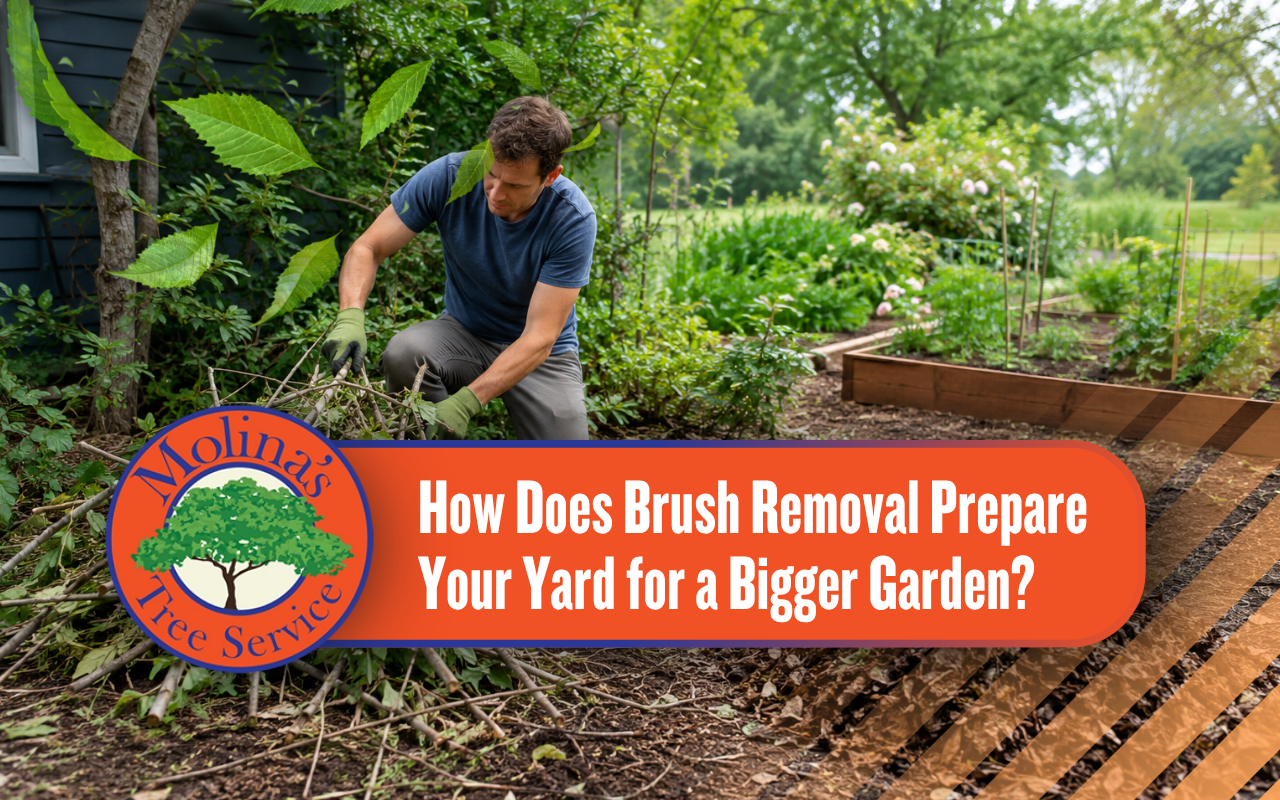
A cleaner yard can also support healthier soil. Brush Removal for Compost-Friendly Yard Cleanup gives homeowners a practical way to sort natural debris, reduce waste, and return useful organic material to the landscape.
At Molina’s Tree Service & Landscaping LLC, we believe responsible cleanup starts with knowing what to keep, compost, or remove. Our guide to eco-friendly tree waste disposal offers more ideas for handling natural debris with care.
Why Does Brush Cleanup Support a Healthier Yard?
Overgrown brush can block sunlight, limit airflow, and take space away from healthy plants. Tangled growth may also hide uneven ground, sharp branches, or areas where pests can settle. Removing this material makes the yard easier to inspect, maintain, and enjoy.
Brush Removal for Compost-Friendly Yard Cleanup also helps separate useful organic matter from debris that may harm a compost pile. Leaves, soft plant cuttings, and small untreated branches can support healthy compost when prepared correctly. Larger, diseased, or treated materials often need another disposal method.
What Can Go Into Your Compost Pile
A successful compost pile needs a balanced mix of green and brown material. Green material adds nitrogen, while dry brush and leaves add carbon. Cutting or shredding woody pieces helps them break down more evenly.
- Dry leaves that show no signs of disease
- Untreated twigs cut into small pieces
- Grass clippings added in thin layers
- Soft plant trimmings without seeds or pests
- Small branches that have been chipped or shredded
Composting brush and small branches safely requires patience. Woody material takes longer to decay than grass or fresh leaves. Mix it with softer material, keep the pile lightly moist, and turn it regularly to improve airflow.
What Yard Debris Should Stay Out
Understanding what yard debris should not be composted protects the finished compost and the plants that receive it. Some materials may carry disease, chemicals, pests, or seeds that survive a basic backyard composting process.
- Diseased leaves, branches, or plant stems
- Pressure-treated, painted, or stained wood
- Invasive weeds with roots or mature seeds
- Pet waste or material contaminated by animals
- Plastic ties, coated wire, and synthetic landscape fabric
- Large branches that have not been chipped
Set unsuitable material aside before building the compost pile. Local collection programs may accept some yard waste, while larger loads may require a brush removal service with the equipment to sort and transport debris responsibly.
Safe Steps for Removing Brush Responsibly
Begin with a careful inspection of the work area. Look for low branches, unstable limbs, hidden holes, utility lines, and debris under thick growth. Our team at Molina’s Tree Service & Landscaping LLC encourages homeowners to avoid cutting anything that feels too heavy, high, or difficult to control.
- Wear gloves, eye protection, closed shoes, and long sleeves.
- Clear a safe path before cutting dense or tangled growth.
- Remove small branches in controlled sections.
- Place leaves, twigs, and larger wood into separate piles.
- Shred compostable brush into smaller pieces when possible.
- Rake the ground and inspect the area for sharp debris.
Do not use a chainsaw, chipper, or powered cutting tool without the right training and protective equipment. A professional cleanup may be safer when branches are under tension, mixed with storm damage, or close to buildings and fences.
Turning Small Branches Into Useful Compost
Small branches can become valuable brown material when they are clean, untreated, and free from disease. Cut them into short sections or pass them through suitable shredding equipment. Smaller pieces give microbes more surface area, which supports faster decomposition.
Layer the woody material with grass clippings, fresh plant cuttings, or suitable kitchen scraps. Keep the pile as damp as a wrung-out sponge. Turn it when the center becomes packed or develops an unpleasant smell. Good airflow supports a steady breakdown process.
Brush Removal for Compost-Friendly Yard Cleanup works best when composting is only one part of the plan. Some wood may be better suited for mulch, municipal collection, or professional removal. Sorting each material by condition and size leads to cleaner compost and less wasted effort.
When Professional Cleanup Makes Better Sense
A brush removal service can be useful when the yard contains heavy piles, thorny growth, large branches, or debris spread across a wide area. Professional equipment can make sorting and hauling more efficient while reducing the physical strain of moving awkward material.
With Molina’s Tree Service & Landscaping LLC, you can discuss which debris may stay for composting and which material should be removed. This approach supports a cleaner work area without treating every branch or leaf as waste.
Professional help may also make sense after strong weather. Broken branches can remain under pressure or become tangled with healthy growth. Careful removal protects nearby plants and makes future yard maintenance more manageable.
Frequently Asked Questions
Can all small branches go into compost?
No. Small branches should be untreated, disease-free, and cut or shredded before composting. Branches affected by severe weather may need closer inspection. Our storm cleanup guide explains how to approach scattered yard debris safely.
How small should brush pieces be?
Pieces should be short and thin enough to mix through the pile without creating large air pockets. Shredded material usually breaks down faster. Thick wood may take much longer and may be better used as mulch or removed.
Can brush removal reduce future yard hazards?
Regular cleanup can improve visibility, reduce dense growth, and make weak branches easier to notice. It also supports wider maintenance efforts. Review our tree maintenance tips for storm prevention for practical ways to prepare your landscape.
What should I do with non-compostable debris?
Separate it from clean organic material and follow local disposal rules. Treated wood, diseased plants, and oversized branches may require collection or professional hauling. At Molina’s Tree Service & Landscaping LLC, we can help you consider suitable cleanup options.
Which services may support a larger cleanup?
The right service depends on the amount, condition, and location of the debris. You can review our tree service and landscaping options to understand which type of support may fit your yard.
Build a Cleaner, Greener Yard With Confidence
Brush Removal for Compost-Friendly Yard Cleanup can turn routine maintenance into a more useful process. By composting safe material, separating unsuitable debris, and removing heavy brush carefully, you support healthier soil and a more manageable outdoor space.
When you choose Molina’s Tree Service & Landscaping LLC, we can help you plan a responsible cleanup based on your yard’s condition. Use our contact page to discuss your brush removal needs and create a clearer path toward a safer, greener yard.