Large oaks can add shade and character to a property, but damaged or declining trees may create serious safety concerns. Oak Tree Removal requires careful planning because heavy limbs, wide canopies, and nearby structures can make the work difficult.
At Molina’s Tree Service & Landscaping LLC, we focus on careful planning and controlled work around your property. If you are already considering removal, our tree removal service options can help you understand the next steps.
Signs an Oak Tree May Be Unsafe
Recognizing problems early can help you address unsafe oak trees before conditions become more serious. Changes in leaves, branches, bark, roots, or trunk structure may show that an oak needs closer attention. Some problems develop slowly, while storm damage can create visible concerns in a short time.
- Dead, cracked, or hanging branches in the canopy
- Large cavities, splits, or damaged areas in the trunk
- Unusual leaf discoloration or early leaf loss
- Fungal growth or visible decay around the trunk
- Changes in the soil or roots near the base
One warning sign does not always mean a tree must be removed. A careful assessment can help determine the condition of the tree, the surrounding risks, and whether removal is the right option.
Professional Planning Helps Reduce Removal Risks
Before cutting begins, a tree crew needs to understand the tree and everything around it. Buildings, fences, driveways, landscaping, other trees, and access points can affect the removal plan. The crew also needs enough working space to control branches and trunk sections as they come down.
Large trees in developed areas often require a more controlled approach. Our guide to large tree removal in urban neighborhoods explains why limited space can change how a removal project is planned.
What Makes Oak Tree Removal More Complex?
Oak trees can develop thick trunks, broad canopies, and heavy limbs. These features can make removal more demanding than cutting a smaller tree. With Molina’s Tree Service & Landscaping LLC, you have a team that considers the tree’s size, condition, location, and surrounding property before deciding how the work should proceed.
Weak or damaged sections can also behave differently during cutting. A branch that looks stable from the ground may have decay, cracks, or poor attachment points. For this reason, the removal plan should account for how each section may move once cuts are made.
Equipment and Cutting Methods Support Controlled Work
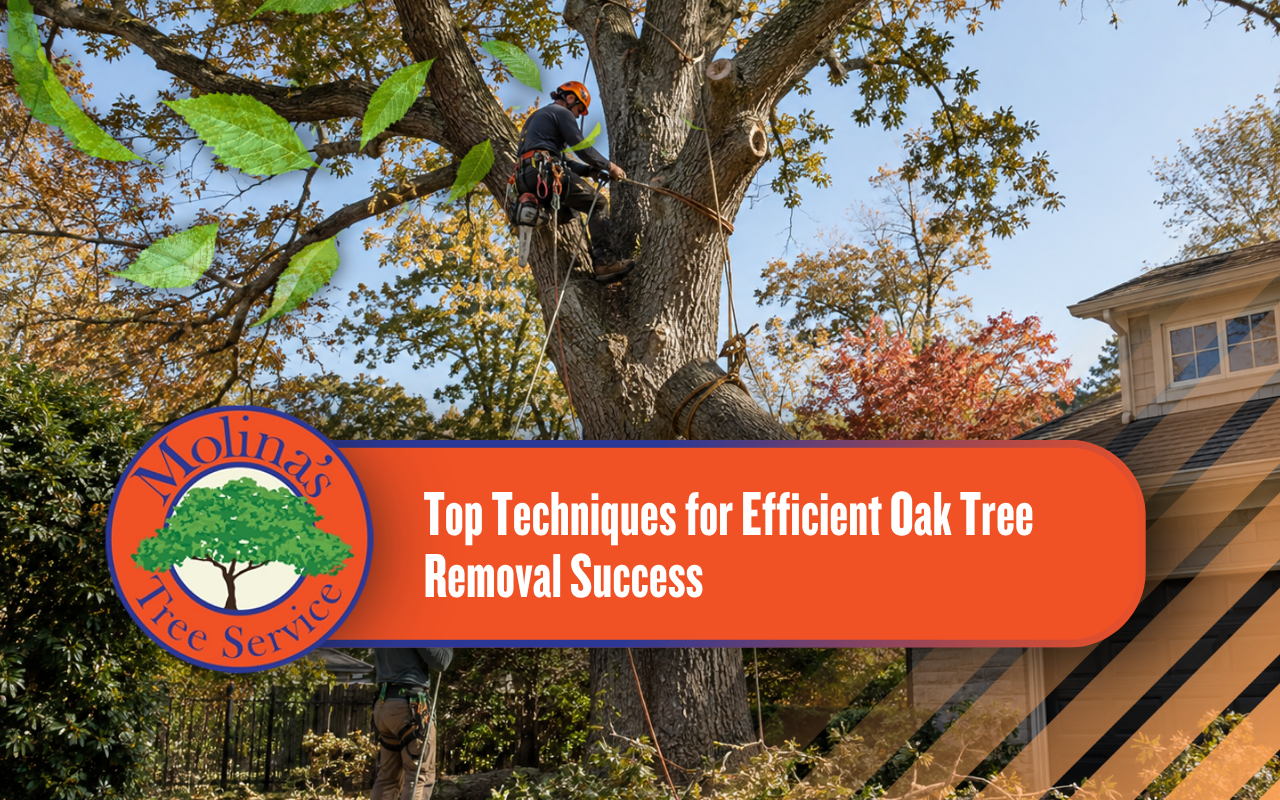
The equipment used for Oak Tree Removal depends on the tree’s height, trunk size, condition, and location. In many situations, crews remove sections gradually instead of bringing down the entire tree at once. This method can provide more control when buildings, landscaping, or other obstacles are nearby.
- Chainsaws sized for different branches and trunk sections
- Ropes and rigging equipment for controlled lowering
- Access equipment for reaching higher parts of the canopy
- Protective equipment for crew members working on site
- Chipping or grinding equipment for cleanup after cutting
Cutting direction also matters. Proper cuts can help guide how branches or trunk sections move. Heavy sections may need to be lowered with ropes instead of being allowed to fall freely.
Protecting Property Throughout the Removal Process
A safe work area starts with identifying where branches and equipment may move. People, vehicles, outdoor furniture, and other movable items should remain outside the active work zone. Clear communication among crew members also helps everyone understand when cutting or lowering is taking place.
Our team at Molina’s Tree Service & Landscaping LLC also considers changing conditions around the tree during the job. Homeowners thinking about handling difficult removal work themselves can review the risks of DIY tree removal before deciding how to proceed.
Storm-damaged trees may need a different approach because broken limbs and weakened trunks can be less predictable. More information is available in our guide to tree removal after storm damage.
Stumps, Debris, and Landscape Recovery After Removal
Removing the tree is only part of the project. The remaining stump, branches, logs, and disturbed ground also affect how the property looks and functions afterward. Planning these steps early can make cleanup easier and help prepare the area for future landscaping.
- Grind or address the remaining stump when appropriate
- Chip smaller branches for easier cleanup or reuse
- Remove or manage larger trunk sections
- Fill and level disturbed areas when needed
- Restore grass, plants, or groundcover around the site
Stump grinding can reduce a remaining obstacle and make the area easier to use. After cleanup, exposed soil may also need attention to reduce erosion and support new grass or plants.
Frequently Asked Questions
How can I tell if an oak tree is becoming unsafe?
Look for large dead branches, cracks, cavities, decay, unusual leaning, or changes around the roots. These signs can suggest a structural problem. Our guide to identifying hazardous trees explains several warning signs homeowners can watch for.
Can I remove a large oak tree myself?
Large tree removal can involve heavy branches, unstable sections, cutting equipment, and limited working space. These conditions can make DIY work dangerous. Before starting, review the common risks of DIY tree removal and consider whether professional help is the safer choice.
When is Oak Tree Removal needed after a storm?
Storm damage may require removal when major limbs, the trunk, or the root system have been seriously affected. When you choose Molina’s Tree Service & Landscaping LLC, we can consider the visible damage and surrounding risks. You can also review our storm damage removal guide.
Does every damaged oak tree need to be removed?
No. Some damaged trees may still have enough sound structure to remain in place, while others may create a greater risk to nearby property. The right decision depends on the type of damage, the tree’s condition, and what is located around it.
What happens to the stump after tree removal?
The stump can remain in place or be addressed as part of the cleanup plan. Stump grinding is one common option because it reduces the visible portion of the stump and can make it easier to restore or reuse the area afterward.
Plan Safer Oak Tree Removal for Your Property
Oak Tree Removal works best when the process considers the tree, the property, and the cleanup from the beginning. Careful planning can reduce unnecessary risks while helping protect nearby structures, landscaping, and usable outdoor space.
At Molina’s Tree Service & Landscaping LLC, we can discuss the condition of your tree and the practical steps for moving forward. If unsafe oak trees are creating concerns around your property, contact our team about your tree removal needs.