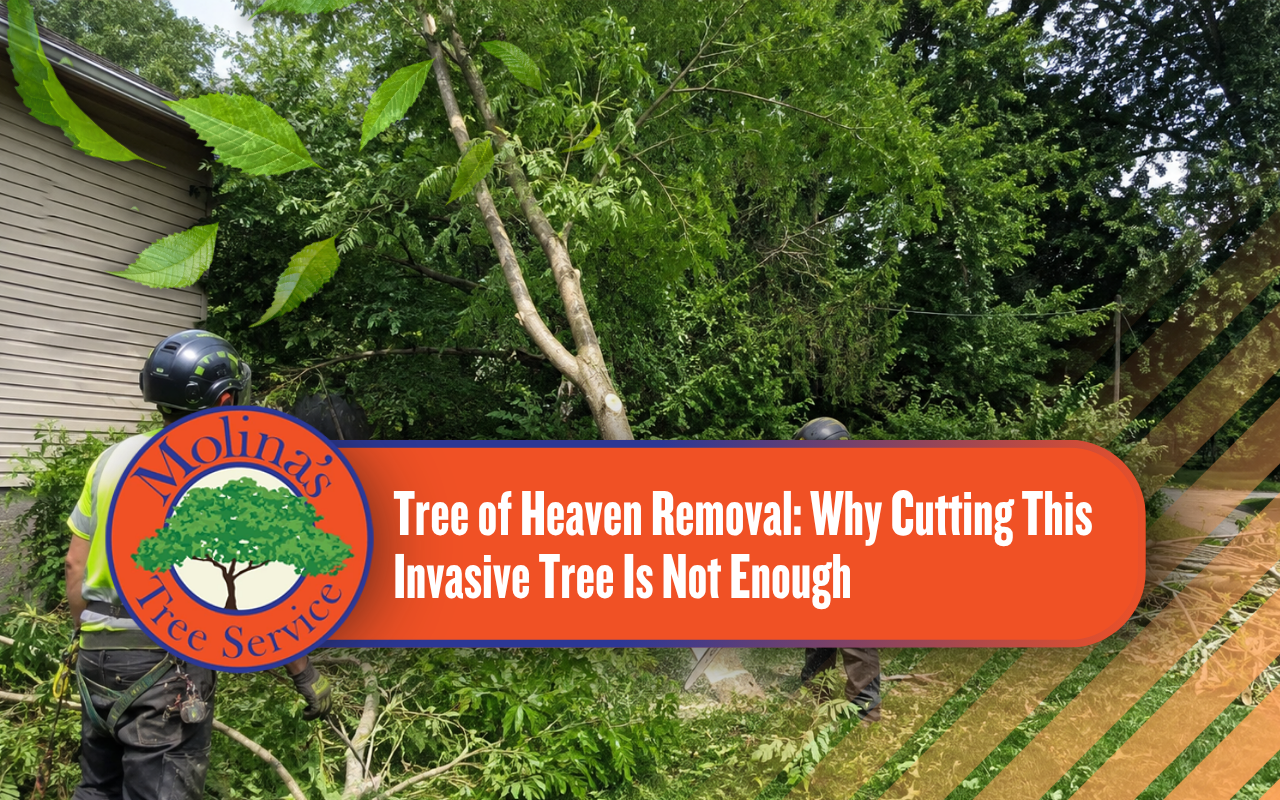
Tree-of-heaven can look like an ordinary fast-growing tree, but its ability to spread through roots and wind-blown seed makes removal more complicated than cutting the trunk. In North Carolina, it is considered an invasive species that can outcompete native plants. Schedule invasive tree removal with an insured team backed by 12+ years of experience.
At Molina’s Tree Service & Landscaping LLC, we help homeowners evaluate invasive trees, difficult access, nearby structures, and cleanup needs. A well-planned removal considers both the visible trunk and the tree’s tendency to resprout.
How to Recognize Tree-of-Heaven
Tree-of-heaven, or Ailanthus altissima, has large compound leaves with many leaflets. Crushed leaves and twigs can have a strong unpleasant odor, and mature trees may produce clusters of papery seeds.
Correct identification matters because several native trees can look similar from a distance. Do not remove a tree solely from an online photo comparison if you are uncertain.
Why Tree-of-Heaven Spreads So Aggressively
The species grows quickly, produces many seeds, and can send up vigorous sprouts from its root system. Cutting the trunk without a broader control plan can trigger more shoots around the original tree.
- Rapid growth in disturbed soil
- Abundant wind-dispersed seeds
- Root suckers far from the trunk
- Ability to grow in poor soil
- Dense colonies that crowd other plants
Plan Removal Before Cutting
Plan lot clearing safely if Tree-of-Heaven has spread across a larger section of the property. A single trunk may only be one part of a connected root system, so the work area should be checked for smaller shoots and nearby seedlings.
The right approach depends on tree size, location, season, surrounding vegetation, and whether follow-up treatment will be needed.
Cutting vs Complete Invasive Management
| Approach | Short-Term Result | Long-Term Concern |
|---|---|---|
| Cut trunk only | Tree is removed above ground | Root sprouts may increase |
| Remove trunk and stump | More material removed | Roots may still resprout |
| Integrated control plan | Targets tree and regrowth | Requires follow-up monitoring |
| Ignore seedlings | No immediate work | New trees can establish quickly |
Why DIY Tree Removal Can Backfire
Tree-of-heaven can grow tall and may appear in tight urban spaces, fence lines, vacant edges, and areas close to buildings. Cutting large limbs without rigging, fall-zone planning, or proper equipment can create serious hazards.
Review our avoid risky tree removal guide before attempting large-tree work yourself.
Urban Trees Need Extra Planning
When a Tree-of-Heaven grows near a house, driveway, fence, utility area, or neighboring property, the removal method should account for limited drop space.
Our review urban tree removal resource explains why sectional removal and controlled lowering may be needed in tight locations.
Common Mistake: Cutting every visible sprout at once without a control plan can stimulate more root suckering. Identification and timing matter.
Why Follow-Up Monitoring Matters
Tree-of-heaven removal is rarely finished the moment the main trunk leaves the yard. New sprouts can appear from surviving roots, and seedlings may emerge where seeds reached open soil. Walk the area regularly during the growing season and note fresh shoots before they become established.
Follow-up is especially important along fence lines, woodland edges, disturbed beds, and areas where equipment exposed bare soil. Catching regrowth early is easier than allowing another cluster of stems to mature.
What to Expect During Professional Removal
A crew may first establish a work zone, identify targets below the canopy, and decide whether the tree can be felled whole or must be dismantled in sections. Access for ropes, saws, loaders, or hauling equipment can affect the sequence.
After the main trunk is down, cleanup may include limb processing, hauling, stump options, and removal of smaller volunteer shoots around the original tree.
What Happens After the Main Tree Is Gone
Monitor the area for new shoots during the following growing seasons. Young sprouts are easier to address than another mature tree.
Also watch nearby fence lines, disturbed soil, and open landscape beds where seeds may establish.
Permits and Property Boundaries in Raleigh
Most private-yard decisions are different from work involving City trees or public right-of-way. Raleigh requires a Tree Impact Permit for work affecting City trees, including pruning or removal in public areas.
If the trunk or root zone is near the street, sidewalk, or public property, confirm ownership before starting removal.
Choose a Removal Plan That Includes Follow-Up
Tree-of-Heaven removal is more successful when homeowners plan for regrowth instead of treating the project as a one-day cut-and-go job. The removal scope should explain trunk work, debris handling, stump options, and follow-up expectations.
Explore complete tree services with our team at Molina’s Tree Service & Landscaping LLC for insured service, 24/7 emergency availability, and 12+ years of hands-on experience.
Frequently Ask Question
Is Tree-of-Heaven invasive in North Carolina?
Yes. NC State Extension identifies Tree-of-Heaven as a problematic invasive species that can spread rapidly and displace native plants.
Will cutting Tree-of-Heaven kill it?
Not necessarily. Cutting can stimulate vigorous root sprouts, so a broader control plan is often needed.
How can I tell Tree-of-Heaven from native trees?
Look at leaf structure, leaflet shape, bark, seed clusters, and odor, but get expert identification when uncertain.
Do large invasive trees require special equipment?
They often do when they are tall, unstable, near buildings, or located where there is little safe drop space.
Do you remove invasive trees?
Yes. Our insured team handles invasive tree removal, lot clearing, debris removal, and related tree services.
Start invasive tree removal with our insured team for a removal plan that considers access, cleanup, and follow-up regrowth.