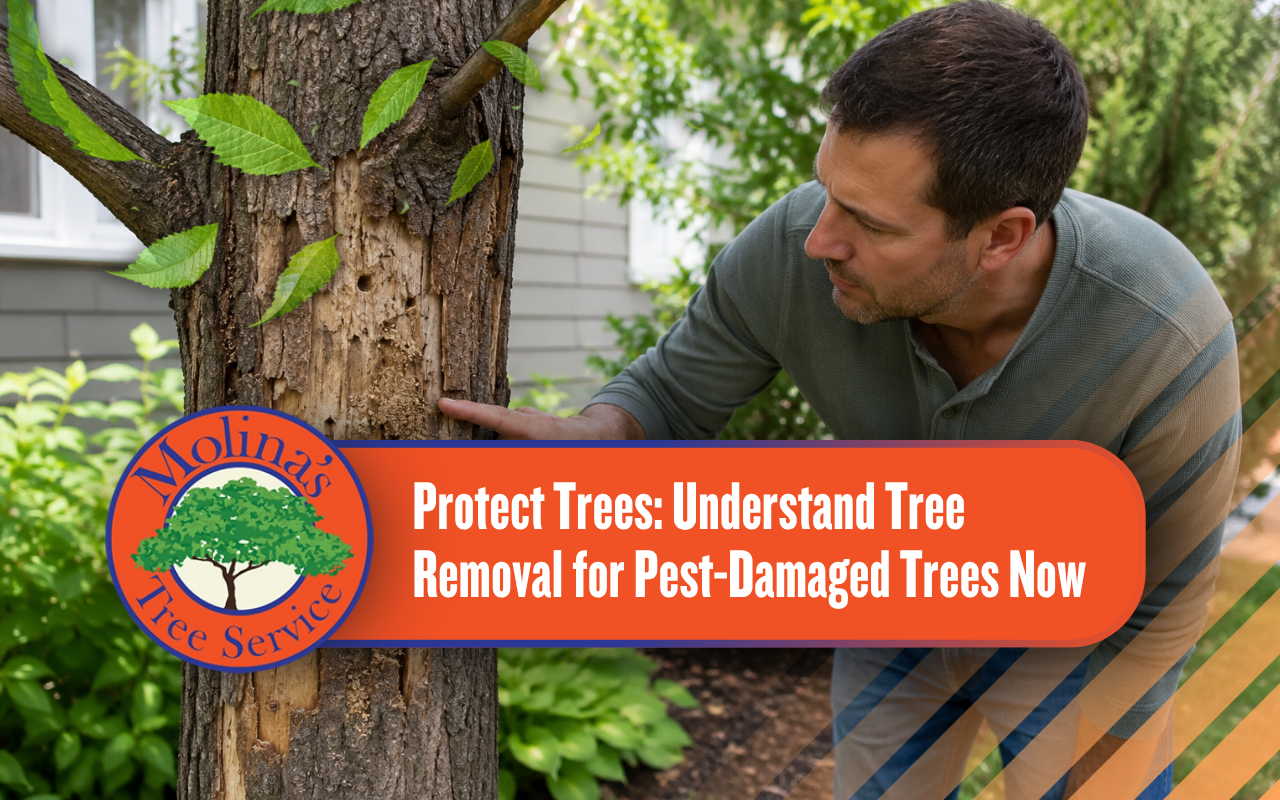
Pests can turn a strong tree into a serious safety concern. Visible holes, loose bark, thinning leaves, and weak branches may show that insects have damaged the tree from the inside. At Molina’s Tree Service & Landscaping LLC, we help homeowners understand when Tree Removal for Pest-Damaged Trees may be necessary.
Pest activity can also allow fungi and disease to enter damaged wood. Knowing how to spot signs of tree disease can help you recognize problems before the tree becomes unstable.
Early Warning Signs of Serious Pest Damage
Some insect activity causes only minor stress, while other damage weakens the trunk, branches, or roots. Inspect your trees regularly, especially after storms or long periods of dry weather. Common signs pests have damaged a tree include:
- Small round, oval, or D-shaped holes in the bark
- Sawdust-like material collecting around the trunk
- Loose, cracked, peeling, or missing bark
- Dead branches or thinning leaves near the crown
- Sticky residue, dark mold, or insect eggs on leaves
- Mushrooms or soft wood near the tree base
- Woodpeckers repeatedly feeding on the same trunk area
One symptom does not always mean removal is required. However, several warning signs together may point to advanced internal damage. Our team at Molina’s Tree Service & Landscaping LLC can examine the affected areas and identify visible safety concerns.
How Insects Weaken a Tree From Within
Bark beetles, borers, and wood-boring caterpillars create tunnels beneath the bark. These tunnels interrupt the movement of water and nutrients. As the damage spreads, branches may die, the crown may thin, and sections of the trunk may lose strength.
Sap-feeding insects, including aphids and scale insects, weaken leaves and young branches. Defoliators reduce the tree’s ability to produce energy. Root-feeding pests can damage the underground support system, making the tree more likely to lean or fall.
Because much of this damage remains hidden, the outside of a tree may look healthier than its interior. A professional tree removal service can evaluate whether damaged wood still has enough strength to remain safely in place.
When Does Pest Damage Make a Tree Unsafe?
Pest damage becomes a major concern when it affects the tree’s structure rather than only its appearance. Large dead limbs, deep trunk cavities, root decay, and major bark loss may reduce the tree’s ability to support its own weight.
Location also matters. A weakened tree beside a home, driveway, walkway, play area, or utility line creates a greater risk. When pest damage makes a tree unsafe, Tree Removal for Pest-Damaged Trees may be safer than waiting for branches or the trunk to fail.
With Molina’s Tree Service & Landscaping LLC, you receive a practical review of the tree’s visible condition and surroundings. Homeowners can also use our guide to identifying hazardous tree conditions to understand common warning signs.
Common Connections Between Pests and Tree Disease
Insects often create openings that allow fungi and bacteria to enter the tree. Once these organisms reach the inner wood, they may cause cankers, root rot, soft tissue, or internal decay. This combined damage can move faster than either problem alone.
Oozing wounds, sunken bark, mushrooms, dark stains, and soft wood may indicate a secondary infection. These symptoms deserve prompt attention because decay can reduce structural strength even after the original pest activity slows down.
Tree Removal for Pest-Damaged Trees may help limit nearby exposure when an infestation and disease are both advanced. Removal decisions should consider the tree’s condition, location, species, and ability to recover.
Safety Risks Around Homes and Outdoor Areas
A damaged tree may fail without much warning, especially during high winds or heavy rain. Pest activity can weaken several parts of the tree at the same time. Important risks include:
- Dead branches falling onto roofs, vehicles, or walkways
- A weakened trunk splitting under wind pressure
- Damaged roots losing their grip in wet soil
- Infested wood spreading pests to nearby trees
- Decay making climbing or cutting more dangerous
Trying to cut an unstable tree without proper equipment can increase these dangers. Review the risks of DIY tree removal before attempting work around damaged limbs, leaning trunks, or hidden decay.
What a Professional Tree Inspection Should Evaluate
A careful inspection looks beyond visible insects. It considers how much damage has occurred, whether the tree can recover, and what could happen if a branch or trunk section fails. The evaluation should include:
- The location, size, and number of bark openings
- The amount of dead wood in the crown
- Cracks, cavities, decay, or weak branch connections
- Root damage, soil movement, or a recent lean
- Nearby homes, roads, fences, and outdoor activity areas
- The likelihood that pests will spread to other trees
When you choose Molina’s Tree Service & Landscaping LLC, we focus on the tree’s condition and the safety of the surrounding area. An inspection can clarify whether monitoring, pruning, treatment, or removal is the most suitable next step.
Frequently Asked Questions
Can a pest-damaged tree recover without removal?
Some trees can recover when damage is limited and the trunk, roots, and main branches remain stable. Early identification improves the range of possible options. Our tree disease warning guide explains additional symptoms that may affect recovery.
Do insect holes always mean a tree is dangerous?
No. A few holes may not indicate serious structural damage. Concern increases when holes appear with loose bark, dead branches, sawdust, canopy loss, decay, or leaning. A professional inspection can determine whether the damage is active and how deeply it has affected the wood.
How quickly should an unsafe tree be inspected?
Arrange an inspection promptly when a tree is leaning, dropping large branches, showing trunk cracks, or standing near people and structures. You can review more hazardous tree warning signs before scheduling an assessment.
Can removing one tree protect nearby trees?
Removal may reduce the available host material when pests have heavily infested a tree. Proper handling of branches and wood also matters because insects may remain inside cut material. Tree Removal for Pest-Damaged Trees should include a plan for containing and removing affected debris.
Why should homeowners avoid removing damaged trees themselves?
Pest-damaged wood can break differently from healthy wood. Internal decay may cause limbs or trunk sections to move without warning. Our guide to DIY tree removal hazards explains why unstable trees require careful planning and suitable equipment.
Plan Safe Removal and Protect Nearby Trees
Acting before a weakened tree fails can protect your home, outdoor areas, and surrounding trees. At Molina’s Tree Service & Landscaping LLC, we assess visible pest damage, structural concerns, and the tree’s location before discussing the next step.
For Tree Removal for Pest-Damaged Trees, explore our tree removal options and request a tree safety inspection. A timely review can help you make a safer and more informed decision.