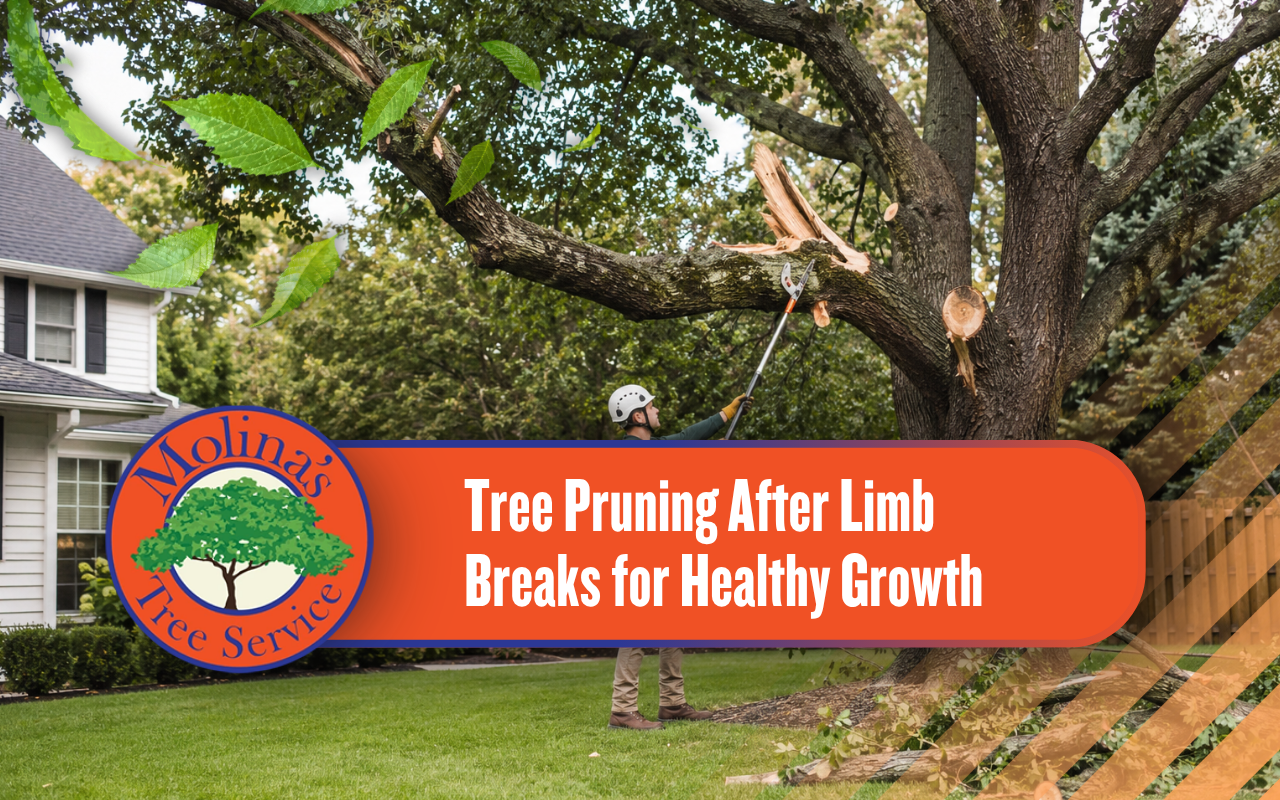
A broken tree limb can leave exposed wood, torn bark, and unstable branches. Corrective Tree Pruning After Limb Breaks removes damaged material carefully so the tree can protect the wound, rebuild a balanced canopy, and direct energy toward healthier growth.
At Molina’s Tree Service & Landscaping LLC, we approach damaged trees with safety and long-term health in mind. Proper cuts can reduce hazards and limit future problems. Our guide to pruning for tree health and structure explains why careful branch management matters.
Why Broken Limbs Need Corrective Pruning
A damaged limb rarely leaves a clean wound. Storms, falling objects, or sudden impact can split wood and tear bark below the break. These rough surfaces hold moisture and create weak areas where insects, fungi, and decay may enter.
Corrective pruning removes loose fibers and damaged wood without cutting away more healthy tissue than necessary. It also reduces the weight of hanging branches that may fall without warning. A clean pruning cut gives the tree a better boundary around the injury.
The goal is not to make the wound disappear. Trees do not heal damaged wood like human skin. Instead, they form new tissue around the injury and isolate the affected area. Correct pruning supports this natural process while preserving as much healthy growth as possible.
How Should You Assess Branch Damage?
Begin by viewing the tree from a safe distance. Look for hanging branches, split unions, exposed wood, leaning sections, and cracks that continue toward the trunk. Corrective Tree Pruning After Limb Breaks should begin only after the full extent of the damage is understood.
Check the ground for fallen pieces and mark areas where people should not walk. A broken branch may remain partly attached even when it appears stable. Wind or movement in the canopy can cause it to fall suddenly.
Our team at Molina’s Tree Service & Landscaping LLC can evaluate damage that involves large limbs, elevated cuts, or important structural branches. Before pruning, consider these warning signs:
- A branch is hanging above a home, vehicle, walkway, or play area.
- The break reaches the trunk or a major branch union.
- Bark has torn far below the original point of impact.
- The tree has several damaged limbs on the same side.
- Power lines or utility equipment are near the work area.
Safe Tools and Setup for Tree Recovery
The right equipment helps create smoother cuts and lowers the risk of injury. Tools should match the size of the damaged branch. Dull blades can crush wood fibers, leave rough edges, and make the pruning process harder to control.
- Use bypass pruning shears for small branches and young growth.
- Choose loppers for medium branches that can be reached from the ground.
- Use a pruning saw for larger limbs that are safe to handle.
- Wear gloves, eye protection, sturdy footwear, and protective clothing.
- Clean cutting blades before and after working on damaged wood.
- Keep other people and pets outside the work zone.
Do not use a ladder while holding cutting equipment unless you have the correct training and support. Large branches can swing, split, or fall in an unexpected direction. A professional tree pruning service is the safer choice when cuts cannot be made securely from the ground.
Correct Pruning Cuts That Support Healing
Learning how to prune after branch damage starts with locating the branch collar. This slightly raised area sits where a branch connects to the trunk or a larger limb. A final cut should normally be made just outside this collar.
Cutting through the collar can damage tissue that helps the tree seal the wound. Leaving a long stub can also create problems because the remaining wood may die back and decay before the tree can close around it.
For a heavy or partly attached limb, use a three-cut method. The first cut goes underneath the branch, away from the trunk. The second cut is made farther out from the top, removing most of the limb. The final cut removes the remaining stub outside the collar.
With Molina’s Tree Service & Landscaping LLC, you receive a careful approach that considers branch weight, bark condition, and canopy balance. Corrective Tree Pruning After Limb Breaks should protect the tree’s natural shape rather than remove healthy branches without a clear reason.
When damage affects the upper canopy, selective reduction may improve balance. Our overview of tree crown reduction techniques explains how targeted cuts can reduce stress without topping the tree.
Preventing Decay and Supporting Healthy Regrowth
Preventing decay after broken limbs depends mainly on clean cuts and good tree care. Wound paint and sealants are not usually needed. Some coatings can trap moisture against the wood and interfere with the tree’s natural defense process.
After pruning, support recovery by protecting the root area and reducing added stress. Healthy roots supply the water and energy needed for new tissue growth around the wound.
- Water deeply during dry periods without keeping the soil constantly wet.
- Place mulch around the root zone while keeping it away from the trunk.
- Avoid parking, digging, or storing heavy materials beneath the canopy.
- Watch for mushrooms, soft wood, holes, or dark fluid near the wound.
- Remove new shoots only when they create weak or crowded growth.
- Schedule follow-up checks after strong winds or heavy rain.
Disease prevention also depends on regular inspections and timely pruning. Review our guide on how pruning helps prevent disease for additional ways to protect vulnerable trees.
When Professional Tree Pruning Is Safer
Small branches near the ground may be manageable with basic tools and careful planning. Large, elevated, or unstable limbs require more control. Their weight can tear additional bark, damage nearby property, or cause serious injury during removal.
Professional support is especially important when the main trunk is split or the tree has lost a large part of its canopy. At Molina’s Tree Service & Landscaping LLC, we can assess whether pruning can restore a safe structure or whether the damage requires another solution.
A qualified evaluation can also identify hidden concerns, including internal decay, weak branch unions, root movement, and cracks that are difficult to see from the ground. Early action may prevent a damaged section from becoming a larger hazard.
Frequently Asked Questions
Can a tree recover after losing a large limb?
Many trees can recover when enough healthy trunk, roots, and canopy remain. The outcome depends on the size and location of the break. A severe injury near the trunk should be assessed carefully. Our guide to storm prevention tree maintenance can help reduce future damage.
Should I cut a broken branch immediately?
Remove an immediate hazard only when the work can be completed safely. Hanging limbs, branches near power lines, and heavy sections above property require professional equipment. When you choose Molina’s Tree Service & Landscaping LLC, we evaluate the safest removal method before making corrective cuts.
Should pruning paint cover the exposed wood?
Pruning paint is generally unnecessary for routine branch wounds. A properly placed cut allows the tree to form protective tissue naturally. Good watering, healthy soil, and careful monitoring usually provide more value than coating the exposed area.
How often should the damaged area be checked?
Inspect the wound every few weeks during the first growing season and after severe weather. Look for loose bark, soft wood, fungal growth, insects, or new cracks. Regular structural pruning practices can also address weak growth as the canopy develops.
Can future limb breaks be prevented?
Not every break can be prevented, but routine inspections can identify deadwood, crowded branches, weak unions, and unbalanced growth. Timely tree trimming support can reduce avoidable stress before storms or strong winds occur.
Plan the Next Step for Safer Recovery
Corrective Tree Pruning After Limb Breaks can reduce immediate hazards while giving the tree a stronger path toward recovery. The right response depends on the branch size, wound location, remaining structure, and safety conditions around the tree.
At Molina’s Tree Service & Landscaping LLC, we can help you understand the damage and choose a careful next step. Use our contact page for corrective pruning support or explore our tree health and structural pruning guide to begin protecting your damaged tree.