
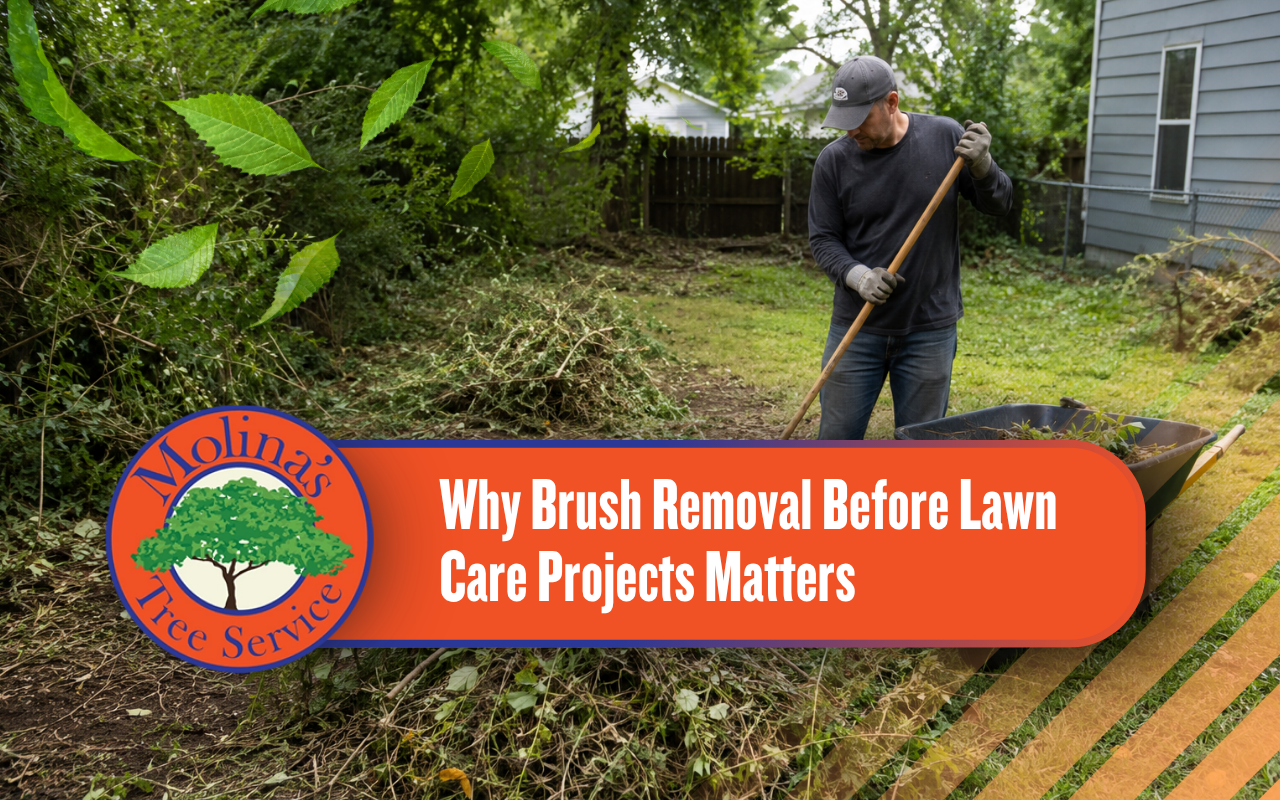
Proper brush removal before lawn care projects gives grass a better place to grow. Dense weeds, vines, and small saplings can block light, hold moisture, and crowd healthy turf. Clearing the area first creates cleaner soil, safer access, and better results for mowing or seeding.
At Molina’s Tree Service & Landscaping LLC, we use practical steps that protect your yard and reduce extra work. A clean surface helps tools move safely, lets seed reach the soil, and gives grass enough space to become fuller and more even.
Early Brush Clearing Supports Better Lawn Growth
Completing brush removal before lawn care projects matters because grass needs sunlight, water, and room. Thick growth can shade the lawn and compete for moisture. As a result, turf may become thin or patchy even when you water and fertilize it often.
Knowing how brush buildup affects lawn growth also helps prevent lasting damage. Old stems and roots can trap damp debris, reduce airflow, and create hiding places for insects. For wider property care, review our complete outdoor service options.
Common Brush Types That Disrupt Healthy Lawn Areas
Not all overgrowth looks the same. Some plants spread across the ground, while others grow quickly and create heavy shade. Before using tools, identify what is growing so you can choose a safe and useful removal method.
- Young saplings that compete with grass roots
- Thorny brambles that block access and hide debris
- Fast-growing vines that cover shrubs and fences
- Heavy weeds that spread seeds across open soil
Our team at Molina’s Tree Service & Landscaping LLC checks these growth patterns before work begins. This careful review helps protect nearby plants, irrigation lines, lawn edges, and other useful parts of the landscape.
Essential Tools Make Brush Cleanup Safer And Easier
The right tools depend on the size and thickness of the growth. Hand pruners work well for thin stems, while loppers handle larger branches. A rake, tarp, and wheelbarrow also make cleanup faster and keep cut material under control.
- Wear gloves, eye protection, boots, and long sleeves
- Use sharp tools that match each branch size
- Keep children and pets away from work areas
- Check the ground for rocks, holes, and wire
For larger spaces, a brush cutter or brush mower may be needed. However, heavy equipment should only be used when the ground is clear and the operator can control it safely.
Safe Steps For Clearing Brush Before Regular Mowing
A brush removal service often follows a clear order. First, mark the work area and inspect it for hazards. Next, cut larger stems close to the ground. Then remove vines, weeds, and loose debris before bringing mowing equipment into the space.
Clearing brush before mowing or seeding reduces the chance of blade damage and flying debris. After the main growth is gone, rake the ground and walk across it slowly. This final check can reveal roots, stones, or low stumps.
Better Soil Preparation Creates Stronger New Seeding Results
Once the brush is cleared, look closely at the soil. Hard ground may need light aeration so water and air can move deeper. Bare areas may also benefit from a thin layer of compost or topsoil before grass seed is spread.
Good brush removal before lawn care projects improves contact between seed and soil. After seeding, rake lightly and water with a gentle spray. Keep people and pets away while young grass starts growing because its early roots are easy to disturb.
Responsible Brush Disposal Protects Yards And Local Communities
Brush piles should not remain near fences, sheds, or dry grass. They can attract pests, hold moisture, and increase fire risks. Therefore, sort the material so branches, leaves, and vines can be handled in the most useful way.
- Chip clean branches for mulch around garden beds
- Compost soft leaves and untreated plant material
- Use local yard waste collection when available
- Arrange professional hauling for large mixed piles
For practical ideas, read our guide to eco-friendly tree waste disposal methods. Proper handling keeps the property cleaner and supports safer recycling.
Frequently Asked Questions
When should brush be cleared before lawn work?
Clear it before mowing, aerating, or seeding. This gives you enough time to remove hidden debris and prepare the soil without rushing.
Can small brush be removed with hand tools?
Yes. Pruners, loppers, and a rake can handle light growth. Dense or woody areas may need stronger equipment or professional support.
Why does brush return after being fully cut?
Many plants grow again from roots or dropped seeds. Regular mowing, root removal, and seasonal checks help reduce new growth.
Is professional removal safer for large lawn areas?
Often, yes. Trained crews have suitable tools, safe work methods, and better ways to manage large piles of debris.
How can homeowners prevent future brush buildup?
Inspect the yard often, trim young shoots, mow on schedule, and cover open soil with healthy grass or mulch.
Professional Support Keeps Your Lawn Projects Moving Forward
Managing brush removal before lawn care projects can be difficult when growth is thick, uneven, or spread across a large property. With Molina’s Tree Service & Landscaping LLC, you receive careful cleanup and clear guidance based on your yard’s condition.
Review our Cary neighborhood cleanup guidance and Wake Forest HOA brush advice. Then, contact our team about preparing your lawn before mowing, seeding, or other improvements.