
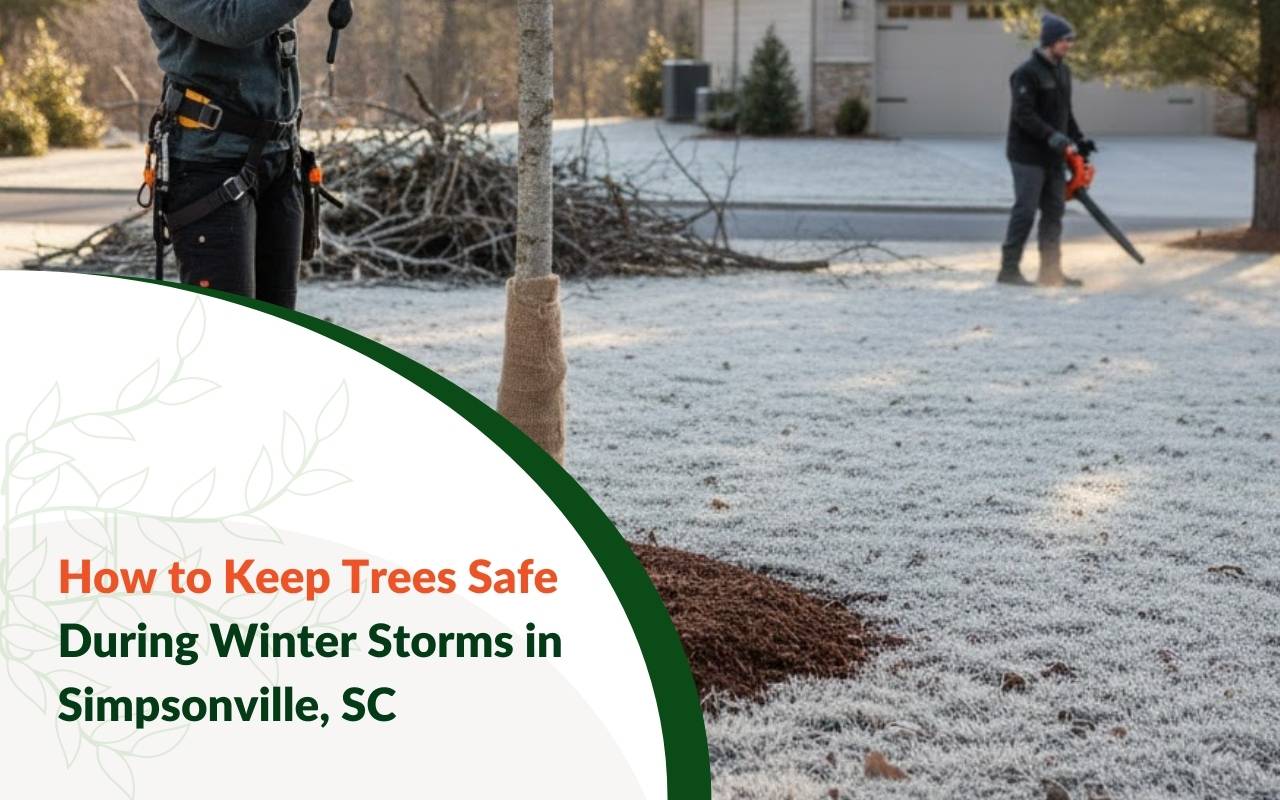
How to Keep Trees Safe During Winter Storms in Simpsonville, SC starts with simple, steady care before cold weather. As winter approaches, heavy snow and strong wind can strain branches and leave even healthy trees at risk.
Without preparation, broken limbs may harm your home, vehicles, or power lines. However, when you understand how your trees respond to ice and wind, you can prevent many winter problems. This guide explains practical steps, from early checks and pruning to support, mulching, and professional inspections tailored to Simpsonville, SC.
Assessing Tree Health Before Winter
Before freezing nights arrive, take time to see which trees are strong enough and which need extra help. This careful review is a key part of How to Keep Trees Safe During Winter Storms in Simpsonville, SC. First, walk slowly around each tree and look for loose bark, insect holes, leaning trunks, or exposed roots.
- Look for missing or peeling bark along the trunk and main limbs.
- Check for insect galleries, holes, and sawdust near the base.
- Notice any leaning trees, especially near buildings or driveways.
- Observe raised soil or exposed roots that might signal instability.
Next, study branches from the ground and use binoculars, if needed, so you notice cracks, splits, or dead limbs near the top. Additionally, checking trees for weak spots before storms helps you decide which ones need pruning, cabling, or expert support. Also examine the soil; soggy or compacted ground often signals poor drainage and weaker roots.
Strengthening Trees Against Winter Storms
Once you know which trees are vulnerable, strengthen them so they can handle snow, ice, and gusty wind. Wrapping young trunks with light tree guards helps limit frost cracks and sunscald when temperatures swing up and down. Additionally, use soft, wide straps to tie risky limbs toward the main trunk, creating support you can remove in spring.
- Install tree guards on thin-barked species exposed to direct sun.
- Use flexible straps rather than wire to avoid cutting into bark.
- Check supports regularly so they remain snug but not too tight.
- Remove temporary supports in spring to encourage natural movement.
After each storm, gently brush off loose snow to reduce strain on heavy limbs. By following these steps, you also learn how to prevent branches from breaking under snow without harsh shaking or heavy tools. Together, these actions support How to Keep Trees Safe During Winter Storms in Simpsonville, SC for many seasons.
Pruning Techniques for Winter Preparation
Timing matters when you decide when to prune before a cold front and prepare trees for storms. Late fall or early winter, when trees are dormant, is usually best because it reduces sap loss and stress. Start by removing dead, damaged, or crossing branches so air can move through the canopy and strong winds cause less damage.
Always use clean, sharp tools and cut just outside the branch collar to help wounds seal naturally. Avoid leaving long stubs or making flush cuts, since both slow healing and invite pests. If the canopy is tall, dense, or near power lines, consider scheduling expert tree trimming in Simpsonville, SC for safer results. For extra planning, review guidance about when to trim your trees in South Carolina and the best times for trimming in SC.
Mulching for Winter Protection
Mulch works like a cozy blanket for tree roots during cold months. Spread a 2–4 inch layer of organic material, such as wood chips, pine needles, or shredded bark, around the base of each tree. This layer helps regulate soil temperature and reduces moisture loss during dry winter periods.
However, keep mulch a few inches away from the trunk to avoid rot and pest problems. Over time, the mulch will break down and enrich the soil with valuable nutrients. Applying it in late fall, after the ground cools but before freezing, gives roots time to benefit from insulation and reduces frost heaving, especially for younger trees.
Supporting Young Trees During Winter
Younger trees often need extra care, and many homeowners ask about the best way to support young trees in winter without slowing growth. Begin by anchoring saplings with two or three stakes placed a short distance from the trunk. Then, attach flexible ties loosely so the tree can still sway slightly and build strong roots.
Additionally, consider installing a breathable tree wrap or trunk guard to protect thin bark from sunscald and curious animals. Water young trees deeply before the ground freezes so roots start winter well hydrated. On windy sites, a simple burlap screen on the windward side reduces cold stress and snow buildup around the base.
Identifying and Addressing Weak Tree Branches
Spotting unstable limbs before winter storms can prevent emergencies. Look for cracks along major branches, hollow sections, or bark that splits away from the wood. These signs often point to internal decay or structural weakness that may fail under heavy snow or ice.
When you find a compromised limb, use proper pruning cuts outside the branch collar and clean tools to limit disease spread. If a limb or trunk is too damaged to save, consider professional tree removal in Simpsonville, SC. After removal, follow up with stump grinding services to keep the area safe, neat, and ready for replanting.
Importance of Professional Tree Inspections
A local winter storm tree inspection service can spot minor decay, pests, and structural issues that are easy to miss. Trained arborists understand how local weather, soil types, and neighborhood conditions affect tree health. During a visit, the specialist can explain How to Keep Trees Safe During Winter Storms in Simpsonville, SC using advice tailored to your property.
Scheduling an inspection in early fall gives plenty of time to plan pruning, cabling, or bracing before harsh weather. Additionally, a written report creates helpful records for insurance or long-term maintenance. Whenever you notice concerning cracks, sudden leaning, or storm damage, you can request a detailed inspection and get clear recommendations.
Dealing with Ice Accumulation on Trees
Ice can be more dangerous than snow because it sticks firmly to branches and adds heavy weight. After an ice event, gently tap branches with a soft broom handle to loosen thick buildup. However, avoid forceful shaking or pulling, since sudden movement can cause limbs to snap.
Before storms arrive, loosely wrapping vulnerable branches in foam or burlap netting can help ice slide off more easily. Additionally, keep trees well watered in the weeks before freezing weather, because hydrated wood bends more and snaps less. With careful prevention and patient cleanup, you reduce the chance of serious winter damage.
Emergency Measures for Tree Care During Severe Winter Weather
After a strong storm, safety comes first for your family and neighbors. If you see hanging limbs, downed wires, or leaning trunks, keep people and pets away from the area. Then, contact a certified arborist for any large, high, or complicated damage instead of taking risky steps yourself.
- Mark and rope off danger zones near broken limbs or leaning trees.
- Take photos of damage for insurance before cleanup begins.
- Use temporary braces only if you can do so safely from the ground.
- Avoid chainsaw work unless you are trained and conditions are stable.
Temporary supports, such as guy wires or adjustable braces, may keep a cracked trunk from splitting further until help arrives. Additionally, apply wound sealant only when recommended, since many trees heal better with open, clean cuts. By acting quickly yet carefully, you lower long-term risks and protect your landscape.
Frequently Asked Questions
When should I start preparing my trees for winter storms?
Ideally, begin planning in late summer and start physical work in early fall. This schedule allows time for inspections, pruning, and mulching before the first hard freeze arrives.
Is it safe to shake snow or ice off tree branches?
Lightly brushing off loose snow with a soft broom is usually fine. However, avoid strong shaking, beating, or kicking, because sudden shocks can crack branches and create hidden weaknesses.
Which trees in my yard are most at risk during winter?
Trees with shallow roots, existing cracks, dead limbs, or recent construction damage face higher risk. Young trees and those near driveways, roofs, or power lines also need closer monitoring before and after storms.
How do I know when to call a professional arborist?
Call a professional whenever you see large broken limbs, leaning trunks, or damage near wires or buildings. You should also seek help if you feel unsure about safe pruning heights or tools.
Do evergreen trees need winter protection too?
Yes, evergreens can suffer from snow load, ice, and drying winter winds. Mulch, careful pruning, and occasional inspections help keep them healthy, especially when they grow close to homes or streets.
Ensuring Tree Health and Survival Through Winter
Consistent care, early planning, and smart choices help every tree face harsh weather with less stress. By assessing health, reinforcing weak spots, pruning at the right time, and responding calmly after storms, you reduce the chance of serious damage.
When you combine mulch, good support for young trees, gentle ice management, and expert inspections, you gain a complete winter strategy. With these practical steps, you truly understand How to Keep Trees Safe During Winter Storms in Simpsonville, SC and protect your landscape all season long.