Trees provide shade, beauty, and cleaner air. However, distress can creep in quietly. Use this checklist to learn how to spot diseased trees in Simpsonville, SC during routine walks. Ultimately, early action preserves safety, boosts curb appeal, and protects nearby plants.
Common Tree Diseases in Simpsonville SC
First, start by learning common tree diseases and symptoms found locally. Homeowners asking how to spot diseased trees in Simpsonville, SC should begin with leaves, bark, and roots before problems spread. In particular, watch for the issues below.
- Oak wilt: wilting leaves and branch dieback; consequently, rapid decline may follow.
- Dutch elm disease: yellowing foliage and vascular streaks under bark; therefore, pruning sanitation is critical.
- Pine wilt: rapid browning needles that remain attached; as a result, removal is often necessary.
- Anthracnose: leaf spots, defoliation, and twig dieback after wet springs; moreover, repeated infections weaken canopies.
- Powdery mildew: white, powdery patches on leaves and buds; meanwhile, shaded, crowded sites worsen outbreaks.
- Root rot: poor vigor and crown thinning, common after heavy rains; consequently, drainage improvements help.
Recognizing patterns early reduces spread to healthy trees and, furthermore, guides treatment choices.
Recognizing Signs of Tree Distress
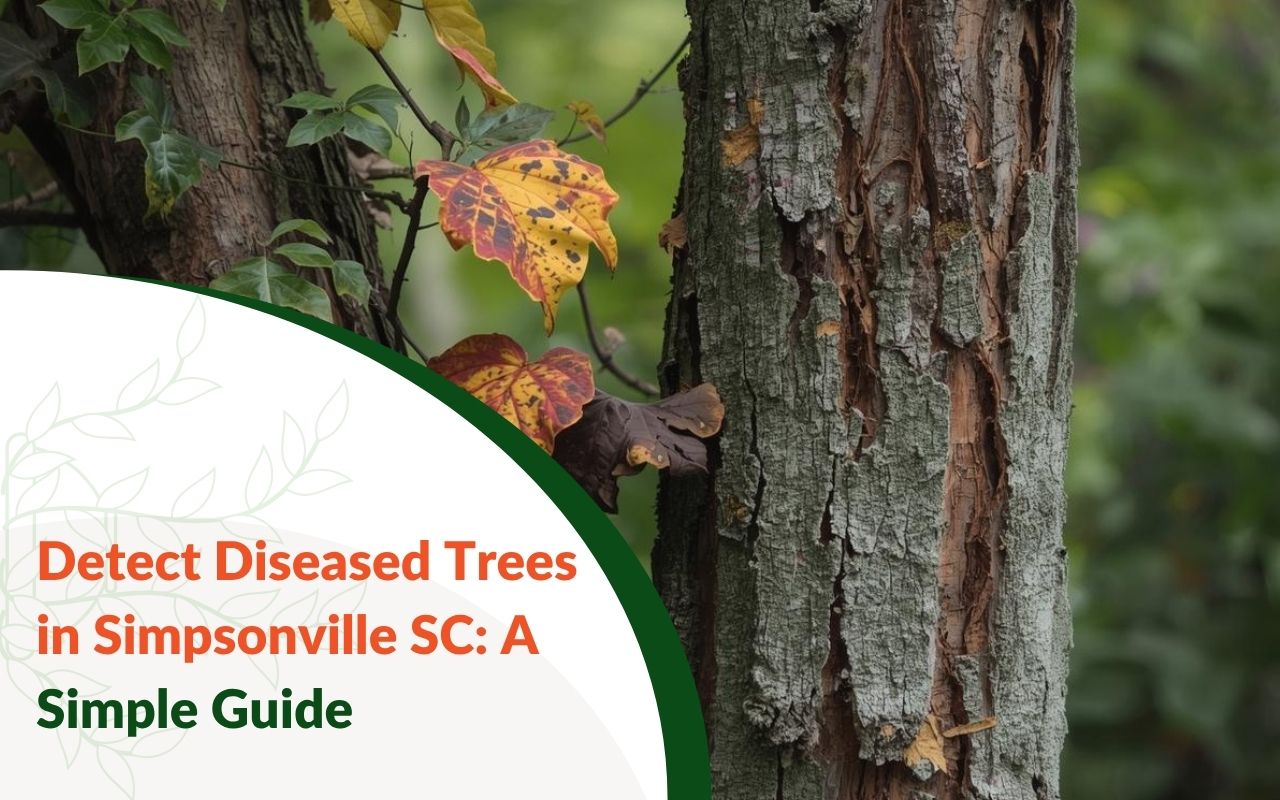
To begin, leaves with premature color change or spotting may indicate infection. In addition, dead branches, crown thinning, and brittle twigs suggest internal decay. If you’re unsure about how to spot diseased trees in Simpsonville, SC, then schedule a professional inspection.
- Bark issues: peeling, sloughing, or sunken cankers; likewise, discolored patches can signal trouble.
- Cracks or splits that, in turn, invite pests and pathogens.
- Unusual sap flow, frass, or exit holes from borers; for example, fine sawdust at the base.
- Mushroom-like growths on trunks or roots; notably, these often indicate advanced decay.
What to do if a tree is losing bark
First, rule out normal shedding. Next, inspect for cankers, insects, or mechanical injury. Finally, clean cuts properly and avoid wounding with tools or mowers; otherwise, you may worsen the problem.
Understanding Tree Fungus and Its Impact
Tree fungus thrives in warm, humid conditions. Once inside wounds, it may block nutrient flow and weaken structure; therefore, prevention matters. Knowing how to prevent tree fungus includes pruning for airflow and removing infected wood promptly.
Fruiting bodies at the base or on limbs warn of active decay. When appropriate, apply fungicides only when recommended by an arborist; otherwise, you could mask deeper issues.
Importance of Timely Tree Disease Detection
Early detection saves time and money. For instance, a small lesion might need pruning, while late discovery could require tree removal in Simpsonville, SC. Consequently, knowing how to spot diseased trees in Simpsonville, SC helps you act before storms cause damage.
Additionally, use a trusted tree health inspection service to reveal hidden decay, root issues, and pests.
Steps to Take for Preventive Tree Care
Preventive habits strengthen resilience. When wondering how to prevent tree fungus, start with cleanliness and airflow; then, build consistent routines.
- Water deeply during dry spells; moreover, mulch to regulate soil temperature.
- Keep mulch off trunks to avoid rot; instead, maintain a clear collar.
- Fertilize by soil test, not guesswork; as a result, you avoid excess salts.
- Disinfect tools between cuts; likewise, prune dead or weak branches.
- Maintain spacing for sunlight and air circulation; consequently, foliage dries faster.
Trim correctly or hire pros for safe, clean cuts via tree trimming in Simpsonville, SC. In short, proper technique reduces disease entry points.
Beneficial Practices for Tree Health
Companion plants can deter pests; therefore, you can reduce sprays. Installing guards prevents trunk injuries. In addition, aerate compacted soils and add organic matter to boost microbes.
Slow-release fertilizers aid recovery after droughts or storms. If you’re still learning how to spot diseased trees in Simpsonville, SC, then combine seasonal checkups with good soil care for better outcomes.
Seeking Professional Help from Arborists
Know when to call an arborist for diagnosis: major canopy dieback, significant bark loss, or visible mushrooms. Certified experts provide treatment plans, pruning, and a tree health inspection service; moreover, they document progress over time.
Unsure about next steps? In that case, contact Molina’s Tree Service for guidance and tailored care.
Frequently Asked Questions
What are the common tree diseases and symptoms here?
Oak wilt, Dutch elm disease, pine wilt, anthracnose, powdery mildew, and root rot. Specifically, watch for leaf spots, wilting, browning needles, and crown thinning.
How to prevent tree fungus effectively?
Improve airflow with proper pruning; additionally, sanitize tools, remove infected wood, water correctly, and avoid trunk injuries.
What to do if a tree is losing bark?
Inspect for cankers and insects; then avoid further wounds; finally, consult an arborist if bark loss spreads or exposes wood.
When should I call an arborist for diagnosis?
Call if you see rapid dieback, structural mushrooms, large cracks, or repeated seasonal decline; above all, act sooner rather than later.
What is a tree health inspection service?
A comprehensive assessment of canopy, trunk, roots, soil, and pests; afterward, you receive a treatment or monitoring plan.
Sustainable Tree Disease Management Strategies
Integrated Pest Management blends cultural practices, biological controls, and minimal chemicals. Whenever possible, shred and compost sick debris at high heat to reduce pathogens. For stubborn roots, consider stump grinding services to remove inoculum sources.
Community Engagement in Tree Health Preservation
Neighborhood workshops on how to spot diseased trees in Simpsonville, SC build awareness. Furthermore, volunteers can report changes, share guides, and support planting days that improve spacing and species diversity.
Plan seasonal reminders on when to trim your trees to reduce disease risks and improve structure.
Ensuring the Longevity of Trees in Simpsonville SC
Overall, vigilance, smart maintenance, and timely help protect the urban forest. Work with certified arborists who teach how to spot diseased trees in Simpsonville, SC through seasonal checkups and targeted care. In the end, healthy trees mean safer yards and lasting beauty.