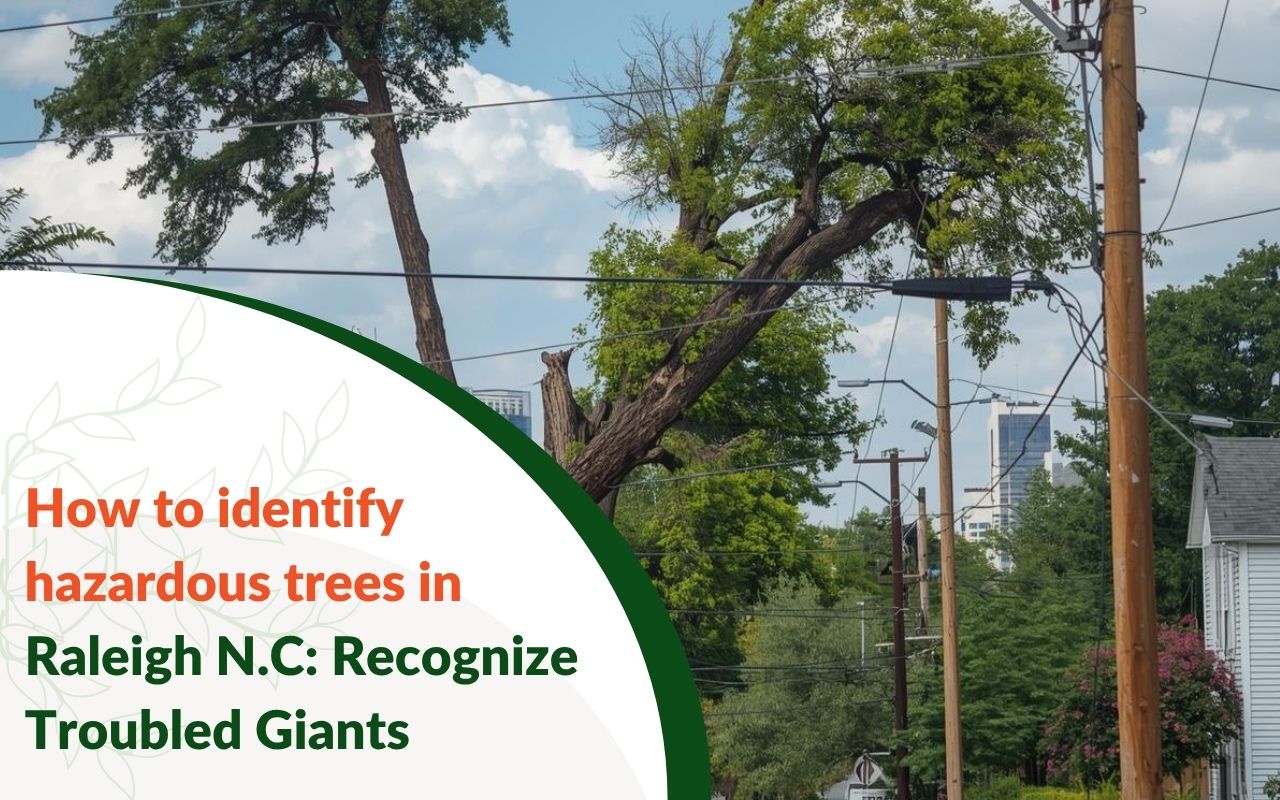
Towering trees enrich Raleigh, yet hidden defects can threaten homes. This guide explains how to identify hazardous trees in Raleigh N.C so you can act before storms turn small issues into emergencies. Learn the warning signs of a dead tree, how wind damage affects trees, and when to call a tree expert for help.
Why this matters for Raleigh homeowners
Severe weather, clay-heavy soils, and rapid growth can combine into risk. Knowing how to identify hazardous trees in Raleigh N.C empowers you to protect family, property, and neighbors while preserving your landscape’s beauty.
Signs of tree decay and disease
Decay often begins out of sight. Surface clues include fungi at the base, loose bark, and oozing sap. These are classic warning signs of a dead tree that signal internal weakness.
- Mushrooms or conks near roots
- Cracks, cavities, or spongy wood
- Out-of-season yellowing and sparse foliage
If you’re unsure how to tell if a tree is rotting inside, schedule an assessment promptly.
Recognizing structural issues in trees
Unusual branch angles, widening cracks at unions, and pronounced leans indicate failure risks. Multiple trunks with narrow attachments are especially vulnerable under wind load.
- Gapped or swollen branch unions
- Heavy, overextended limbs
- Leans that worsen after storms
Understanding the impact of root problems
Roots anchor and feed the tree. Erosion, soil heave, and root rot reduce stability. A lean that increases after rain suggests undermined support—another cue in how to identify hazardous trees in Raleigh N.C.
Identifying pest infestations in trees
Bark beetle bores, sawdust frass, and chewed leaves reveal insects stealing vital resources. Small woodpecker holes often point to concealed pests accelerating decay.
Assessing tree trunk stability
A hollow “drum” sound on gentle tapping hints at internal decay. Note soft spots, large cavities, or failing root flares. After major wind, reassess quickly to decide when to call a tree expert.
Checking for dead branches and canopy health
“Widow-maker” limbs break without warning. During the growing season, snap twigs: dry, brown interiors indicate deadwood. Thinning crowns often trace back to root or trunk issues.
Importance of regular tree inspections
Seasonal walk-arounds help you catch trends early. Keep notes on cracks, leans, and debris after storms. Mastering how to identify hazardous trees in Raleigh N.C builds confidence and reduces emergencies.
Professional tree risk assessment services
Certified arborists use tools and local expertise to diagnose decay, structure, and soil conditions. If you notice warning signs of a dead tree or wonder how to tell if a tree is rotting inside, expert guidance brings clarity.
Taking action: removal or treatment options
Advanced decay may require removal and stump grinding. In urgent cases, emergency tree removal service protects people and structures. Milder issues respond to pruning, cabling, soil aeration, and targeted fertilization.
- Prune deadwood to reduce storm load
- Cable weak unions to prevent splits
- Improve drainage to curb root rot
Helpful local services
For shaping and preventive care, see tree trimming in Raleigh, NC. For hazardous removals, visit tree removal services in Raleigh, NC and emergency tree removal in Raleigh. Finish the job with stump removal in Raleigh, NC. Learn the risks of DIY tree removal in Raleigh neighborhoods.
Frequently Asked Questions
What are early warning signs of a dead tree?
Fungal growth at the base, peeling bark, sparse foliage, and brittle twigs are early warning signs of a dead tree that may precede structural failure.
How can I tell if a tree is rotting inside?
Listen for hollow sounds when tapped, look for cavities and conks, and watch for oozing sap. An arborist can confirm how to tell if a tree is rotting inside.
When should I call a tree expert?
Call immediately after storms, if a lean increases, or when you notice major cracks, large dead limbs, or soil heave. Knowing when to call a tree expert prevents emergencies.
How does wind damage affect trees?
Wind opens cracks, tears weak unions, and destabilizes roots. Understanding how wind damage affects trees helps prioritize pruning and cabling before the next storm.
Who provides emergency tree removal service in Raleigh?
Local certified teams offer 24/7 emergency tree removal service to secure sites, remove hazards, and coordinate stump grinding and cleanup.
Safeguarding your property from hazardous trees
Stay proactive: combine routine inspections with timely pruning and expert assessments. When in doubt, act fast. For consultations or service, Contact Molina’s Tree Service & Landscaping. With these steps, you’ll know how to identify hazardous trees in Raleigh N.C and keep your landscape safe year-round while learning how to identify hazardous trees in Raleigh N.C effectively.